Pipes and fittings
Pipes and fittings: sizes, classes and project supplies
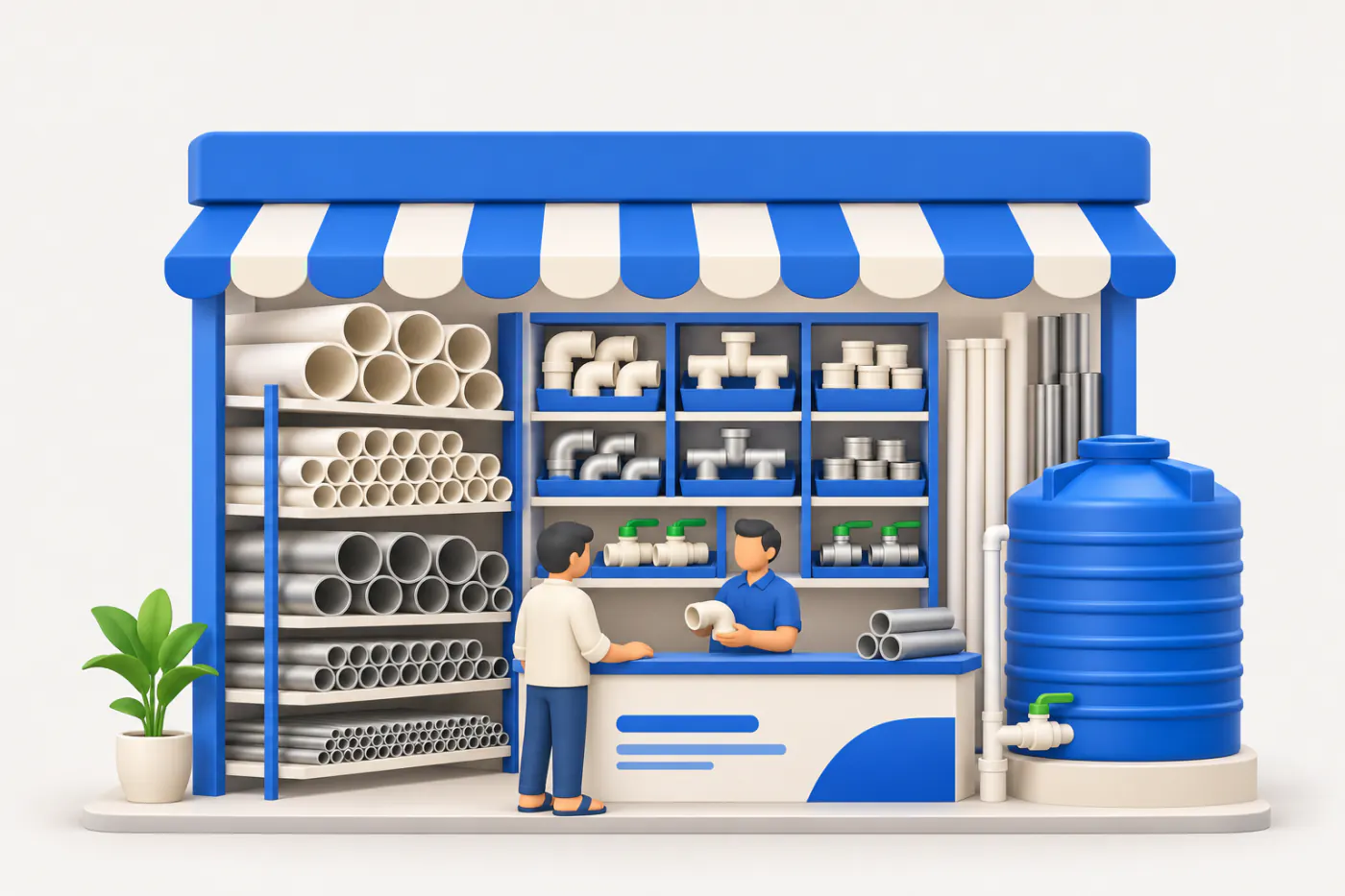
Pipes and fittings look simple until you count the sizes. A distributor may carry thousands of combinations of material, diameter, pressure class and fitting type, sold by length, piece and box to plumbers, retailers and projects.
- Right rate for each customer
- Challans for every site lot
- Beats, orders, collections
- Plumber and project dues
Start free trialBook a free demo
Works with your TallyPrime14-day free trialJaipur team, call +91 70738 53555
Built for pipes and fittings businesses
Who it’s for
- Pipe and fitting distributorsRetailers and plumbers supplied by the truckload
- Sanitary and plumbing retailersLengths and fittings over the counter
- Agricultural pipe dealersHDPE and PVC pipes sold with the crop season
- Project suppliersBuilders and contractors billed against BOQs
- GI and MS pipe tradersLengths and weights for fabricators and builders
- Pump and borewell suppliersColumn pipes, pumps and fittings for farms and homes
- Hardware storesPlumbing range beside tools and hardware
Pain → fix
The problems we fix
The everyday headaches of pipes and fittings businesses, and what changes when the books are on every phone.
- The problemOld rate quoted after a price revision
Brands revise lists several times a year and salesmen keep quoting from last month's sheet.
With Cashflow OSPrice lists by dealer type, updated onceDealer types with layered discount rules fill the rate automatically on orders and documents.
See how it works - The problemProject deliveries billed weeks later
Phased supplies go to site against the contractor's PO and the invoice waits.
With Cashflow OSChallans per delivery, converted to invoicesEach lot goes with a branded delivery challan that converts into the Tally sales invoice.
See how it works - The problemRetailer orders written in a diary
Orders taken on the weekly visit are typed again at the office, with sizes mixed up.
With Cashflow OSBeat orders posted to Tally as sales ordersSalespeople take orders in the staff app; once writing is on, they post to Tally.
See how it works - The problemPlumber's bills spread across many sites
Payments arrive in round sums and nobody knows which site's bills they cover.
With Cashflow OSBill-wise dues per plumber and projectReceivables from Tally show each open bill with its age, on phone and web.
See how it works - The problemSalesman's weekly beat not followed
Retailers in smaller towns are visited when convenient, and orders go elsewhere.
With Cashflow OSRoute plans and visit check-insAreas and route plans set the beat; visit check-in records GPS location and notes.
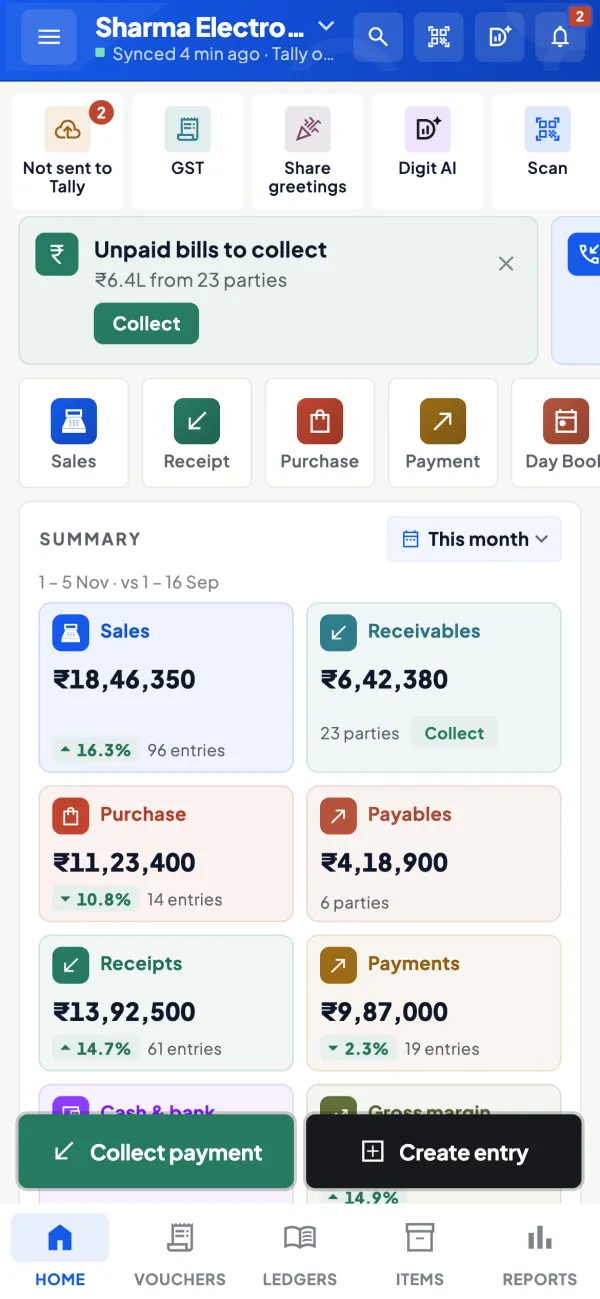
See how it works - The problemCounter can't find CPVC elbow 25 mm SDR 11
Tally names written differently by different people slow every bill.
With Cashflow OSYour own clear display names beside Tally'sItems carry your own display name and photo beside the Tally name, grouped by stock group.
See how it works
Features
How Cashflow OS works for pipes and fittings businesses
The right rate, filled for you
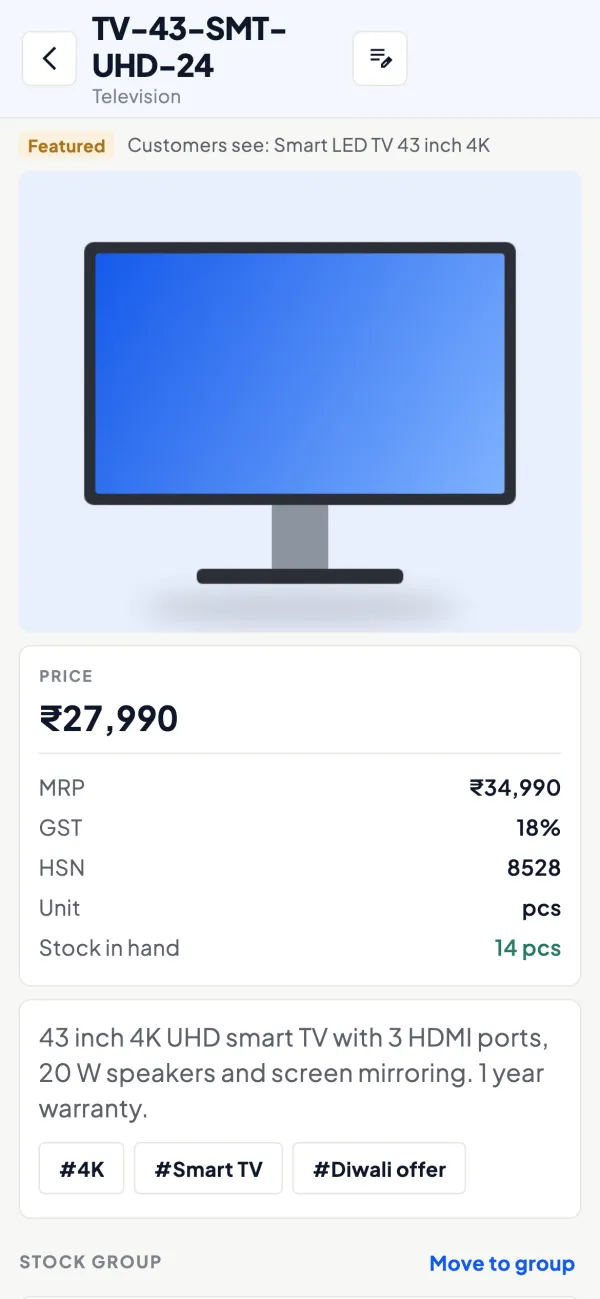
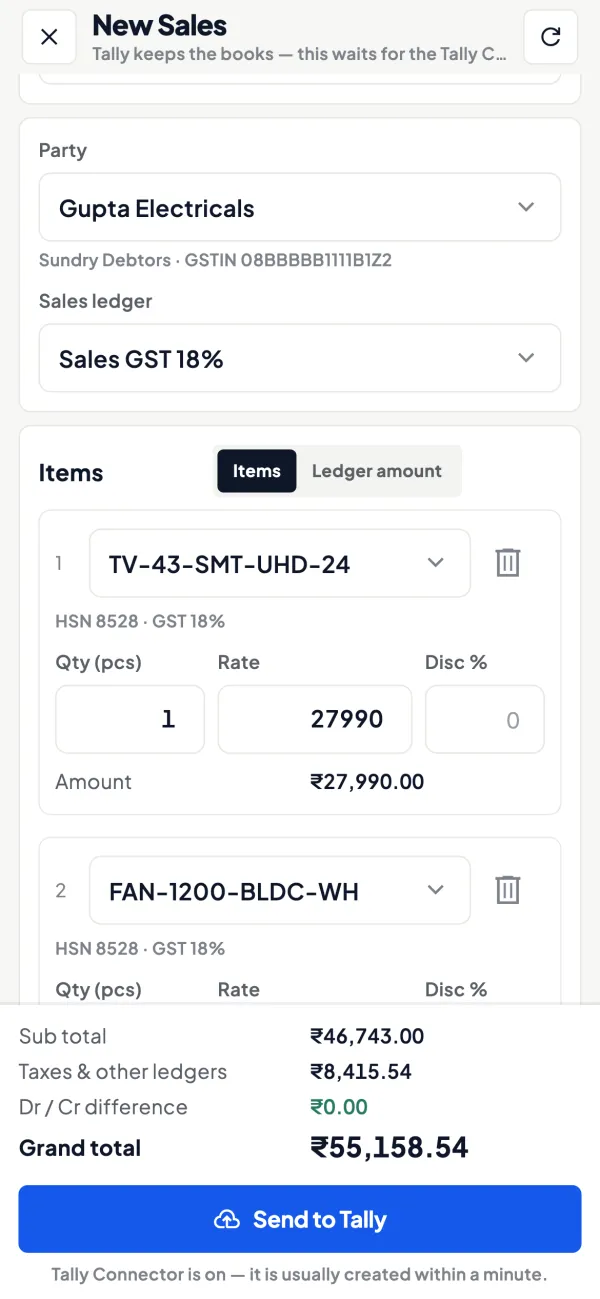
How it works. Create a sale or order from the phone; the price list fills the rate by dealer type, and GST is worked out from the item and party.
- Same discount slab in the field and at the counter
- One update when a revision arrives
- Entry validated by Tally
In practiceA retailer in Jodhpur on the A list orders 200 lengths of uPVC 1 inch; the revised rate fills itself on the order.
Beats that actually get covered
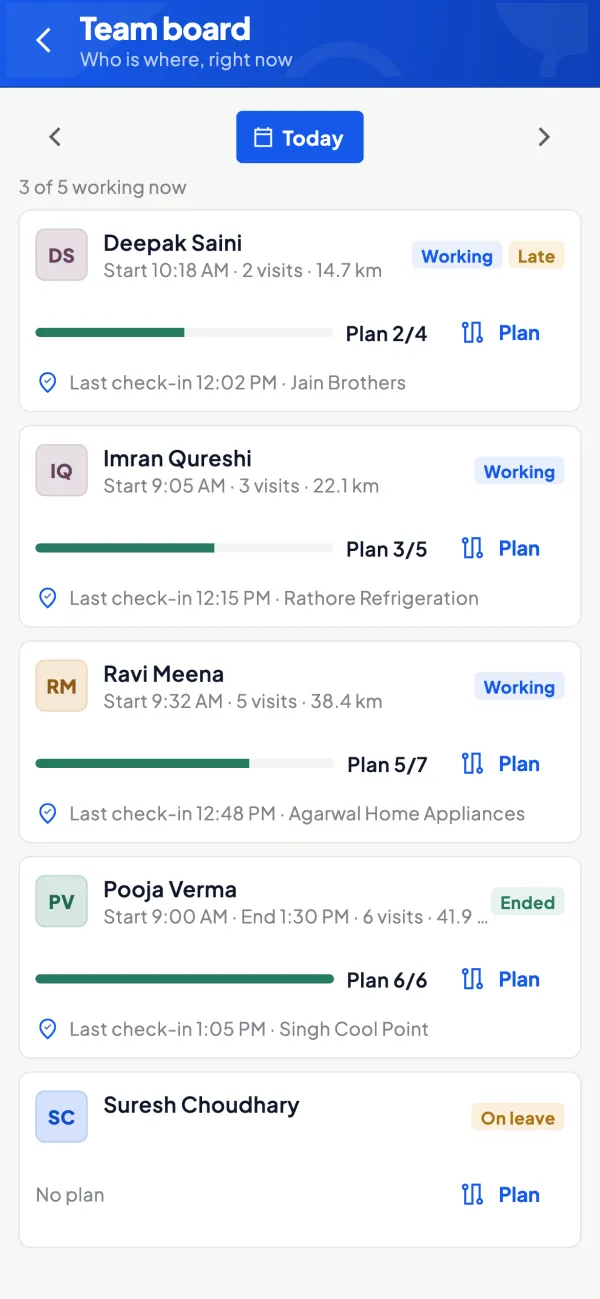
How it works. Areas and route plans list the retailers for each day; salesmen check in with GPS location and add notes and photos.
- Missed outlets visible to the owner
- Order and collection in the same visit
- Attendance and leave in one app
In practiceSalesman Manoj covers 18 hardware and sanitary shops around Bikaner every Thursday, with each visit checked in.
Orders straight into Tally
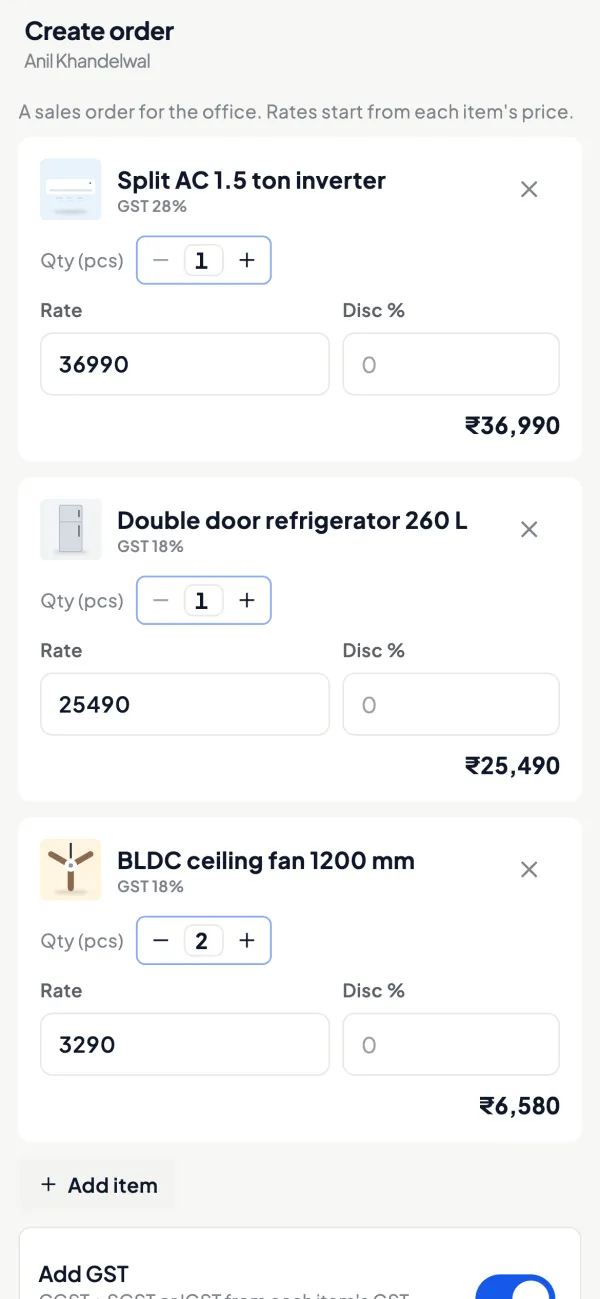
How it works. Orders carry items, units and GST and post to Tally as sales orders, with owner approval if you want it.
- Box and piece units as set in Tally
- No retyping in the office
- Dispatch works from Tally as usual
In practiceA plumber orders 12 boxes of CPVC elbows and 40 loose tees; the order reaches Tally before the tempo is loaded.
Plumber, retailer and project dues
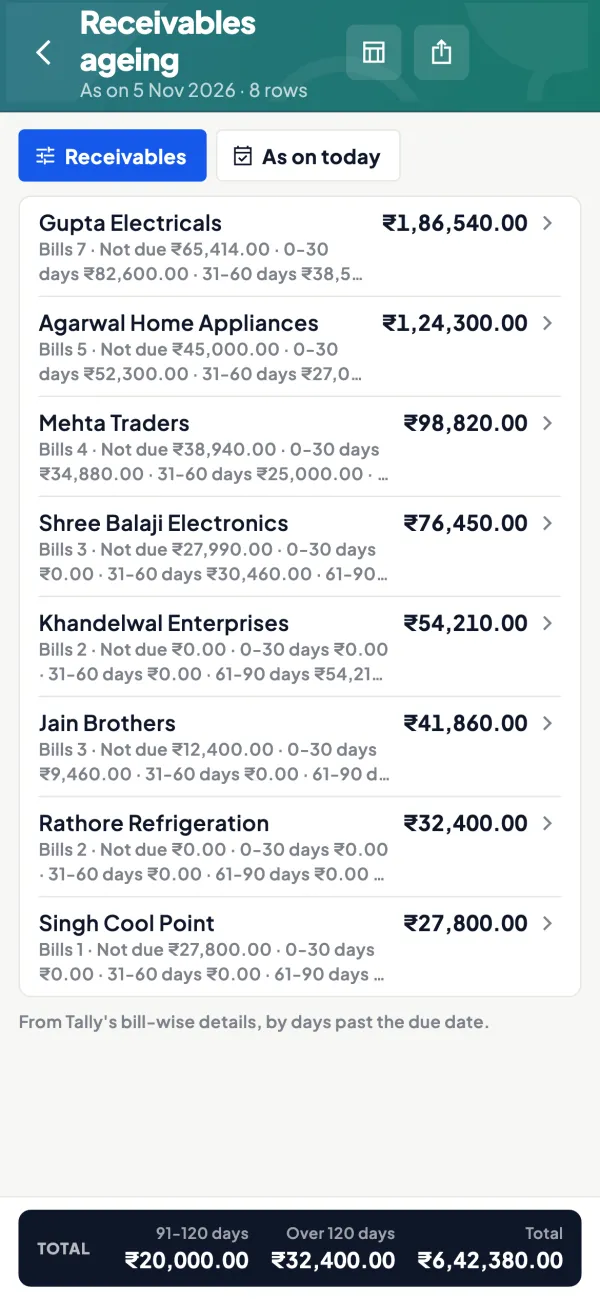
How it works. Bill-wise receivables with ageing come from Tally; statements go on WhatsApp in Tally's format or as a Hindi page.
- Three kinds of customer reviewed separately
- Oldest open bill shown first
- Checked before the next supply
In practiceA builder's project in Jaipur has ₹6,40,000 open across nine challans and bills; the owner holds supply until the oldest two clear.
Thousands of sizes, easy to find
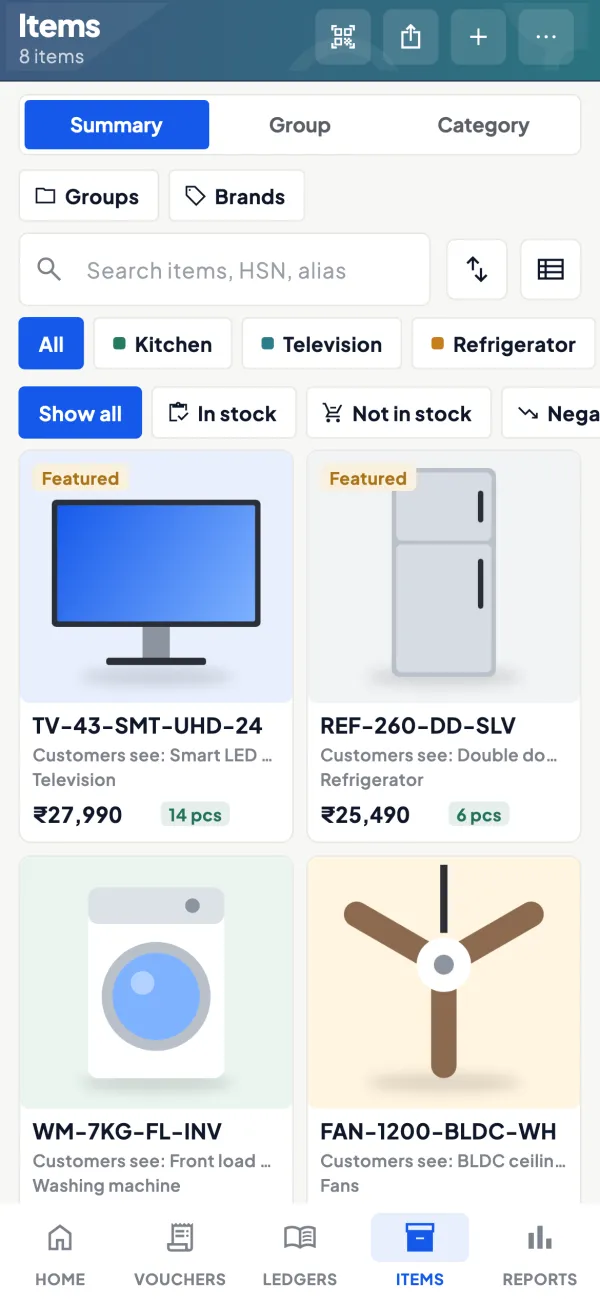
How it works. Items show your own display names and photos beside the Tally names, grouped by Tally stock groups for material and type.
- Material, size and class in a readable name
- Search by your name or Tally's
- Stock by group on the phone
In practiceCounter staff search 'CPVC elbow 25' and find the right SDR 11 item at once, without scrolling a long list.
Know your trade
A guide for pipes and fittings businesses
How the business works, where money gets stuck, and the GST points to watch.
Materials, sizes and how they are sold
The range covers PVC and uPVC pipes for plumbing and drainage, CPVC for hot and cold water, HDPE for water supply and agriculture, SWR pipes for soil and waste, GI and MS pipes, and the fittings for each: elbows, tees, couplers, reducers, valves, unions and solvent cement. Each pipe has a diameter, a pressure rating or class, and a standard length; fittings come in boxes of many pieces.
Retail customers buy a few lengths and a bag of fittings. Plumbers buy for several sites. Retailers in smaller towns buy by the truckload. Projects, such as housing societies, irrigation schemes or factories, buy against a bill of quantities with specified brands and classes.
Getting the item master right
Item naming is everything in this trade. A consistent pattern, for example Material, Type, Size, Class (CPVC Elbow 25 mm SDR 11), lets counter staff find items quickly and keeps stock accurate. Use Tally stock groups for material and type, and categories for brand. Fittings are best set with box as one unit and pieces as the alternate unit, so you can buy by the box and sell loose. See alternate units in Tally and stock groups and categories.
| Item | Main unit | Alternate unit |
|---|---|---|
| uPVC pipe 1 inch, 3 m length | Length | Metre |
| CPVC elbow 20 mm | Box | Piece |
| Solvent cement 100 ml | Piece | none |
Price revisions and schemes
Pipe prices follow raw material costs such as PVC resin, and brands issue revised price lists several times a year. When a revision arrives, every rate on your system and every pending quotation needs checking. Distributors also receive target and cash-discount schemes, and some pass slab discounts to retailers. Keep a dated copy of each price list, and on project quotations state clearly whether rates hold until delivery or follow the list on dispatch date.
Projects and agriculture
Project supplies are delivered in phases over months. Every delivery should go with a delivery challan referencing the contractor's purchase order, and challans should be converted into invoices promptly. Retention, short-supply complaints and rate disputes are common, so keep the paperwork for each project together.
In agricultural areas, HDPE and PVC pipes for irrigation sell with the crop calendar and may be linked to government subsidy schemes, where documentation requirements are strict and payment can take time. Read each scheme's rules carefully before committing stock.
Credit and collections
A typical distributor carries three kinds of receivables: plumbers on running accounts, retailers on fixed credit days, and project contractors on milestone payments. Look at each group separately. For retailers, weekly visits by a salesperson who both takes the order and collects the payment for old bills work best. For projects, link each payment to the bills it covers so that disputes do not mix across projects. Our guide on reducing outstanding receivables covers practical steps.
Returns and slow sizes
Plumbers and retailers often return unused fittings after a job, and project sites return leftover pipes at completion. Accept returns only in saleable condition, in full boxes where possible, against a credit note that references the original bill. Loose returns piling up behind the counter without entries are one of the commonest reasons stock in Tally stops matching the shelf.
Some sizes and classes sell rarely but must be kept because customers expect a full range. Keep the quantity of these low, reorder only when needed, and check every quarter which slow items can be dropped from the range altogether. A small list of truly fast movers, with reorder levels set for each, does more for stock health than counting everything every month. Our guide on reorder levels and safety stock explains how to set them.
GST notes
Pipes and fittings of different materials can fall under different HSN codes; check the current GST rate for each on the GST portal. Inter-state purchases from manufacturers attract IGST. E-way bills are routine for truckloads above the threshold. Registered plumbers and contractors need their GSTIN on bills for input credit. This is general information, not tax advice.
How Cashflow OS and Tally help
Cashflow OS syncs your TallyPrime data so the owner sees retailer, plumber and project outstanding with ageing on the phone. Price lists with dealer types fill the right rate for each customer automatically. Salespeople on a route plan record visits, orders and collections from the staff app, and orders post to Tally as sales orders. Delivery challans for project supplies carry your logo and can be converted into invoices. See route planning for how beats are set.
This page is general information for Indian businesses, not tax, legal or financial advice. Rules and rates change — check the official portals or your CA before acting.
Set-up
Up and running in 4 steps
No new software to learn for your accountant — Tally stays as it is.
- 1
Install the Tally Connector on the PC that runs TallyPrime
- 2
Sign in with your mobile number and scan the connector's QR
- 3
Set dealer types for retailers, plumbers and projects
- 4
Invite salesmen and counter staff with a link and a role
Buyer’s checklist
What to look for in software for pipes and fittings businesses
Whatever you choose, check these before you commit.
- Handles box and piece units for fittings as your Tally items are set
- Finds items quickly across thousands of size and class combinations
- Fills the right rate per customer type after each price revision
- Makes delivery challans for phased project supplies
- Converts challans into invoices without retyping
- Gives salesmen a beat plan with visits, orders and collections
- Shows plumber, retailer and project dues bill by bill
- Works on your Tally books, with entries validated by Tally
Plans
Simple yearly plans
- 14-day free trial on your own books
- 3-year term saves up to 25%
- Premium modules (catalogue, field force, price lists, store…) priced extra
Start free trialGet the price for your business
Compare all plans- Growth₹3,000/year + GSTBooks, reports, outstanding and sharing
- Pro₹5,000/year + GSTEverything in Growth, plus entries into Tally
- Pro+₹7,000/year + GSTEverything in Pro, plus e-invoice and e-way bill
Why Cashflow OS
Why pipes and fittings businesses choose Cashflow OS
- Rates kept currentPrice lists by dealer type mean one update covers every salesman.
- Project supplies billedChallans per lot convert into invoices, so deliveries do not go unbilled.
- Beats that workRoute plans, visit check-ins, orders and collections in the staff app.
- Readable item namesYour own display names beside Tally's make sizes easy to find.
- E-way bills from the appPlans that include e-way bill generate it for synced Tally sales vouchers.
- Free 14-day trialTry it with your own items and customers before choosing a plan.