Running the business Pricing
Price list management for dealers
A good dealer price list has one base price per item, a small number of dealer types, and clear discount rules on top. When the rules live in your system rather than in salespeople's heads, every dealer gets the right rate on every bill.
- Distributors
- Wholesalers
- Manufacturers selling to dealers
- Sales managers
- Billing staff

On this page 12
Why price lists break down
In many distribution businesses the "price list" is a PDF from the company, a few WhatsApp messages about new rates, and whatever the senior salesperson remembers. The result is familiar: two dealers in the same market get different rates, billing staff override prices, and disputes surface only when the dealer pays less than the bill.
A structure that scales
- One base price per item. Usually MRP or the company's list price, kept in one place.
- Three or four dealer types. For example A (large, prompt payers), B (regular dealers), C (small or new retailers). More types than this become hard to manage.
- A discount rule per type and product group. For example A gets 14% on fans and 10% on switches.
- Extra rules layered on top. Quantity slabs, a running scheme, a special rate for one party.
- Dates. Each rule has a start date and, where relevant, an end date.
Example: one item, three dealer types
| Dealer type | Discount on list ₹1,000 | Rate before GST | Your margin if cost is ₹780 |
|---|---|---|---|
| A | 15% | ₹850 | ₹70 (8.2% of sale) |
| B | 12% | ₹880 | ₹100 (11.4%) |
| C | 8% | ₹920 | ₹140 (15.2%) |
Seeing margins next to rates helps you decide whether a dealer moving from B to A is worth it. An A dealer must buy, and pay, enough more to make up for the ₹30 lower margin per piece.
Handling a price increase
- Update the base price once, with the effective date. Dealer-type discounts then follow automatically.
- Decide what happens to orders already booked: honour old rates for orders taken before the date, or not. Write the rule down and tell salespeople.
- Send dealers a short note with the date and the new list, or a fresh catalogue link.
- Check the first week's bills for items still going out at the old rate.
Controls worth having
- Only one or two people can change base prices and rules.
- Rates below the price list need approval, and the approval is recorded.
- A monthly check of average rate realised per item against the list.
- Every party is assigned a dealer type; review assignments every six months on purchases and payment record.
If you use TallyPrime, compare its price levels with a separate price list tool in Tally price levels vs price lists.
Assigning dealer types fairly
Dealers will ask why a neighbour gets a better rate. Make the answer a rule, reviewed every six months:
| Type | Typical criteria |
|---|---|
| A | Purchases above a set amount per quarter and average payment within terms |
| B | Regular monthly purchases; payment within 15 days of due date |
| C | Small or irregular purchases, new dealers, or frequent late payment |
Tie the type to both volume and payment. A dealer who buys a lot but pays 60 days late is costing you more than the rate suggests.
Tell dealers the criteria. When a B dealer knows what it takes to become A, the price list becomes a reason to buy more and pay on time, rather than a source of complaints. Moving a dealer down should follow the same rule, with notice and a chance to recover at the next review.
Keeping one source of truth
Most price disputes come from several copies of the price list: the PDF from last quarter, a spreadsheet in accounts, rates in the billing software and a salesperson's notebook. Pick one place where rates live and make every other copy come from it. When a dealer questions a rate, the answer should be "this is what the system shows for type B from 1 October", not a debate about which list is current. Retire old PDFs by sending dealers the new list with the date clearly printed on it.
Price lists in Cashflow OS
Cashflow OS lets you set dealer types (for example A, B and C) and layered discount rules, which fill rates automatically in quotations, proforma invoices, sales orders and vouchers. A salesperson taking an order on the phone gets the right rate for that dealer without looking it up, and the order can be posted to Tally with GST worked out from the item and the party's state. Read more on price lists.
Avoid these
Common mistakes
- MistakeRates kept in PDFs, WhatsApp chats and memoryDo this instead
Keep rates in one system and make every other copy come from it, with the effective date printed on lists sent to dealers.
- MistakeToo many dealer typesDo this instead
Use three or four types; more types mean more rules to maintain and more room for mistakes.
- MistakeSpecial rates with no end date or approverDo this instead
Record a party-specific rate as a rule with an end date and an approver, so it does not become a permanent untracked discount.
- MistakeDealer types based on volume aloneDo this instead
Tie the type to both purchases and payment record; a big buyer paying very late can cost more than the rate suggests.
Keep handy
Checklist
Price list management for dealers — 8 checks. Tick them as you go.
In Cashflow OS
How Cashflow OS helps
Cashflow OS puts your TallyPrime books on every phone in the team. Where it fits this topic:
Dealer types and layered discounts
Set dealer types such as A, B and C with layered discount rules that fill rates automatically in quotations, proforma invoices, sales orders and vouchers.
See Price lists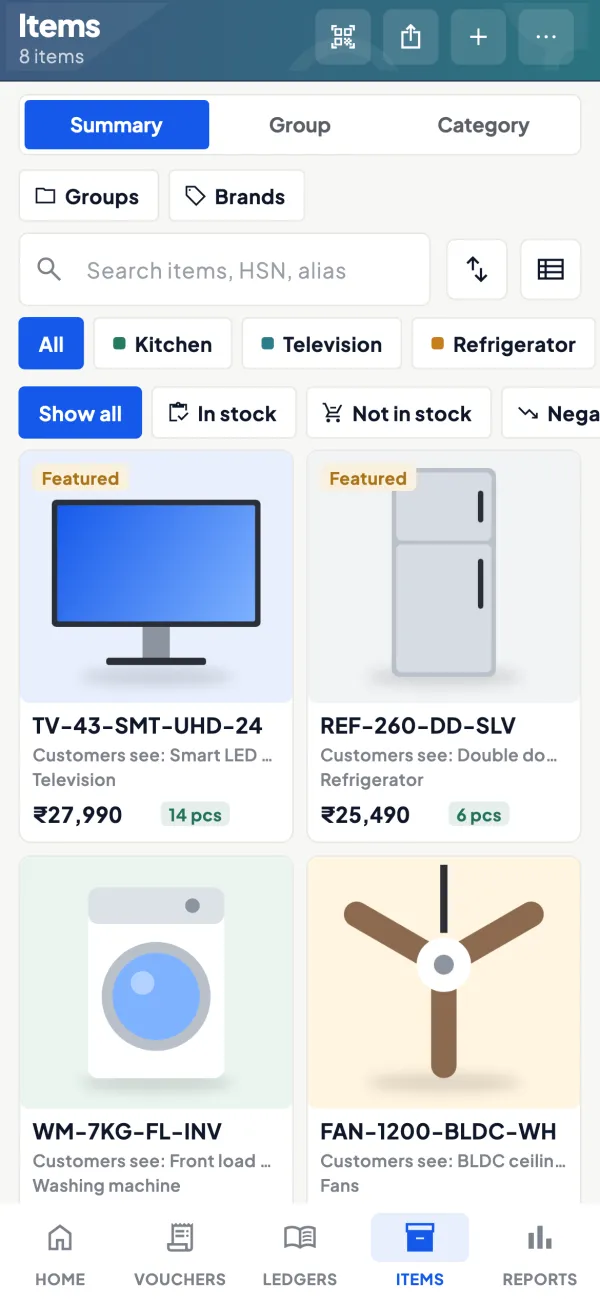
The right rate on orders posted to Tally
A salesperson taking an order on the phone gets the dealer's rate without looking it up, and the order can post to Tally with GST worked out from the item and the party's state.
See Sales orders to Tally
Questions people ask
How many dealer types should a distributor have?
Should price lists include GST?
Can one dealer have a special rate?
How often should dealer types be reviewed?
What happens to booked orders when prices go up?
How do I stop billing staff overriding prices?
Should I tell dealers the criteria for each type?
How do I check a dealer type change is worth it?
This page is general information for Indian businesses, not tax, legal or financial advice. Rules and rates change — check the official portals or your CA before acting.