Running the business Pricing
Pricing strategy for traders
Most traders price by adding a margin to cost or matching the market. Both are fine starting points. What separates profitable traders is knowing their true landed cost, pricing different items differently, and understanding exactly how much a discount costs.
- Traders and wholesalers
- Distributors
- Retailers setting margins
- Building material dealers
- Owners reviewing margins

On this page 11
Start with true landed cost
Landed cost is everything it takes to get an item onto your shelf, per unit:
- Purchase price (net of trade discount)
- Freight inward, loading and unloading
- Non-creditable taxes or charges
- Breakage allowance for fragile goods
Example: tiles bought at ₹420 a box, freight ₹18, unloading ₹4, breakage allowance 1% (₹4.20). Landed cost ≈ ₹446, not ₹420. Pricing on ₹420 quietly loses ₹26 a box.
Three ways to set prices
| Method | How | Works well for |
|---|---|---|
| Cost-plus | Landed cost ÷ (1 − target margin) | Items with no clear market price, made-to-order goods |
| Market-based | Match or stay close to competitors | Branded, price-known items customers compare |
| Value-based | Price on what the item and your service are worth to the buyer | Urgent supply, rare items, credit, delivery, installation |
Use all three across your range. Price-known fast movers often carry thin margins; accessories, small parts and hard-to-find items can carry more. Make sure you calculate margin, not markup; see gross margin vs markup.
What a discount really costs
To keep the same gross profit after a discount, sales volume must rise by:
Extra volume needed = discount ÷ (margin − discount)
| Your margin | Discount | Extra volume needed |
|---|---|---|
| 20% | 2% | 11% |
| 20% | 5% | 33% |
| 15% | 5% | 50% |
| 12% | 4% | 50% |
A trader on a 15% margin who gives 5% off must sell 50% more just to earn the same rupees. Discounts are sometimes right, to clear stock or win a key account, but they should be a decision, not a habit.
Differentiate by customer
Different customers cost different amounts to serve. A large dealer who pays in 15 days and takes full truckloads deserves a better rate than a small shop that orders loose quantities on 60-day credit. Formalise this with dealer types and a dealer price list, so rates follow rules rather than negotiation every time.
Credit has a cost too. At an overdraft rate of 12% a year, 60 days of credit on a ₹1,00,000 sale costs you about ₹1,970 in interest, nearly 2% of the sale.
When and how to raise prices
- Pass on supplier increases promptly, with a short note and an effective date.
- Review prices of slow-selling but profitable items; small increases there rarely cost volume.
- Bundle service (delivery, installation, faster dispatch) instead of cutting price.
- Give notice to regular dealers; surprises damage trust more than the increase itself.
Keep a simple record of each price change: item group, old and new rate, date and reason. When a dealer questions a rate months later, or when you review margins at year end, the history is there.
Price by item role, not one rule for all
| Item role | Example | Pricing approach |
|---|---|---|
| Traffic builders | Popular branded items everyone compares | Close to market; thin margin; never out of stock |
| Core range | Regular items bought every month | Standard target margin through the price list |
| Add-ons | Fittings, accessories, small parts | Higher margin; customers rarely compare |
| Specials | Rare, imported or urgent items | Value-based; include sourcing effort |
| Clearance | Slow and dead stock | Price to sell; recover cash |
Tag each item group with its role once a year. It makes pricing decisions faster and keeps staff from discounting add-ons as heavily as traffic builders.
Pricing checks with Tally and Cashflow OS
Your purchase and sales data in TallyPrime shows what you actually paid and realised. Cashflow OS puts the Profit & Loss, stock summaries and reports on your phone, with Excel export to check margins by period or group. Its price lists with dealer types and layered discounts fill rates automatically in quotations, orders and vouchers, so the prices you decide are the prices salespeople give. See price lists.
Avoid these
Common mistakes
- MistakePricing on purchase price instead of landed costDo this instead
Add freight, loading, non-creditable charges and breakage per unit before setting the margin.
- MistakeConfusing markup with marginDo this instead
Set price as landed cost ÷ (1 − target margin); adding the margin percentage to cost gives a lower real margin.
- MistakeGiving discounts out of habitDo this instead
Work out the extra volume each discount needs and use discounts as a decision, such as clearing stock or winning a key account.
- MistakeSame rate for prompt and slow payersDo this instead
Use dealer types that reflect order size and payment speed, or add the interest cost of long credit to the rate.
Keep handy
Checklist
Pricing strategy for traders — 8 checks. Tick them as you go.
In Cashflow OS
How Cashflow OS helps
Cashflow OS puts your TallyPrime books on every phone in the team. Where it fits this topic:
Rates from rules, not memory
Price lists with dealer types and layered discounts fill rates automatically in quotations, orders and vouchers, so the prices you decide are the ones salespeople give.
See Price lists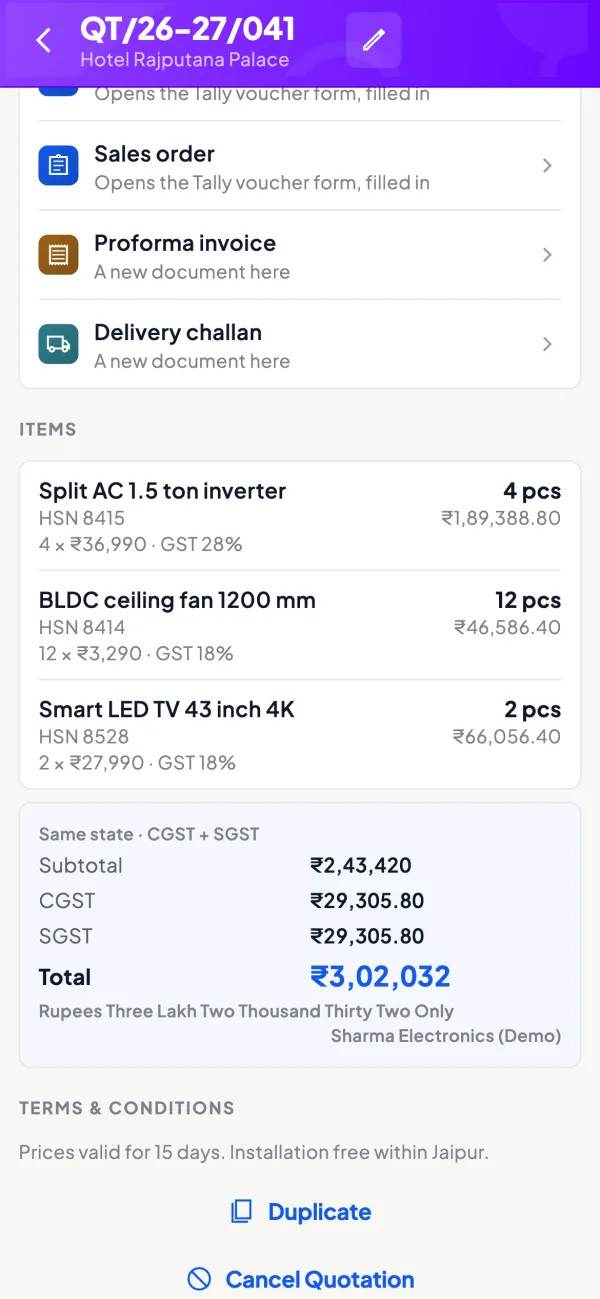
Check margins from your books
Profit & Loss, stock summaries and reports synced from Tally are on your phone, with Excel export to check margins by period or group.
See Financial reports from Tally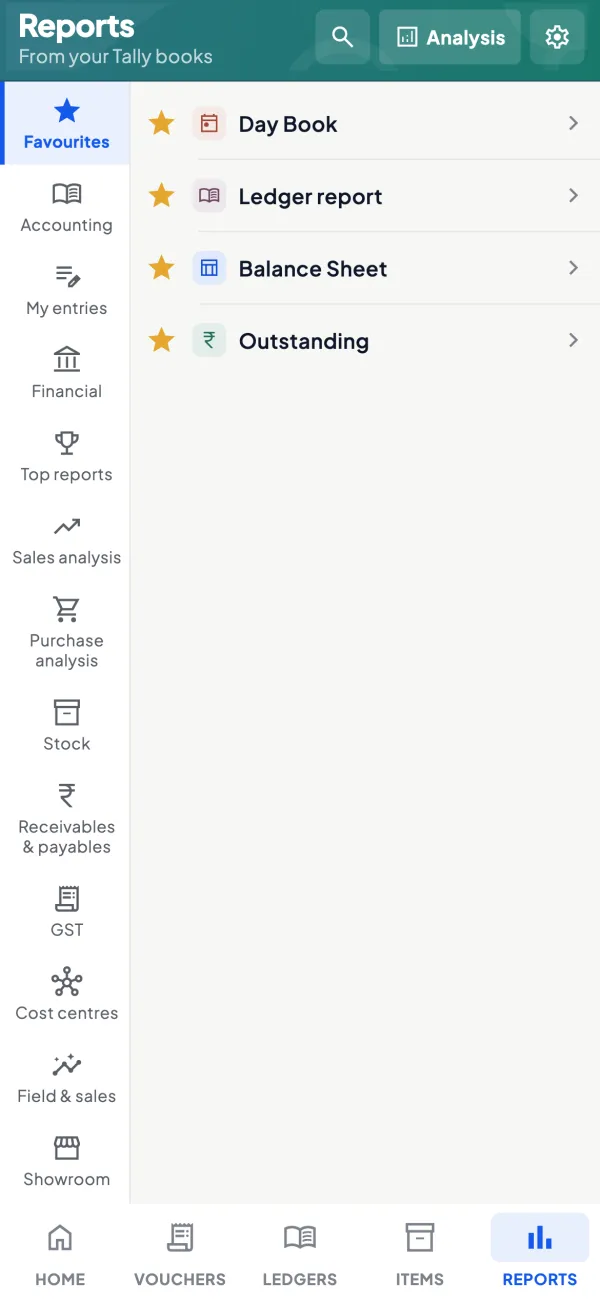
Questions people ask
Should I always match a competitor's lower price?
How often should traders review prices?
Is GST part of the price I set?
What is the simplest pricing method for a new trader?
How do I price items customers buy on long credit?
What is landed cost?
How much extra must I sell to cover a discount?
Can I charge more for add-ons and accessories?
This page is general information for Indian businesses, not tax, legal or financial advice. Rules and rates change — check the official portals or your CA before acting.