
Running the business Pricing
Gross margin vs markup
Markup is profit as a percentage of cost. Gross margin is profit as a percentage of the selling price. The same rupee profit gives a bigger markup percentage than margin, and mixing them up is one of the most common pricing mistakes.
- Traders and wholesalers
- Retailers and showrooms
- Salespeople giving discounts
- Owners setting price lists
- Accountants preparing MIS

On this page 11
The definitions
- Gross profit = selling price − cost
- Markup % = gross profit ÷ cost × 100
- Gross margin % = gross profit ÷ selling price × 100
Example: you buy at ₹800 and sell at ₹1,000 (both before GST). Profit is ₹200. Markup = 200 ÷ 800 = 25%. Margin = 200 ÷ 1,000 = 20%.
See the glossary entry on gross margin for how it appears in your Profit & Loss.
Converting between them
- Margin = markup ÷ (1 + markup)
- Markup = margin ÷ (1 − margin)
| Markup on cost | Gross margin on sale |
|---|---|
| 10% | 9.1% |
| 15% | 13.0% |
| 20% | 16.7% |
| 25% | 20.0% |
| 33.3% | 25.0% |
| 50% | 33.3% |
| 100% | 50.0% |
Pricing for a target margin
If you want a 20% margin, do not add 20% to cost. Divide cost by (1 − margin):
Selling price = cost ÷ (1 − target margin)
Cost ₹800, target margin 20%: 800 ÷ 0.80 = ₹1,000. Adding 20% to cost would give ₹960, a margin of only 16.7%.
On ₹1 crore of sales, the difference between a 20% and a 16.7% margin is about ₹3,30,000 of gross profit.
Where it goes wrong
- Discounts are taken off the selling price, so they eat margin faster than owners expect. On the ₹1,000 item, a 10% discount takes the price to ₹900 and profit from ₹200 to ₹100. A 10% discount halved the profit.
- Salespeople think in markup, accounts in margin. Agree which one you use in price lists and targets.
- Using purchase price instead of landed cost. Include freight inward, loading and non-creditable taxes in cost.
- Mixing GST in. Calculate both on prices before GST. GST you collect is not your income, and GST on purchases is usually claimed as credit.
A practical habit: print both numbers on your internal price list, for example "Cost ₹800 | Price ₹1,000 | Markup 25% | Margin 20%". Anyone approving a discount can see immediately how much margin is left.
Checking real margins in your books
Your Profit & Loss gives overall gross margin: (sales − cost of goods sold) ÷ sales. Item-level margin needs item-wise sales and cost. Check both monthly:
- Overall gross margin by month; a falling trend needs explaining.
- Margin by stock group or brand.
- Items selling below the target margin, often due to unapproved discounts.
For setting prices across a range, see pricing strategy for traders, and for scheme costs, managing dealer schemes and discounts.
Gross margin vs net margin
Gross margin covers only the cost of the goods. Rent, salaries, freight outward, interest and other expenses come out after that. Net margin is what remains:
| Line | Amount | % of sales |
|---|---|---|
| Sales | ₹1,20,00,000 | 100% |
| Cost of goods sold | ₹99,60,000 | 83% |
| Gross profit | ₹20,40,000 | 17% (gross margin) |
| Operating expenses | ₹14,40,000 | 12% |
| Net profit before tax | ₹6,00,000 | 5% (net margin) |
Here a 2% extra discount across all sales, about ₹2,40,000, would cut net profit by 40%. That is why owners should judge discounts against net profit, not gross margin alone. For more on the full statement, see how to read a profit and loss statement.
Seeing margins with Cashflow OS
Cashflow OS shows the Profit & Loss from TallyPrime on your phone and web, month by month or across any date range, along with stock and item summaries. Export to Excel to work out gross margin by period or item group. Price lists with dealer types keep the rates salespeople give consistent, which protects the margin you planned. See price lists.
Avoid these
Common mistakes
- MistakeAdding the target margin % to costDo this instead
Price as cost ÷ (1 − target margin). Cost ₹800 at a 20% margin is ₹1,000, not ₹960.
- MistakeSales thinks in markup, accounts in marginDo this instead
Agree one measure for price lists and targets, or print both on the internal price list.
- MistakeUsing bare purchase price as costDo this instead
Use landed cost: include freight inward, loading and any taxes you cannot claim as credit.
- MistakeApproving discounts without seeing what's leftDo this instead
Check each discount against the margin, and against net profit, before approving it.
Keep handy
Checklist
Gross margin vs markup — 7 checks. Tick them as you go.
In Cashflow OS
How Cashflow OS helps
Cashflow OS puts your TallyPrime books on every phone in the team. Where it fits this topic:
P&L for any period
The Profit & Loss from TallyPrime is on your phone and web month by month or across any date range, with stock and item summaries; export to Excel to work out margin by period or group.
See Financial reports from Tally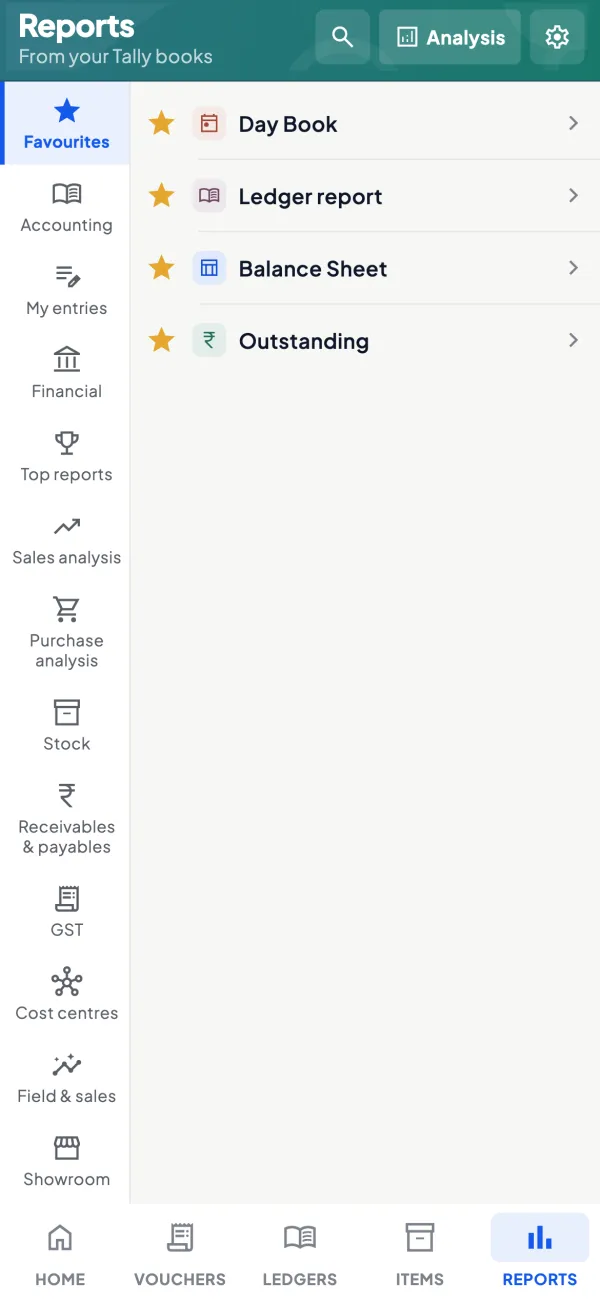
Price lists that protect margin
Dealer types with layered discount rules fill rates automatically in orders and documents, so salespeople give the rates you planned.
See Price lists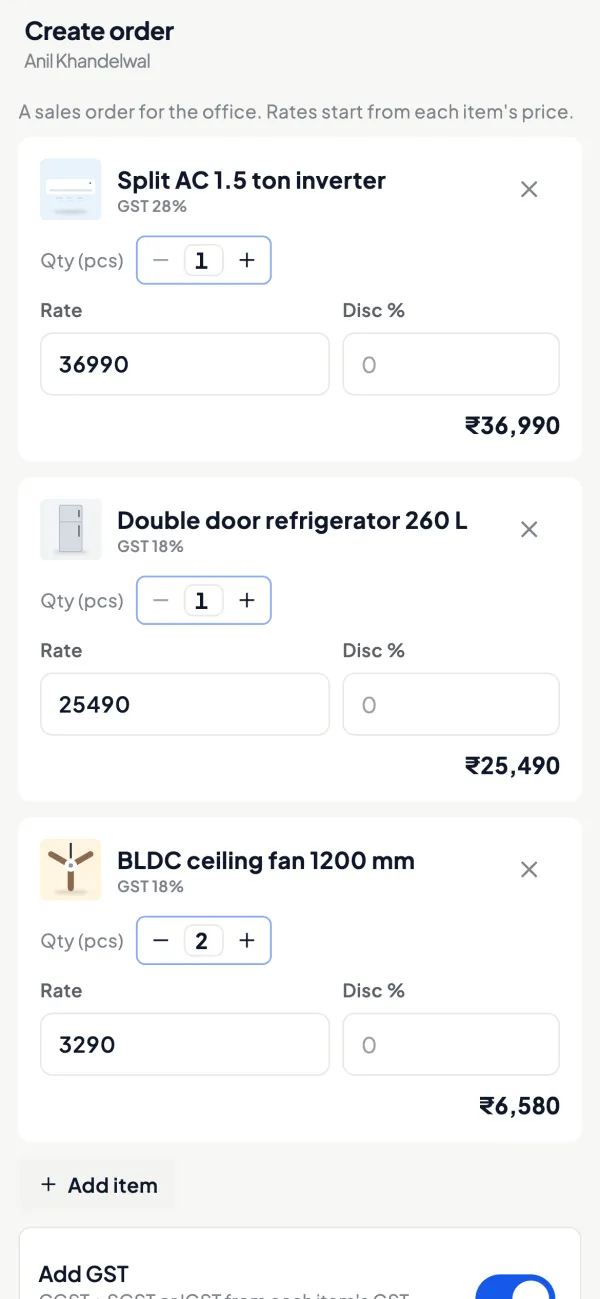
Questions people ask
Can margin ever be more than 100%?
Which should I use for pricing?
Should GST be included when calculating margin?
How do I convert a 30% markup to margin?
Does landed cost change my margin?
Which is higher, markup or margin?
What markup gives a 25% margin?
Is gross margin the same as net profit?
This page is general information for Indian businesses, not tax, legal or financial advice. Rules and rates change — check the official portals or your CA before acting.