Feature
Price lists
When different customers buy at different rates, the rate usually lives in the owner's head, and staff guess. Cashflow OS price lists let you put customers into dealer types such as A, B and C and set layered discount rules, so the rate for each customer fills automatically instead of being remembered.
- Dealer types like A, B, C
- Layered discount rules
- Right rate fills itself
- Fewer calls to the owner
Start free trialBook a free demo
Works with your TallyPrime14-day free trialJaipur team, call +91 70738 53555

Who it’s for
Who uses price lists
- Distributors and stockistsRetailers and sub-dealers on different rates
- WholesalersBulk buyers, regular shops and walk-in traders
- Manufacturers with dealer networksDealer, distributor and project rates
- Building material dealersContractor, builder and retail rates on the same items
- Paint, hardware and electrical dealersBrand-wise and group-wise discounts
- FMCG and pharma distributorsDifferent terms for chemists, kirana and modern trade
- Field sales teamsBooking orders on the road without calling for rates
- Counter staffBilling regulars at their rate, not the list rate
Pain → fix
The problems price lists solves
What goes wrong without it, and what changes with Cashflow OS.
- The problemRates live in the owner's head
Counter staff call the owner for every second order.
With Cashflow OSDealer types with written discount rulesGroup customers into types you name and set the rules once; the team uses them every day.
- The problemSalesmen give the best rate to whoever asks
Margins leak a few rupees an item, every order, all year.
With Cashflow OSThe right rate fills for that dealer automaticallyOnce a customer has a dealer type, the rate fills on the order and the salesman does not decide it.
Sales orders to Tally - The problemStacked discounts worked out on a calculator
12% and then 3% more, done by hand on a busy day, goes wrong.
With Cashflow OSLayered discount rules that combine for youDiscounts can build in layers, for example by dealer type and then by item group.
- The problemQuotations at the wrong rate
A dealer gets a quote at retail rate and the deal stalls.
With Cashflow OSQuotations pick up the dealer's rateMake the quotation for the customer and their dealer-type rate fills on each line.
Quotations - The problemRate changed on an order without anyone noticing
A frontline order goes into Tally at a rate the owner never agreed.
With Cashflow OSOrder approval and roles keep controlFrontline orders can need approval before they go to Tally, and roles limit who can do what.
Team roles and access - The problemEvery new item needs a rate for every customer
One new product means a long list of rates to decide and pass on.
With Cashflow OSRules by group, not item by itemA rule set on an item group or type covers new items in it, so fewer decisions are needed.
What it does
What you can do with price lists
Dealer types you name
How it works. Put customers into types such as A, B and C, or labels that suit your trade, like Distributor, Retailer and Contractor. Each customer's type decides the rate they get.
- Three or four types cover most businesses
- Customers and items are the ones in your Tally
- Change a dealer's type when their volume changes
In practiceA paint distributor in Indore puts 40 large dealers in A, 120 retailers in B and 300 small shops in C.
Layered discount rules
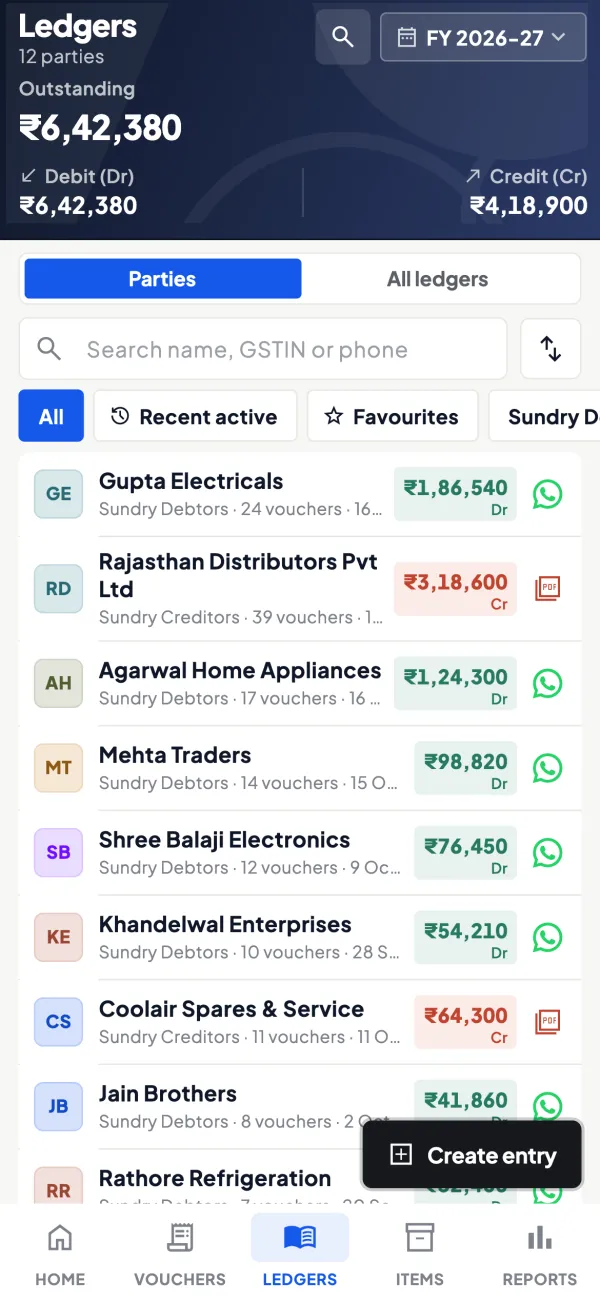
How it works. Set discounts in layers rather than one flat figure, for example a type discount and then an extra discount on a premium range. The layers combine to the effective rate.
- Express how your pricing really works
- No calculator on the counter
- Rules cover new items in the same group
In practiceOn a ₹2,400 bucket, an A dealer gets 12% and then 3% more on the premium range: ₹2,112, then ₹2,048.64.
Rates that fill on orders
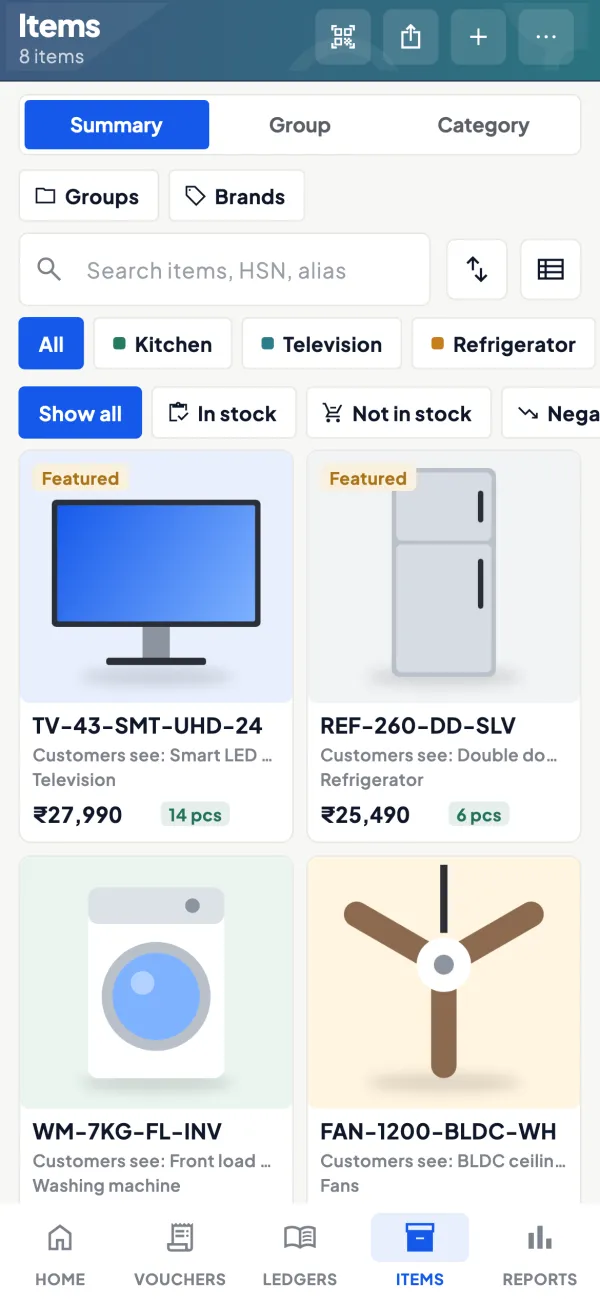
How it works. When the salesman books an order for a customer, the rate for that customer's dealer type fills automatically. Order approval can stay on while the team gets used to it.
- Same rate whichever salesman takes the order
- Fewer calls to the owner from the road
- Orders go to Tally with the agreed rate
In practiceSalesman Vikas books 20 buckets for Mahalaxmi Paints, a B dealer, and each line shows ₹2,163.84 without him working it out.

The same rate on quotations
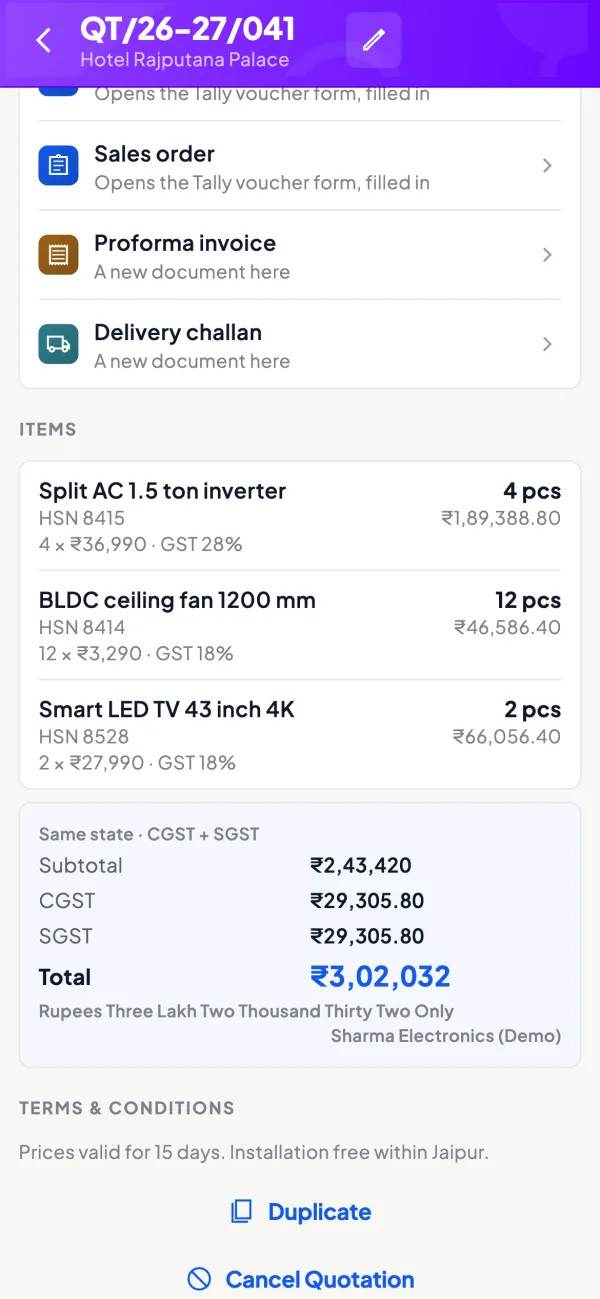
How it works. Quotations made for a customer pick up their dealer-type rate too, so the price quoted and the price billed agree.
- Dealers are quoted at their own rate
- Quotation converts to an order at the same rate
- Branded PDF shared on WhatsApp
In practiceA contractor in category C asks for 50 buckets; the quotation shows ₹2,280 each, ₹1,14,000 before GST, valid for seven days.
Guide
Price lists: the full guide
How it works day to day, who does what, and the points to watch.
The cost of rates in someone's head
Most distributors, wholesalers and dealers sell the same item at several rates: a big dealer gets more off than a small retailer, a contractor gets a project rate, a sub-dealer gets something in between. When those rates are not written anywhere the team can use, three things happen. Salespeople give the best rate to everyone who asks firmly. Counter staff call the owner for every second order. And margins leak quietly. A ₹5 difference on an item that sells 2,000 units a month is ₹10,000 a month, ₹1,20,000 a year, from one item. The guide on price list management for dealers covers how to design tiers.
How price lists work in Cashflow OS
- Dealer types: group customers, for example A, B and C, or any labels that suit your trade.
- Layered discount rules: discounts can build in layers rather than a single flat figure, so you can express how your pricing actually works.
- Automatic rates: once a customer has a dealer type, the rate for that customer fills automatically, so staff do not have to calculate or remember it.
The items and customers are the ones in your Tally books. If you also use Tally's own price levels, our guide on Tally price levels vs price lists explains the difference in approach.
A worked example of layered discounts
A paint distributor sells an emulsion with a list price of ₹2,400 per 20-litre bucket. His structure, as an illustration:
| Dealer type | Type discount | Extra on premium range | Effective rate |
|---|---|---|---|
| A (large dealers) | 12% | 3% more | ₹2,048.64 |
| B (regular retailers) | 8% | 2% more | ₹2,163.84 |
| C (small shops) | 5% | none | ₹2,280.00 |
For an A dealer: ₹2,400 less 12% is ₹2,112, and a further 3% off that is ₹2,048.64. Done by hand on a busy day, at least one of these will be wrong. With the dealer types and rules set once, the salesperson sees the right rate for the dealer he is with. The numbers above are an example of how layers combine, not a recommended discount structure.
Setting it up without disrupting sales
Moving from rates in the owner's head to written price lists is as much a people change as a software change. A sensible order:
- Write down the rates you actually give today for your top 20 items and top 30 customers. Patterns appear quickly: who gets what, and on which items.
- Turn the patterns into dealer types. Most businesses find three or four natural groups.
- Express the differences as rules rather than item-by-item rates, so that a new item does not need a new decision for every customer.
- Assign every active customer a type, starting with the biggest.
- Tell the team, and tell key dealers where it helps. A dealer who knows he is in the A tier because of his volume and payments has a reason to stay there.
Expect a few weeks of exceptions. Note them, and if the same exception keeps coming up, it is a rule you have not written yet.
Who uses it
- Distributors and stockists with retailers and sub-dealers in different tiers.
- Dealers who sell to contractors, sub-dealers and retail customers.
- Manufacturers selling through a dealer network.
- Field sales teams booking orders on the road, where calling the owner for every rate is not practical.
Tips for designing your tiers
- Fewer tiers are better. Three or four types cover most businesses; ten types become impossible to explain.
- Base tiers on behaviour, such as volume and payment record, not on who asks loudest.
- Review tiers every quarter. A dealer who has slipped to 90-day payments may not deserve an A rate.
- Keep schemes separate in your thinking. Time-bound company schemes and your standing dealer discounts are different things; see managing dealer schemes and discounts.
- Keep approval on for frontline orders while the team gets used to the new rates.
What it does not do
- It does not decide your pricing; you set the dealer types and rules.
- It does not change past bills in Tally when you change a rule.
- It does not stop someone with the right access from changing a rate on an entry; use roles and order approval to control that.
- It is a module switched on per company.
This page is general information for Indian businesses, not tax, legal or financial advice. Rules and rates change — check the official portals or your CA before acting.
Set-up
Start using price lists in 4 steps
Works on top of your TallyPrime — nothing to migrate, no second set of books.
- 1
Switch on the price lists module for the company
- 2
Name your dealer types and assign each active customer to one
- 3
Set discount rules in layers, starting with your top items and groups
- 4
Keep order approval on for the first weeks and note exceptions
Buyer’s checklist
What to look for in price lists software
Whatever you choose, check these before you commit.
- Customer groups or tiers you can name to suit your trade
- Discounts that can combine in layers, not just one flat figure
- Rules by item group, so new items do not need rates for every customer
- Rates that fill automatically on quotations and orders
- Works on the same items and customers as your accounting books
- Approval or roles so frontline staff cannot quietly change rates
- Changing a rule does not alter bills already in the books
- Easy to review and change a customer's tier every quarter
Plans
Simple yearly plans
- 14-day free trial on your own books
- 3-year term saves up to 25%
- Premium modules (catalogue, field force, price lists, store…) priced extra
Start free trialGet the price for your business
Compare all plans- Growth₹3,000/year + GSTBooks, reports, outstanding and sharing
- Pro₹5,000/year + GSTEverything in Growth, plus entries into Tally
- Pro+₹7,000/year + GSTEverything in Pro, plus e-invoice and e-way bill
Why Cashflow OS
Why use price lists in Cashflow OS
- Your rates, written downDealer types and rules replace rates remembered by one person.
- Layers that add up correctlyStacked discounts are worked out for you, every time.
- Fills where you sellRates fill on quotations and sales orders made in the app.
- Built on your TallyThe items and customers are those in your TallyPrime books.
- Control with approvalFrontline orders can need approval before they reach Tally.
- Try it first14-day free trial. Price lists are a module priced on top of the plan, + GST.