
Running the business Starting up
Starting a distribution business
A distribution business buys from manufacturers or brands and sells to retailers in a territory. Margins are thin and credit is heavy, so success depends on three things: the right brands, enough working capital, and tight control over collections and stock.
- First-time distributors
- Retailers moving into distribution
- Stockists adding brands
- FMCG and pharma distributors
- Family businesses expanding

On this page 12
How distribution makes money
A distributor earns the difference between the price paid to the company and the price charged to retailers, plus schemes and incentives from the company for hitting targets. In many consumer categories this margin is in single digits, so profit depends on volume, low costs per delivery and collecting on time.
Before you commit, understand your margin structure in detail: base margin, scheme payouts, how and when claims are settled, and who bears freight, damages and expiry.
Getting a brand or company appointment
- Approach the area sales manager or regional office of brands that do not yet have strong coverage in your territory.
- Expect to show: godown space, vehicles or delivery arrangement, salesmen, retailer reach, and financial capacity.
- Companies usually ask for a security deposit and an initial stock order. Read the agreement for territory, targets, credit terms, claim settlement, and termination terms.
- Start with one or two complementary brands that sell to the same retailers, so one delivery trip serves both.
Working out the working capital you need
Example: an FMCG distributor plans monthly sales of ₹30,00,000.
| Item | Days | ₹ needed |
|---|---|---|
| Stock held | 20 days of purchases | 18,40,000 |
| Credit to retailers | 15 days of sales | 15,00,000 |
| Less: credit from company | 7 days of purchases (many companies want advance payment) | −6,44,000 |
| Security deposit with company | One-time | 5,00,000 |
| Vehicles, racks, computer (or rent equivalents) | One-time | Varies |
| Working capital (excluding fixed assets) | about 31,96,000 |
Purchases are taken as about ₹27,60,000 a month (sales less an 8% margin). Underestimating this number is the most common reason new distributors struggle. Read working capital cycle explained.
Setting up operations
- Godown: close to your main market and transport routes, dry, secure, with space to separate damaged and expired stock.
- Delivery: own vehicle or hired, with fixed route days. See delivery management for distributors.
- Sales team: salesmen with defined beats and retailer lists; incentives linked to collection as well as sales.
- Billing: accounting software set up with item master matching the company's codes, GST details and retailer master with GSTIN where registered.
Registrations and compliance
A new distributor typically needs GST registration (companies generally insist on it), a current bank account, Udyam registration, shop and establishment registration, and trade-specific licences such as FSSAI for food or a drug licence for pharma. TDS and labour registrations follow as you grow. See the compliance checklist for a new business.
Credit policy from day one
New distributors often give generous credit to win retailers, then spend the next year chasing money. Decide before you start:
- Credit period by retailer type (for example, cash for new outlets, 7–15 days for established ones).
- Credit limit per retailer, reviewed every quarter.
- No new bill when an old bill is overdue beyond a set number of days.
- Who can approve exceptions — the owner, not the salesman.
A written credit control policy is easier to enforce than one in your head.
Claims, damages and expiry
Many new distributors lose a large part of their margin in the fine print. Companies pay scheme incentives, rate differences and display payments through claims that you must file with supporting documents. Damaged and expired goods may be taken back only under specific terms. Set up a claims register from the first month: claim type, period, amount, documents sent, date filed and amount received. Review it monthly with the company's sales officer. Keep damaged and near-expiry stock in a separate area and a separate godown in your books, so it is not sold by mistake and can be returned or claimed in time.
The first 90 days
- Week 1–2: masters set up, opening stock received and checked, beats assigned.
- Week 3–6: daily review of orders, deliveries, collections and stock. Fix item names and rates as issues appear.
- Week 7–12: first scheme claims filed with the company; first retailer statements sent; review which beats are profitable.
- Day 90: compare actual working capital used with your plan, and adjust credit or stock levels.
Running it with Tally and Cashflow OS
Many distributors keep books in TallyPrime. Cashflow OS adds a mobile and web layer: salespeople take orders with items, photos and price-list rates, orders can need approval and post to Tally as sales orders, field visits and collections are recorded, and the owner sees outstanding with ageing and daily sales. Party statements go out on WhatsApp. Roles keep salespeople to their own customers. See the page for distributors.
Avoid these
Common mistakes
- MistakeUnderestimating working capitalDo this instead
Work it out from days of stock, credit to retailers, credit from the company and deposits, and keep a cushion for delays.
- MistakeGenerous credit to win retailersDo this instead
Fix credit periods and limits by retailer type from day one, and let only the owner approve exceptions.
- MistakeNot filing scheme and damage claims on timeDo this instead
Keep a claims register with type, period, amount, documents and dates, and review it monthly with the company.
- MistakeTaking too many brands too earlyDo this instead
Start with one or two complementary brands that sell to the same retailers, and add more once cash is stable.
Keep handy
Checklist
Starting a distribution business — 8 checks. Tick them as you go.
In Cashflow OS
How Cashflow OS helps
Cashflow OS puts your TallyPrime books on every phone in the team. Where it fits this topic:
Orders from the field into Tally
Salespeople take orders with items, photos and price-list rates; orders can need approval and post to Tally as sales orders.
See Sales orders to Tally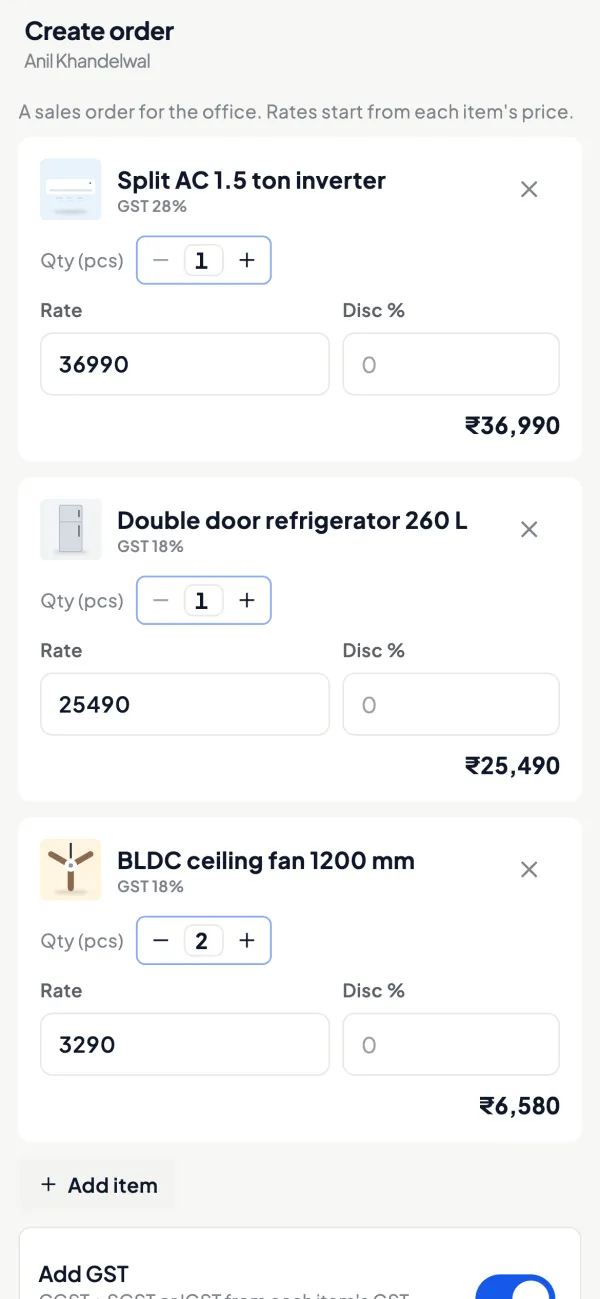
Outstanding and daily sales for the owner
The owner sees outstanding with ageing and daily sales from the Tally books, and party statements go out on WhatsApp.
See Outstanding receivables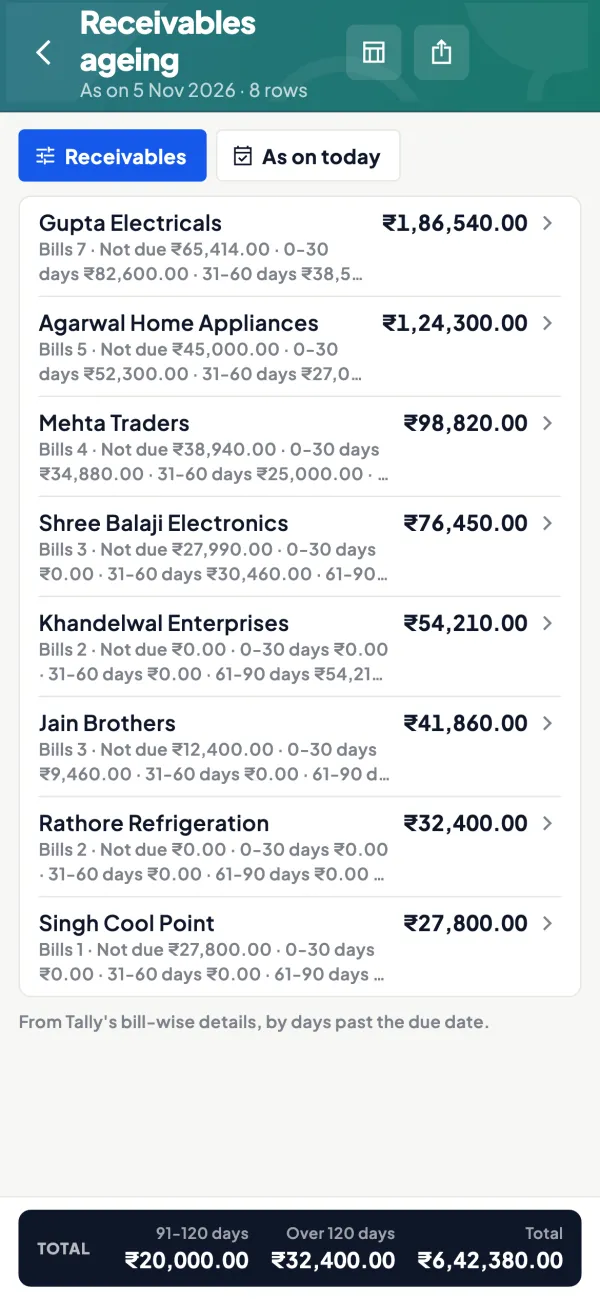
Questions people ask
How much money do I need to start a distribution business?
What margin does a distributor earn?
Is GST registration needed for a distributor?
How many brands should a new distributor take?
Do I need a godown to start?
How do I choose which brand to approach?
Should I give credit to new retailers?
When should I check whether the plan is working?
This page is general information for Indian businesses, not tax, legal or financial advice. Rules and rates change — check the official portals or your CA before acting.