Tally how-tos TallyPrime
Alternate units in Tally, explained
Alternate units let one stock item be counted in two units, such as boxes and pieces, with a fixed conversion. You can buy in one unit, sell in the other, and Tally keeps stock correct in both.
- Tile and sanitaryware dealers
- Hardware wholesalers
- Paint and FMCG distributors
- Billing staff
- Accountants setting up items

On this page 12
The problem they solve
A tile dealer buys in boxes but some customers want square feet. A hardware wholesaler buys screws by the carton and sells packets. A paint shop buys a case of 4 tins and sells single tins. If the item has only one unit, someone converts by hand on every bill, and stock goes wrong whenever they forget. Alternate units make the conversion part of the item, so it happens automatically.
Base unit, alternate unit and conversion
When creating a stock item with alternate units enabled, you set:
- Base unit: the main unit Tally stores stock in, for example Nos (pieces).
- Alternate unit: the second unit, for example Box.
- Conversion: how many base units make one alternate unit, for example 1 Box = 12 Nos.
Each item can have its own conversion. A box of switches might hold 10, a box of sockets 20. That flexibility is the main difference from compound units.
Alternate units vs compound units
| Alternate unit | Compound unit | |
|---|---|---|
| What it is | A second unit on an item, with the conversion set per item | A single unit defined as a combination, such as Box of 12 Nos |
| Conversion | Can differ for every item | Fixed in the unit itself, same for all items using it |
| Best for | Items whose pack sizes vary | A standard pack used across many items |
If every item you sell comes in boxes of 12, a compound unit is simpler. If pack sizes vary, use alternate units.
Worked example: tiles
A floor tile of 600×600 mm comes 4 tiles to a box, covering about 15.5 sq ft per box. The dealer sets base unit Box and alternate unit Sq Ft with the conversion for that item. A builder orders 1,550 sq ft; the invoice shows 100 boxes, the quantity actually handed over, alongside 1,550 sq ft. Stock reduces by 100 boxes. A retail customer ordering 3 boxes is billed in boxes directly. Note the conversion is per item; a 300×300 mm wall tile has a different coverage per box.
For trades where customers think in area and you stock in boxes, round to full boxes at the order stage; partial boxes create fractional stock that never matches a physical count.
Billing in either unit
In an invoice, Tally shows quantity in both units and lets you bill per either unit. Rates can be per base or per alternate unit: a carton of 50 packets at ₹1,500 is the same as ₹30 per packet. Decide which unit rates are quoted in for each trade and stay consistent. The unit and quantity shown on the invoice matter for GST reporting too: the HSN summary reports a unit quantity code (UQC), so check how your units map to UQCs with your accountant; see HSN summary in GSTR-1.
Setting up units for a new item: a checklist
- Ask the godown how the item arrives (carton, box, bag, roll) and how it leaves (piece, box, metre, kg).
- Choose the base unit as the unit you count and sell in most, ideally one that never needs fractions.
- Confirm the conversion from the supplier's packing, not from memory, and write it into the item name if packs vary.
- Check the unit's decimal places: pieces should have none, kg or metres may need some.
- Enter one test purchase and one test sale, then check the stock summary shows sensible figures in both units.
Ten minutes of care at item creation saves hours of stock reconciliation later.
Common mistakes
- Changing the conversion after stock exists. Old stock was counted under the old conversion; changing it later distorts quantities. Create a new item for a new pack size instead.
- Using the wrong unit at purchase. Entering 10 when the supplier sent 10 cartons, not 10 pieces, inflates or deflates stock dramatically.
- Fractional stock like 23.4 boxes that nobody can count. Sell full alternate units or open packs deliberately.
- Not training staff on which unit to type. A one-line note on each item name, such as "(Box of 12)", helps.
Clean units are a key part of reliable stock; see inventory software basics.
Units on the phone with Cashflow OS
Cashflow OS reads your items and units from Tally through the connector, so stock and item summaries on the phone follow the same units. Once writing is switched on, units and stock items can also be created or altered from the app and saved into Tally. Orders and vouchers created in the app use the item's units from Tally. See create vouchers from phone.
Avoid these
Common mistakes
- MistakeChanging the conversion after stock existsDo this instead
Create a new item for the new pack size, so old stock keeps the conversion it was counted under.
- MistakeEntering pieces when cartons were receivedDo this instead
Train staff on which unit to type, and add the pack size to the item name, such as (Box of 12).
- MistakeFractional stock like 23.4 boxesDo this instead
Sell full alternate units, or open packs deliberately with an entry, so stock can be counted.
- MistakeUnits that do not map to GST UQCsDo this instead
Check with your accountant how each unit maps to a UQC for the HSN summary in GSTR-1.
Keep handy
Checklist
Alternate units in Tally, explained — 7 checks. Tick them as you go.
In Cashflow OS
How Cashflow OS helps
Cashflow OS puts your TallyPrime books on every phone in the team. Where it fits this topic:
Same units on the phone
Items and units are read from Tally, so stock and item summaries on the phone follow the same units, and orders made in the app use the item's units.
See Tally on mobile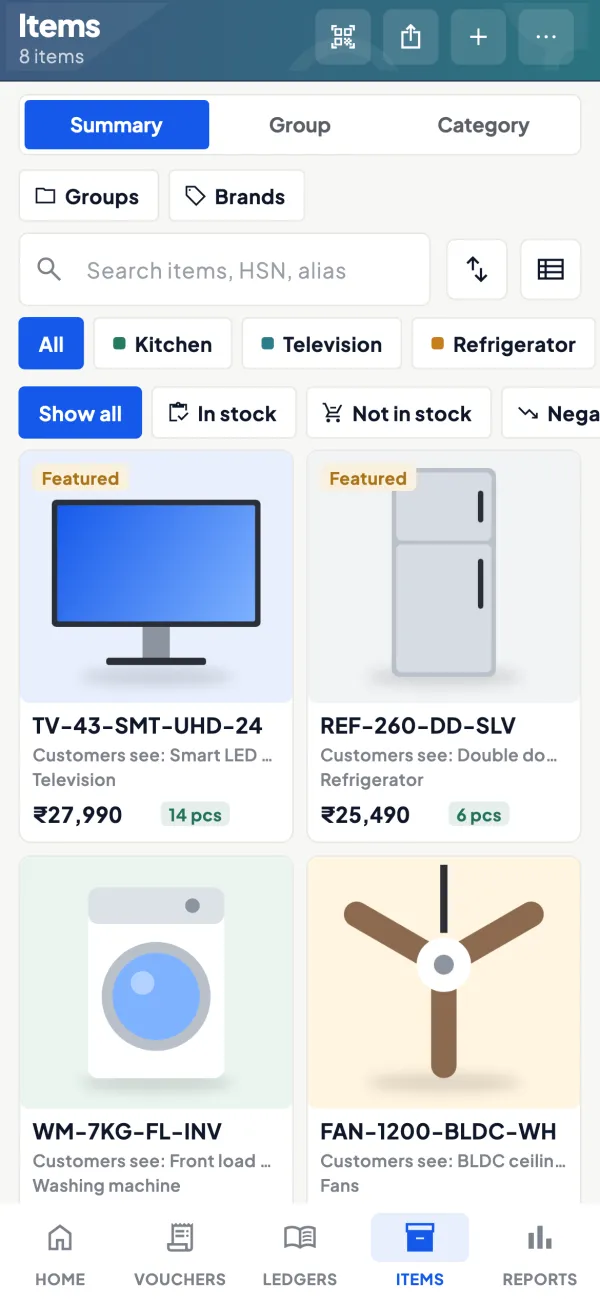
Create units and items from the app
Once writing is switched on, units and stock items can be created or altered from the app and saved into Tally.
See Create Tally vouchers from your phone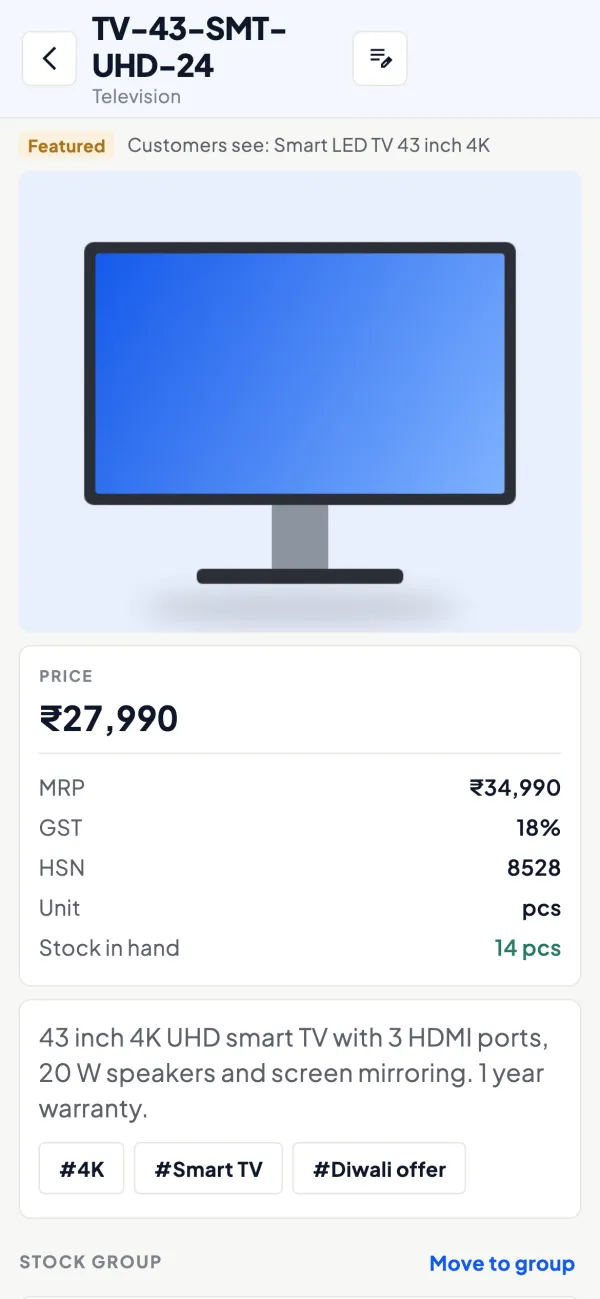
Questions people ask
Can an item have more than two units?
Which unit should be the base unit?
What if the supplier changes pack size?
Do alternate units affect GST rates?
Can I quote rates per box or per piece?
How are alternate units different from price levels?
Can I add an alternate unit to an item that already has stock?
Do alternate units help with stock counts?
This page is general information for Indian businesses, not tax, legal or financial advice. Rules and rates change — check the official portals or your CA before acting.