Stationery and books
Stationery and book businesses: the school season and returns
For a stationery and book business, the year is decided in a few weeks around school reopening. The rest of the year is office supplies, small retail sales and chasing schools and offices for payment.
- Season rush, faster counter
- School and office dues tracked
- Barcodes on fast movers
- Works on your own Tally
Start free trialBook a free demo
Works with your TallyPrime14-day free trialJaipur team, call +91 70738 53555

Built for stationery and book businesses
Who it’s for
- Stationery and book retailersCounter sales all year, a rush at school reopening
- School booklist shopsSets per school and class, packed before the season
- Stationery wholesalers and distributorsRetailers on seasonal credit, brand schemes
- Book distributorsPublisher terms, returns and credit notes to reconcile
- Office supply dealersMonthly accounts with offices, banks and hospitals
- Art and craft suppliersThousands of small SKUs, colours and pack sizes
- Competitive exam book sellersEditions that change every year, coaching institute orders
Pain → fix
The problems we fix
The everyday headaches of stationery and book businesses, and what changes when the books are on every phone.
- The problemThousands of low-value SKUs
Nobody can count every eraser, and missing stock is only noticed at year end.
With Cashflow OSBarcode labels on high-value and fast-moving itemsPrint labels per item on thermal or A4 sheets and scan with the phone camera at the counter and during counts.
See how it works - The problemSchools and offices paying late
Steady accounts, slow payment cycles, and bills from three months ago still open.
With Cashflow OSBill-wise dues and ageing for each accountSee every school's and office's unpaid bills and their age from your Tally books, and remind them before their payment cycle.
See how it works - The problemBook returns and publisher settlements
Goods go back on challans, credit notes come months later, and the two never quite match.
With Cashflow OSPublisher ledgers in Excel to match credit notesExport a publisher's ledger and reports to Excel or PDF and tick each return against the credit note received.
See how it works - The problemOffice accounts on a fixed rate list
Each office and retailer has agreed rates, and the counter keeps billing at the printed price.
With Cashflow OSPrice lists by customer type fill rates for youSet customer types such as A, B and C with layered discount rules, and rates fill automatically in orders and documents.
See how it works - The problemRetailer orders written on paper in the season
Salesmen come back with order books that someone has to type into Tally at night.
With Cashflow OSSalesmen book orders in the app, straight to TallySales orders from the field go into Tally, after your approval if you switch that setting on.
See how it works - The problemStatements asked for again and again
Schools and offices want their account before they release payment, every single time.
With Cashflow OSParty statements on WhatsApp in a tapSend a statement as a PDF in Tally's format or as a simple Hindi हिसाब page.
See how it works
Features
How Cashflow OS works for stationery and book businesses
Barcodes where they pay off
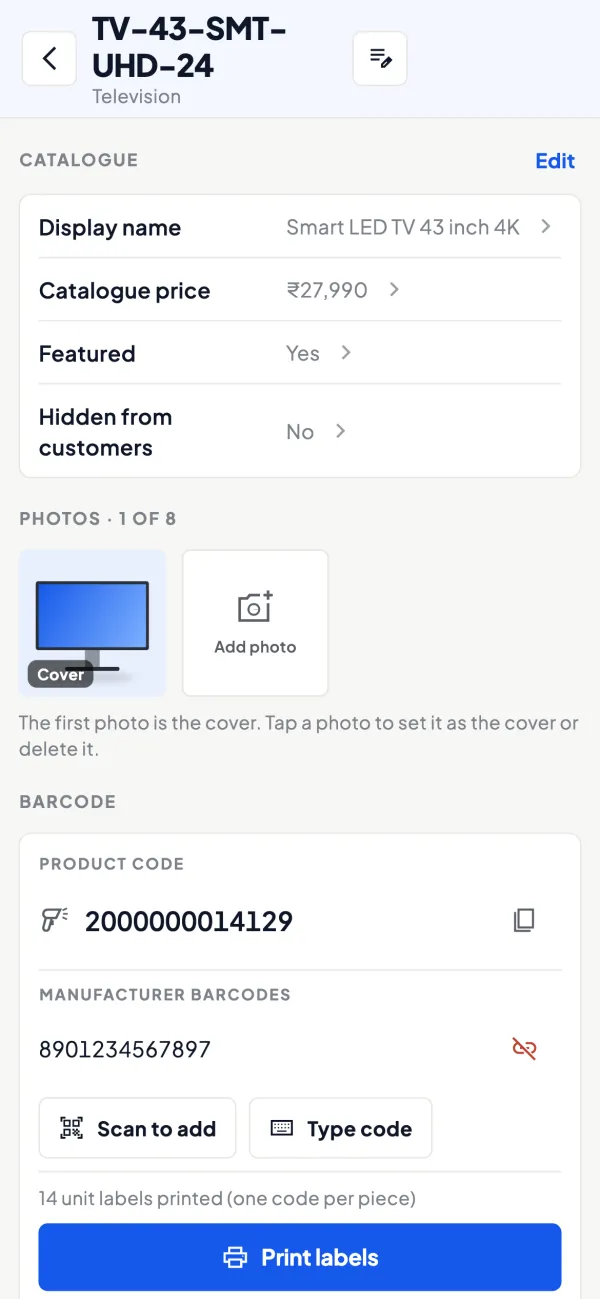
How it works. Label the items that matter by value and speed: calculators, geometry boxes, registers, art kits. Print per item on thermal or A4 sheets and scan with the phone camera.
- Scan instead of searching for 'pen blue 0.7'
- Faster counts of the top items by value
- Labels printed before the season starts
In practiceBefore school reopening you label your top 500 items. During the rush, counter staff scan rather than hunt through look-alike packs.
Retailer orders in the season
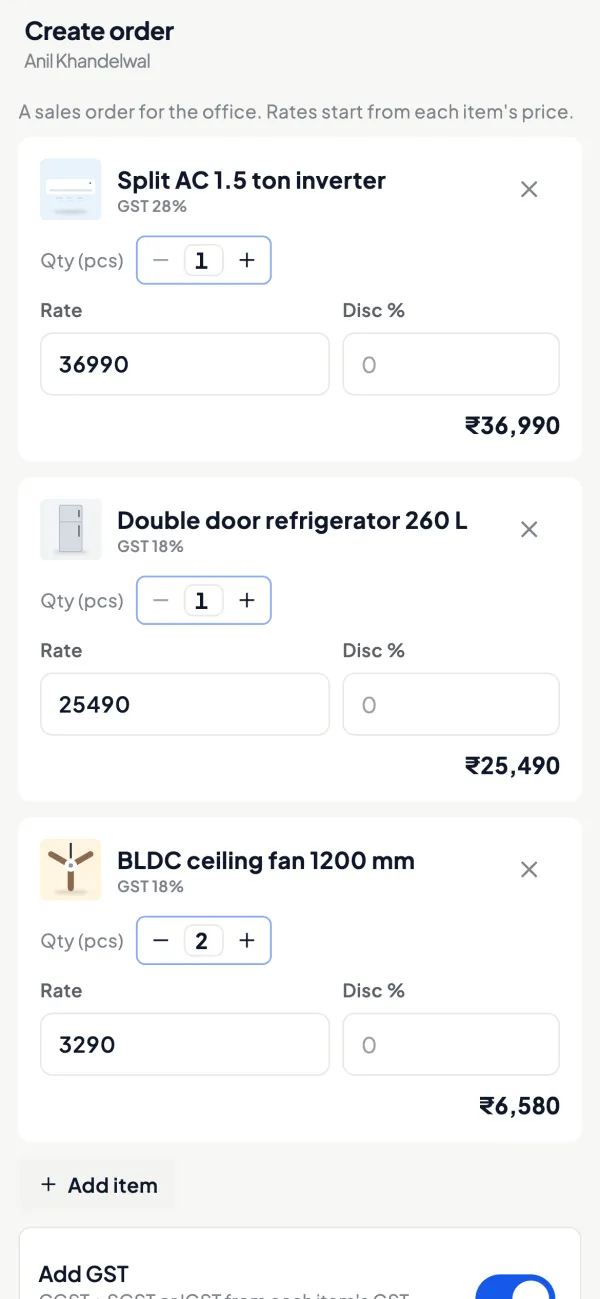
How it works. Distributors give salesmen the staff app with items, price lists and their own customers. Orders go to Tally as sales orders, with owner approval if you want it.
- No order books typed in at night
- Salesmen see their customers, not your accounts
- Rates come from the customer's price list
In practiceYour salesman visits 18 retailers in Bareilly in a day. By evening their orders are waiting for your approval and then go into Tally.
School and office accounts under control
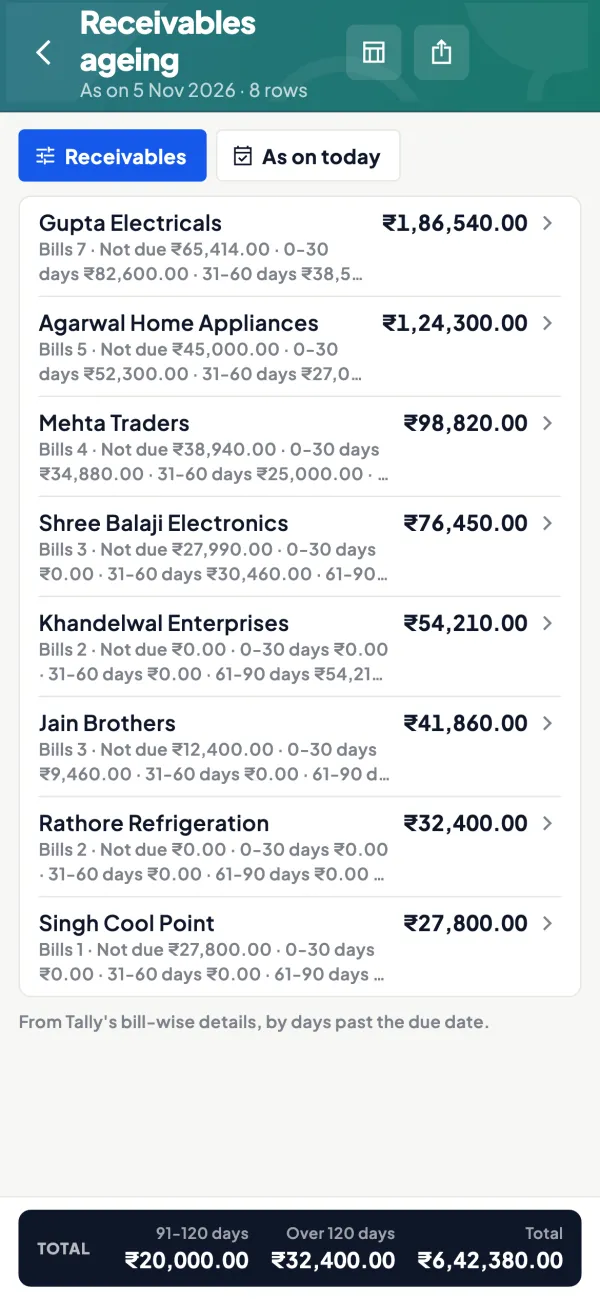
How it works. Bill-wise outstanding and ageing come from Tally, and statements go out on WhatsApp before each account's payment cycle.
- Oldest unpaid bills of each account first
- Statements in Tally's format or a Hindi हिसाब page
- Reminders sent from the phone
In practiceA hospital's monthly supply account has ₹38,600 pending across three months. You send the statement a week before their accounts team makes payments.
Publisher accounts you can reconcile
How it works. Open a publisher's ledger for any date range, even across financial years, and export it to Excel or PDF to match return challans with credit notes.
- Ledger for any period in Excel
- Returns and credit notes side by side
- Uncredited returns found before they are forgotten
In practiceMatching April to March, you find ₹14,250 of returned titles that the publisher has not yet credited and send them the list.
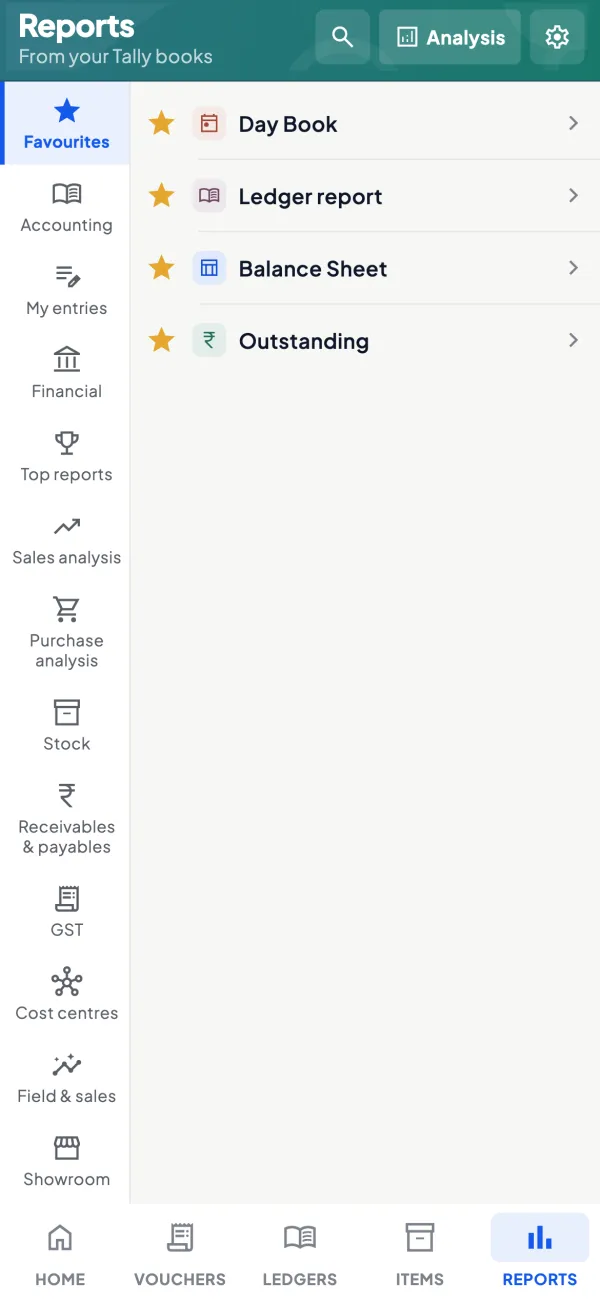
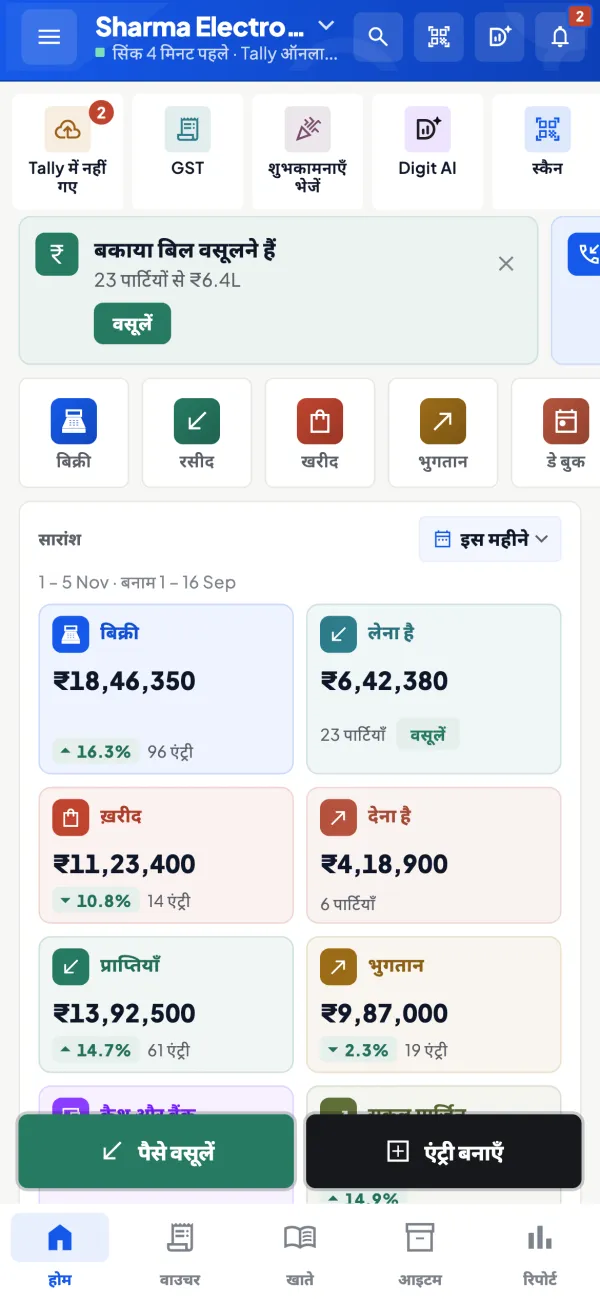
The shop's numbers in Hindi or English
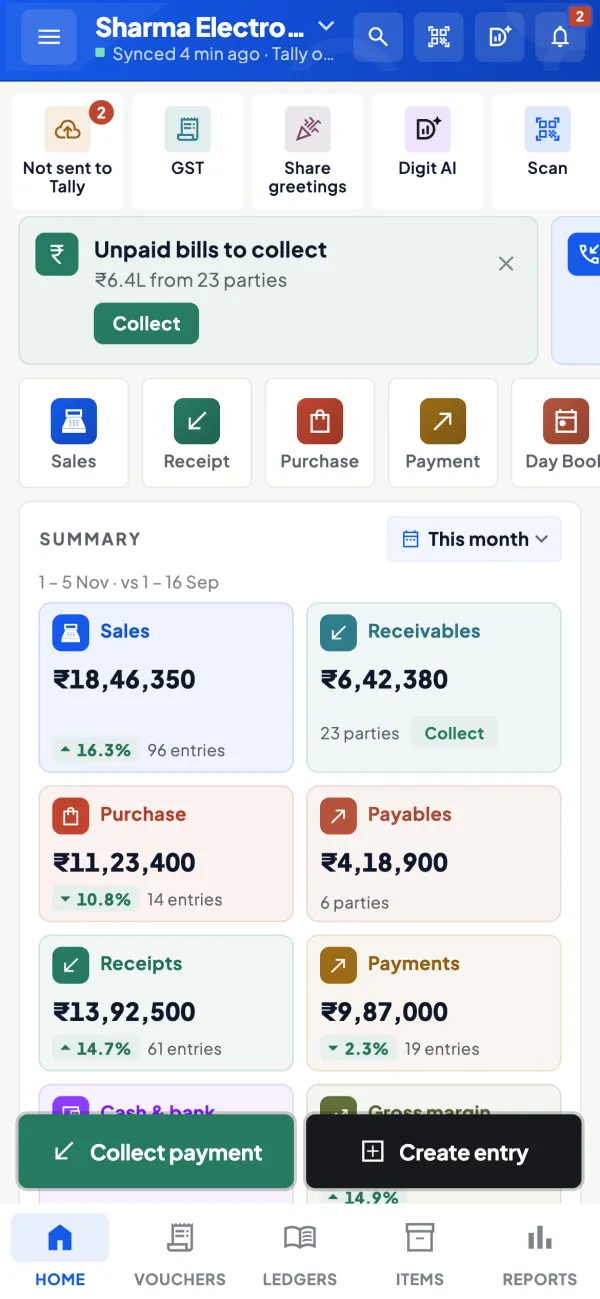
How it works. Home shows today's sales, receipts and cash against the period before. Each person picks English or Hindi.
- Family members see the day in their own language
- Evening summary as a push notification
- Same numbers as Tally
In practiceYour father checks the day's ₹1,12,000 of season sales in Hindi while you review the school dues in English.
Know your trade
A guide for stationery and book businesses
How the business works, where money gets stuck, and the GST points to watch.
Who buys and who supplies
Stationery comes from brand distributors (pens, notebooks, art material, office products) and from wholesalers in city markets. Books come from publishers and their distributors: textbooks from school and board publishers, reference and competitive exam books, and general titles. Many shops also stock school bags, uniforms or uniform accessories, and gift items.
Customers include students and parents, schools buying in bulk, offices on monthly supply accounts, coaching institutes, and smaller retailers who buy from a wholesaler. Schools often recommend a booklist and sometimes nominate specific shops.
The school season
Most of the year's book and stationery sales happen in the weeks around the new academic session, which differs by board and region. Shops prepare booklist sets per school and class, stock notebooks and covers in large quantities, and extend hours. Distributors supply retailers on credit for the season and expect payment when it ends.
Preparation matters more than the rush itself. Collect booklists early, confirm editions with publishers, pack sets in advance, and decide credit for each retailer before the season starts. Our guide on season stock planning uses the same method.
| Before the season | During | After |
|---|---|---|
| Collect booklists, confirm editions | Sell sets, track shortages daily | Return unsold titles to publishers |
| Fix retailer credit limits | Reorder fast items early | Collect season dues |
Publisher terms and returns
Publishers give discounts on the printed price, and many accept returns of unsold copies within a period, subject to condition and their policy. Returns are a big part of book trade accounting: goods go back, credit notes come later, and the difference between what you think you returned and what the publisher credited needs reconciling. Keep a return challan for each lot, and match it with the publisher's credit note. New editions make old ones unsaleable, so return them in time.
Office supply accounts
Offices, banks, hospitals and institutes buy stationery monthly on credit, often against a purchase order and with a fixed rate list. These are steady customers but slow payers, and they need correct GST invoices with their GSTIN. A monthly statement and a reminder before their payment cycle helps. See invoice payment terms for wording that sets expectations clearly.
School orders and institutional terms
Some schools buy books and stationery centrally and supply them to students, while others give the booklist to parents and let them buy from any shop. When a school orders centrally, the shop receives a purchase order, supplies in lots by class, and bills the school, which may pay only after collecting fees from parents. Rates, discounts and delivery dates should be agreed in writing, along with what happens to unsold copies.
Coaching institutes and colleges have their own cycles tied to batch start dates and exams. For each institutional customer, keep a simple record of the agreed rate list, the credit period, and the person who approves payment. Send the statement before their accounts team closes the month. Supplying the next season's order while last season's bill is unpaid is how a shop ends up financing a school's working capital.
Many small SKUs
A stationery shop may carry thousands of items worth a few rupees each. Counting them is hard, and missing items rarely get noticed. Barcodes on high-value and fast-moving items, sensible stock groups (writing, paper, art, office, school), and a periodic count of the top items by value keep things under control without counting every eraser.
GST points
Printed books, notebooks, exercise books, pens, office products and school bags fall under different HSN codes, and some printed books have been treated as exempt while many stationery items are taxable. Rates for some items have been revised, so check the current treatment of each on the GST portal. If you sell both exempt and taxable goods, input credit rules require care; ask your accountant. This is general information, not tax advice.
Cashflow OS and Tally for stationery and books
Cashflow OS syncs your TallyPrime books. Barcodes and labels can be printed per item and scanned with the phone camera at a busy counter. School and office accounts show outstanding and ageing on the phone, and statements go out on WhatsApp. Distributors can give salespeople a staff app with price lists, orders and collections for retailers. Reports in Excel and PDF help reconcile publisher accounts. See reports in Excel and PDF.
This page is general information for Indian businesses, not tax, legal or financial advice. Rules and rates change — check the official portals or your CA before acting.
Set-up
Up and running in 4 steps
No new software to learn for your accountant — Tally stays as it is.
- 1
Install the Tally Connector on the PC where TallyPrime is open
- 2
Sign in with your mobile number and scan the connector's QR
- 3
Print barcode labels for your top items before the season
- 4
Invite counter staff and salesmen with a link and a role
Buyer’s checklist
What to look for in software for stationery and book businesses
Whatever you choose, check these before you commit.
- Barcode labels and camera scanning for a busy counter
- Bill-wise outstanding for schools, offices and retailers
- Ledger reports in Excel to reconcile publisher returns and credit notes
- Rate lists per customer type, so agreed rates are billed
- Salesman orders that reach your books without retyping
- Statements customers can read, in English or Hindi
- Correct GST per item, with GSTR-1 views your accountant can check
- Works with your existing Tally books
Plans
Simple yearly plans
- 14-day free trial on your own books
- 3-year term saves up to 25%
- Premium modules (catalogue, field force, price lists, store…) priced extra
Start free trialGet the price for your business
Compare all plans- Growth₹3,000/year + GSTBooks, reports, outstanding and sharing
- Pro₹5,000/year + GSTEverything in Growth, plus entries into Tally
- Pro+₹7,000/year + GSTEverything in Pro, plus e-invoice and e-way bill
Why Cashflow OS
Why stationery and book businesses choose Cashflow OS
- Made for many small itemsBarcodes per item or per piece, with thermal or A4 printing and camera scanning.
- Season orders without paperSalesmen book retailer orders that go into Tally, with approval if you want it.
- Accounts that pay on timeBill-wise dues, ageing and statements for every school and office.
- Publisher reconciliationLedgers for any period, exported to Excel or PDF.
- Hindi, EnglishEveryone in the shop uses the app in the language they read best.
- 14-day free trialTry it before the season on your own Tally data.