Running the business Stock planning
Festive season stock planning
For many Indian traders, the festive months bring a large share of the year's sales. Plan stock from last year's item-wise sales, buy in stages rather than all at once, line up cash for the peak, and have a plan for what is left after the season.
- Retailers and showrooms
- Electronics and appliance dealers
- Garment and gift traders
- Distributors and wholesalers
- Sweets and FMCG traders

On this page 11
Know your seasons
The festive calendar differs by trade and region, but most businesses plan around a few peaks:
| Period (approximate) | Occasions | Trades that feel it most |
|---|---|---|
| August–September | Raksha Bandhan, Onam, Ganesh Chaturthi | Gifts, sweets and dry fruits, garments, electronics in Kerala and Maharashtra |
| September–October | Navratri, Durga Puja, Dussehra | Garments, jewellery, two-wheelers, appliances, especially in Gujarat and West Bengal |
| October–November | Dhanteras, Diwali, Bhai Dooj, Chhath | Almost every consumer trade: electronics, kitchenware, paints, lighting, sweets, FMCG, gifts |
| November–February | Wedding season | Jewellery, garments, furniture, appliances, kitchenware, gifting |
| January | Makar Sankranti, Pongal, Lohri, Bihu | Regional demand for food, garments, kites, agricultural goods |
| March–April | Holi, Ugadi, Gudi Padwa, Baisakhi, Vishu | Colours and sweets, vehicles and appliances in some states |
Dates move every year with the lunar calendar. Mark the actual dates for the coming year as soon as they are known.
Start from last year's item-wise sales
Guesswork is the main cause of festive overstock. Pull last year's sales for the six weeks before and two weeks after the main festival, item by item. For each item, note:
- Quantity sold in the season vs a normal month.
- Stock-outs: items that ran out early (lost sales).
- Leftovers: items still in stock two months later.
- Margin earned after schemes and discounts.
Then adjust for this year: price changes, new brands or models, and the general mood in your market. If a festival falls earlier this year, your buying must move earlier too.
Buy in stages, not all at once
| When | What to buy |
|---|---|
| 8–10 weeks before | Fast sellers with long supplier lead times; items with confirmed supplier schemes |
| 4–6 weeks before | Main bulk of proven items, based on early enquiries and orders |
| 1–3 weeks before | Top-ups on items actually moving; avoid new experiments |
| Festival week | Only emergency top-ups from nearby suppliers |
Staging protects you if demand is weaker than expected and frees cash for top-ups on what is really selling. Raise reorder levels temporarily for fast items; see reorder levels and safety stock.
Plan the cash before you plan the stock
Example: an electronics and appliances dealer normally holds ₹40,00,000 of stock. For Diwali, the plan is to hold ₹70,00,000 at the peak.
| Source of the extra ₹30,00,000 | ₹ |
|---|---|
| Extended supplier credit on festive schemes | 12,00,000 |
| Additional use of CC limit (within drawing power) | 10,00,000 |
| Collections pushed from existing debtors in August–September | 8,00,000 |
If you cannot see where the cash comes from, reduce the plan. Remember that advance tax, GST and festive bonuses also fall in this period. See cash flow management for MSMEs.
Schemes, dealers and credit
- Supplier schemes: calculate the real benefit after the cost of holding extra stock. A 3% scheme on goods that sell 60 days later may be worth less than it looks.
- Dealer schemes you offer: set clear dates and slabs and record them in the books properly. See managing dealer schemes and discounts.
- Credit: festive buying pushes retailers to ask for longer credit. Agree limits in advance, and make the first post-festival collection round a priority.
After the festival: clear leftovers early
Seasonal items — decorative lights, gift packs, festival-specific packaging — lose value fast after the day. Count leftovers within a week, offer them to dealers in other regions whose festivals come later, run a clearance, or arrange returns with suppliers who allow them. Leftover stock carried into the next year ties up cash and often ends as dead stock.
Then review the season while it is fresh. Within two weeks, list for each main item: quantity bought, quantity sold, leftovers, stock-outs and the margin after schemes. Note which suppliers delivered on time and which did not. This one-page review is the starting point for next year's plan, and it is far more reliable than memory twelve months later.
Planning with Tally and Cashflow OS
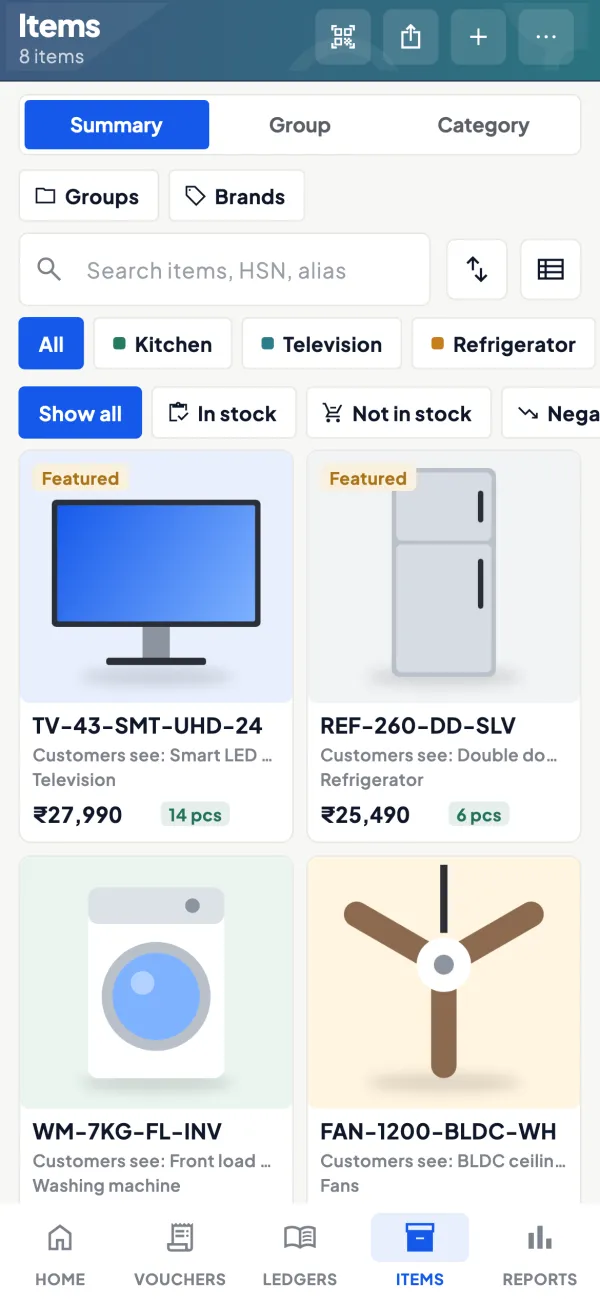
Cashflow OS lets you pull last year's festive period from Tally with a custom date range and compare it with this year. Stock and item summaries, top customers, and bill-wise outstanding with ageing help you plan buying and chase collections before the season. During the peak, salespeople can share an online catalogue link and take sales orders with price list rates, which post to Tally. See online catalogue.
Avoid these
Common mistakes
- MistakeBuying the whole season's stock at onceDo this instead
Buy in stages and keep the final purchases for items that are actually moving.
- MistakeAccepting every supplier schemeDo this instead
Work out the scheme benefit after the cost of holding extra stock and the risk of leftovers, item by item.
- MistakePlanning stock without planning cashDo this instead
List where the extra money comes from: supplier credit, CC limit within drawing power, collections. If it isn't there, cut the plan.
- MistakeCarrying seasonal leftovers into next yearDo this instead
Count leftovers within a week and clear them, return them or sell to regions whose festivals come later.
Keep handy
Checklist
Festive season stock planning — 8 checks. Tick them as you go.
In Cashflow OS
How Cashflow OS helps
Cashflow OS puts your TallyPrime books on every phone in the team. Where it fits this topic:
Last season vs this season
Custom date ranges let you pull last year's festive period from Tally and compare it with this year, with stock and item summaries and top customers.
See Financial reports from Tally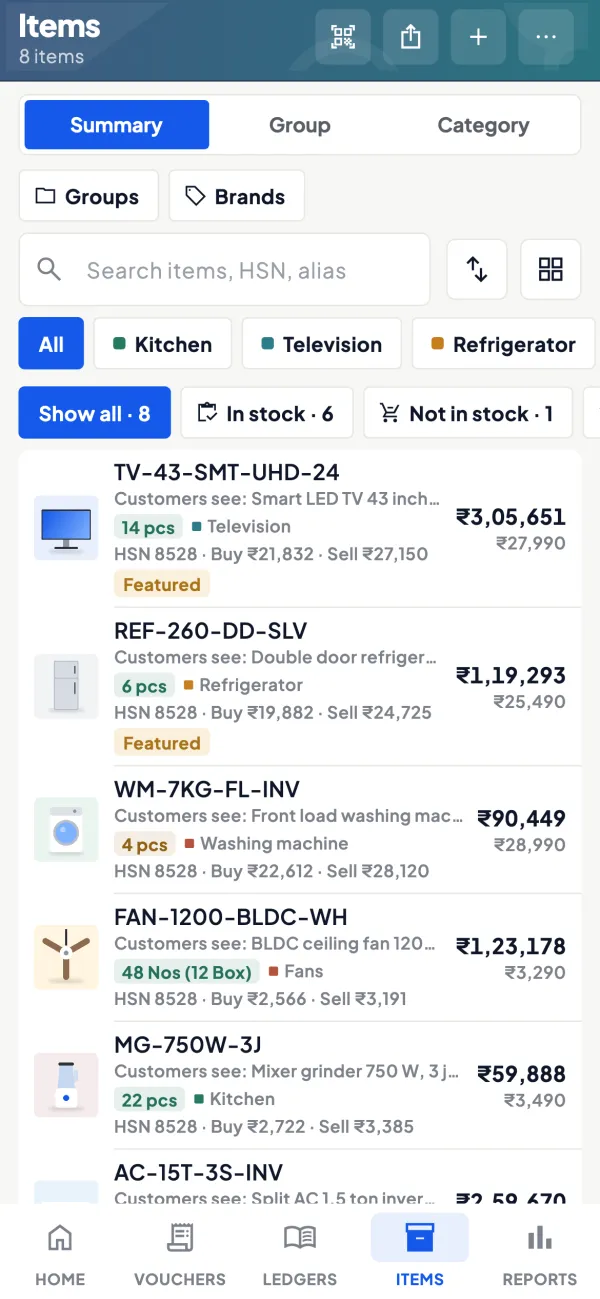
Collections and catalogue in the peak
Bill-wise outstanding with ageing helps chase collections before the season, and salespeople can share an online catalogue link and take orders that post to Tally.
See Online catalogue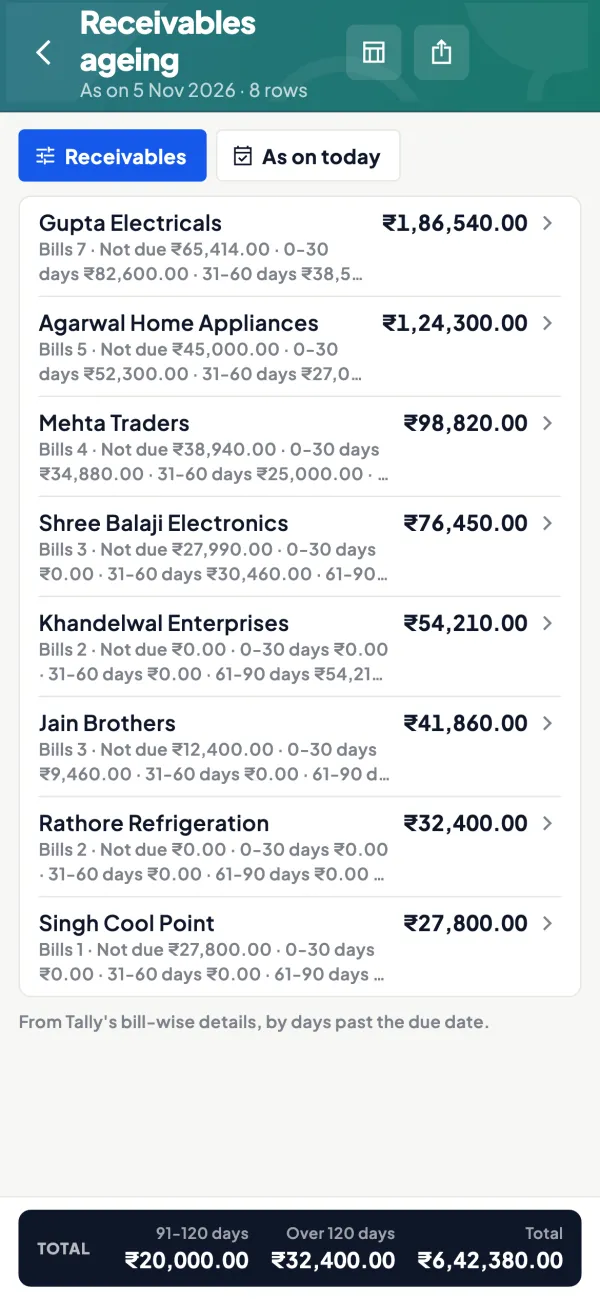
Questions people ask
How early should I start buying for Diwali?
How do I avoid leftover festive stock?
Should I accept every supplier festive scheme?
What about regional festivals?
How do I use stock-outs from last year?
Should reorder levels change in the festive season?
When should the season review be done?
What happens if a festival falls earlier this year?
This page is general information for Indian businesses, not tax, legal or financial advice. Rules and rates change — check the official portals or your CA before acting.