Auto parts
Auto parts dealers: part numbers, fitment and garage credit
An auto parts business sells thousands of part numbers, each fitting only certain vehicles, mostly to garages and mechanics who buy on credit and return what does not fit.
- Find parts by number fast
- Garage dues bill by bill
- Route orders into Tally
- Stays in your Tally
Start free trialBook a free demo
Works with your TallyPrime14-day free trialJaipur team, call +91 70738 53555
Built for auto parts dealers
Who it’s for
- Spare parts retailersCounter and phone orders from local mechanics
- Parts distributorsRange orders to retailers and garages on fixed credit days
- Genuine parts dealersA vehicle maker's parts through its authorised channel
- Two-wheeler parts shopsFast-moving small parts, many bills a day
- Commercial vehicle partsTruck and bus parts for fleet owners and transport garages
- Tractor and farm machinery partsSeasonal demand around sowing and harvest
- Auto electricals and batteriesParts, batteries and lubricants sold together
- Multi-bay garages with a parts counterParts bought, fitted and billed with labour
Pain → fix
The problems we fix
The everyday headaches of auto parts dealers, and what changes when the books are on every phone.
- The problemCounter staff hunting for the right part number
The mechanic is on the phone, the senior counter man is on leave, and nobody can find the item.
With Cashflow OSSearch your Tally items by part number on the phoneIf the part number is in the item name or code in Tally, anyone can find it, with your own display name beside it.
See how it works - The problemMechanic owes ₹38,000 across 45 small bills
A running total hides which bills are three months old and which were yesterday's.
With Cashflow OSBill-wise outstanding and ageing for every garageSee which bills are pending and how old they are, and share the statement on WhatsApp.
See how it works - The problemWrong part picked and sent with the delivery boy
Two brake pads look alike; the wrong one goes out and comes back as a return.
With Cashflow OSBarcode labels per item, scanned with the phonePrint labels on a thermal or A4 printer and scan them with the phone camera before packing.
See how it works - The problemDifferent rates for garages, retailers and fleets
Each counter man gives his own discount, and margins leak on every bill.
With Cashflow OSPrice lists by customer type fill the rateSet dealer types such as A, B and C with layered discount rules, and the rate fills itself on orders.
See how it works - The problemSalesman's garage orders reach the office late
Orders written in a diary are typed in at night, with mistakes and missing items.
With Cashflow OSRoute orders go to Tally as sales ordersSalesmen take orders on the staff app; they reach Tally with lines and GST, ready to bill.
See how it works - The problemNo idea which garages the salesman actually visited
A beat on paper is not proof that the garages were visited or asked for payment.
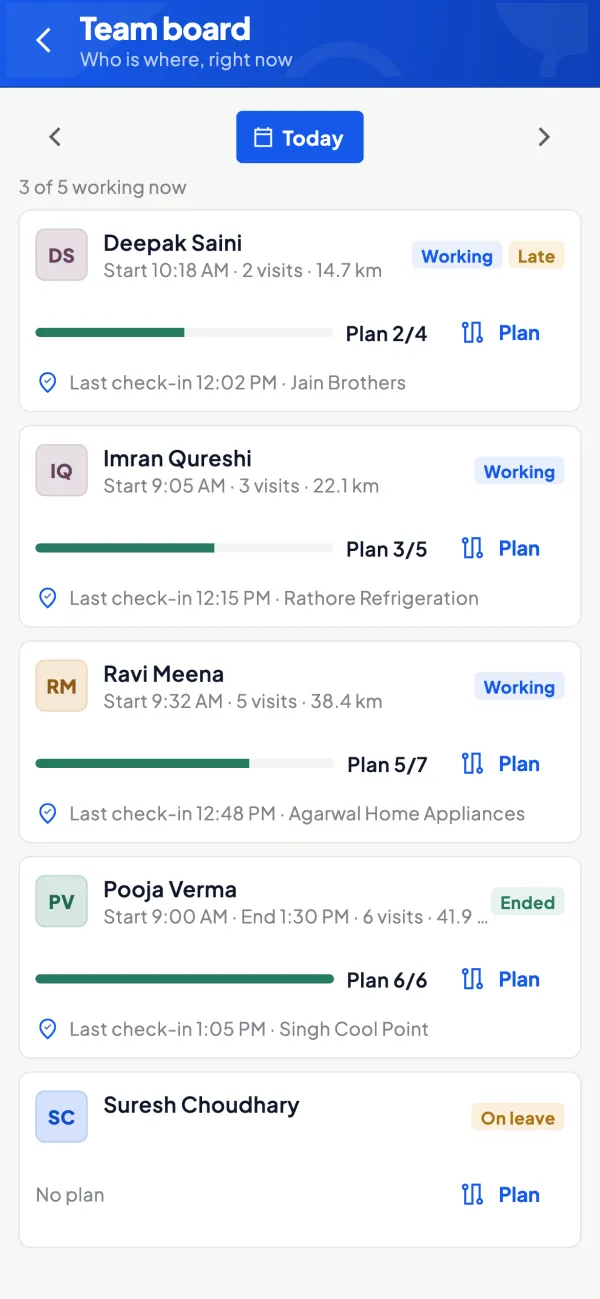
With Cashflow OSRoute plans with GPS check-ins and collectionsAreas, route plans and recommended visits, with check-ins, notes, photos and money collected.
See how it works
Features
How Cashflow OS works for auto parts dealers
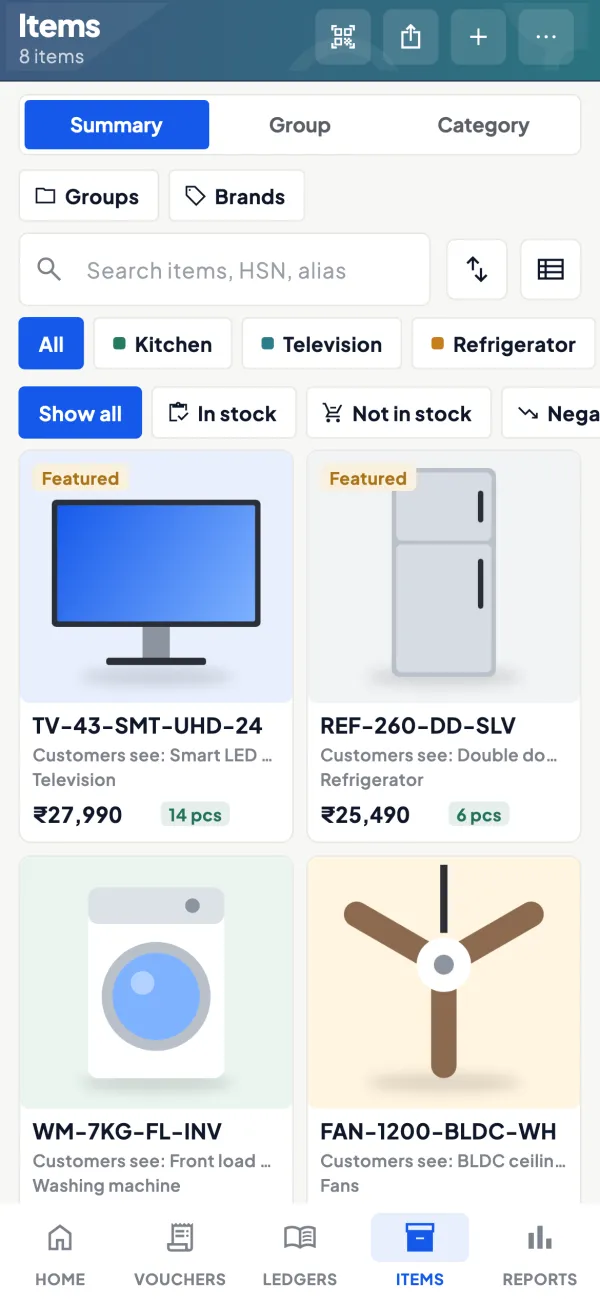
Your parts list, searchable on every phone
How it works. Stock items sync from Tally with stock groups such as engine, brakes and electricals. Add your own display name and photos so counter staff recognise the part.
- Search by part number when it is in the item name or code
- Own display name beside the Tally name
- Photos help staff match the part a mechanic sends
In practiceA mechanic sends a photo of a worn clutch plate. The counter boy searches the part number, checks the photo and stock, and confirms within a minute.
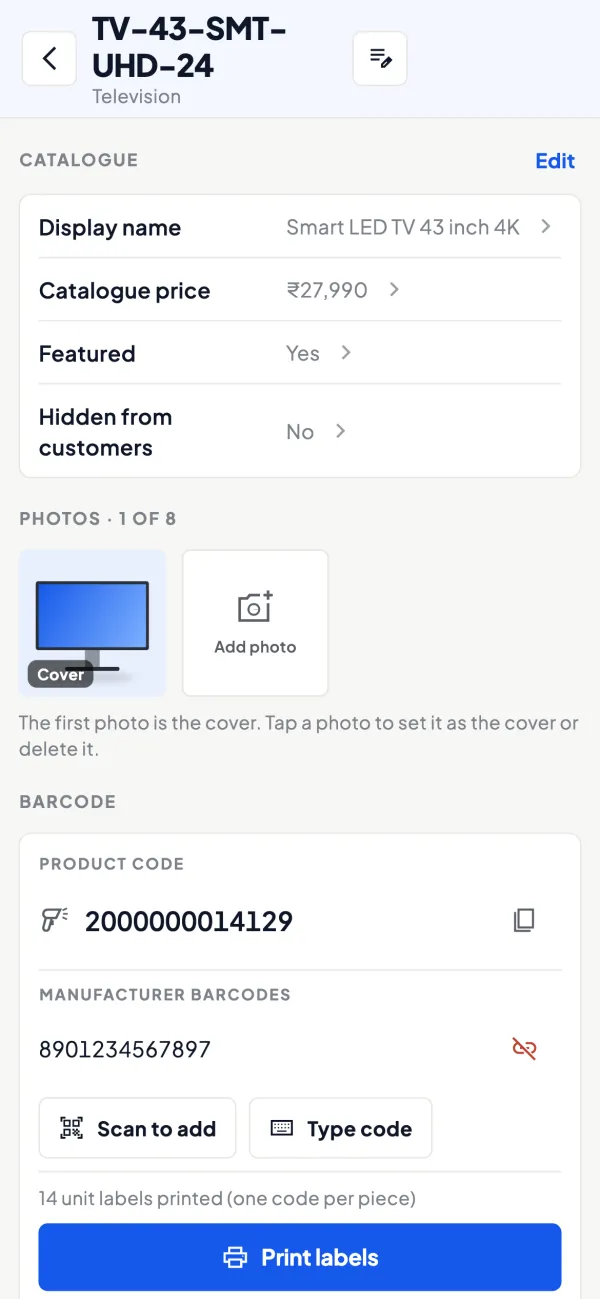
Labels and scanning at the packing table
How it works. Print barcode labels per item or per piece on a thermal or A4 printer, and scan them with the phone camera when packing an order.
- Labels per item or per piece
- Thermal or A4 printing
- Phone camera scanning, no extra scanner needed
In practiceBefore the delivery boy leaves for Kumar Motor Garage, each of the six parts in the packet is scanned against the order.
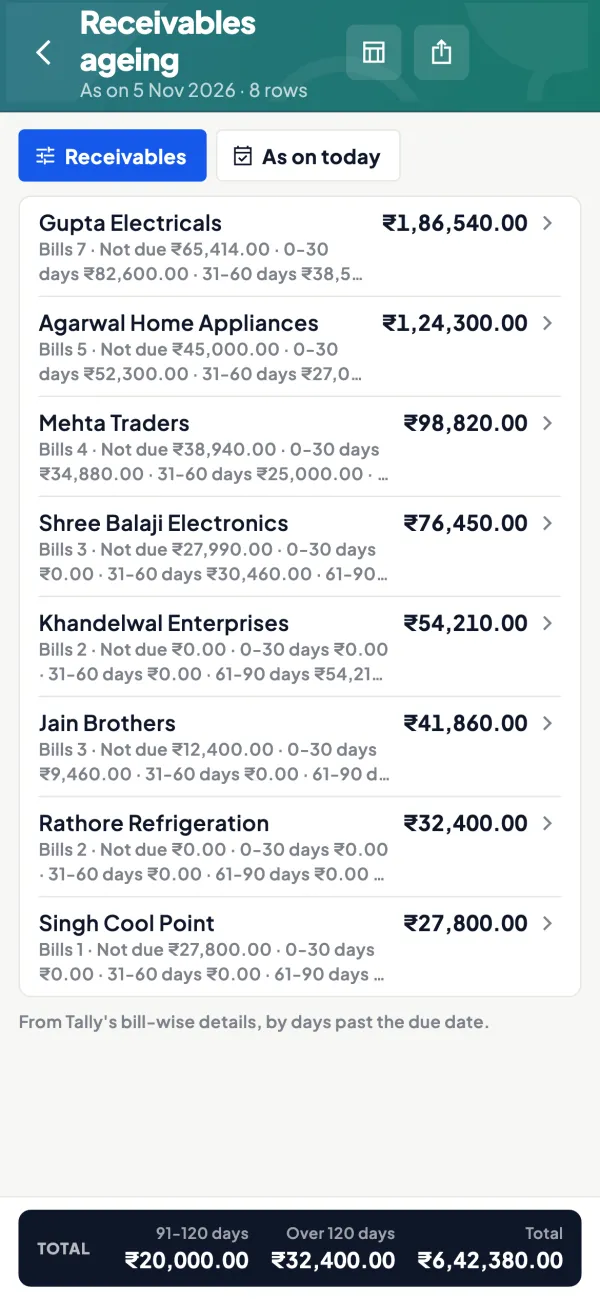
Garage dues the salesman can show
How it works. Bill-wise outstanding and ageing come from Tally. The statement goes on WhatsApp as a PDF in Tally's format.
- Old bills stand out from this week's
- Statement on WhatsApp in Tally's format
- Same figures in the office and in the field
In practiceSharma Auto Works owes ₹38,400. The statement shows ₹11,200 of it is over 60 days, so the salesman asks for those bills first.
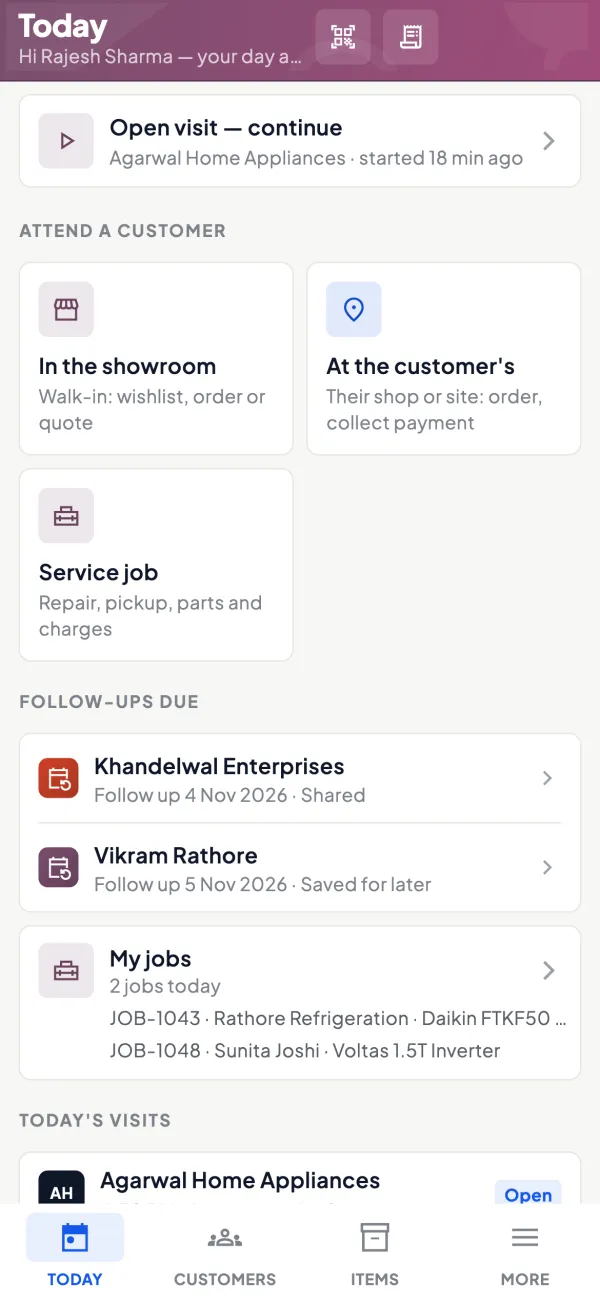
Orders from the garage route
How it works. The staff app's Today screen lists the garages to visit. Orders carry lines, rates from the price list and GST, and post to Tally as sales orders.
- Today screen with customers, visits and orders
- Rates filled from the customer's price list
- Optional approval before orders reach Tally
In practiceOn the Ring Road beat, a salesman books ₹27,650 of filters and bearings for Singh Truck Repairs and records ₹15,000 collected.
Which parts and garages make money
How it works. Sales reports, top customers and item summaries come from Tally and export to Excel or PDF.
- Top customers by sales for any period
- Item and stock summaries by group
- Excel export for slow-stock reviews
In practiceExporting the item summary for the year shows ₹3,40,000 of stock for older models with no sale in twelve months.
Know your trade
A guide for auto parts dealers
How the business works, where money gets stuck, and the GST points to watch.
How spare parts reach the garage
Parts come through several channels: vehicle makers' genuine parts through their authorised distributors, component makers' branded parts through their own distributors, and aftermarket and unbranded parts through wholesalers in big auto parts markets. Distributors supply retailers (spare parts shops) and large garages; retailers supply local mechanics, fleet owners and walk-in customers.
The mechanic is the real customer. He decides which part to fit and where to buy it, usually by phone, often needs the part within the hour, and expects credit. Lubricants, batteries, tyres and accessories are often sold alongside parts.
Part numbers, fitment and the catalogue
A brake pad for one model does not fit another, and the same part can exist as genuine, OEM-supplied and aftermarket versions at very different prices. Selling the right part depends on knowing the vehicle, model, year and variant, and the part number that fits it. Distributors and brands publish catalogues, and experienced counter staff carry a great deal of this in their heads.
For your books, the part number should be the stock item's identity, with a readable description and the brand. Use stock groups for system (engine, brakes, suspension, electrical) and categories for brand or vehicle maker. See stock groups and categories.
Returns and warranty
Returns are part of daily life. A mechanic takes two versions of a part, fits one and returns the other, or returns a part that did not fit. Manufacturing defects are claimed from the brand under its warranty process. If returns are taken back informally, stock and the mechanic's ledger both drift.
- Accept returns only in original packing and saleable condition, within a fixed number of days.
- Issue a credit note against the original bill for every return.
- Keep warranty claims separate and track them until the brand settles.
The guide on returns and replacements has a simple register format.
Garage credit and field sales
Garages and mechanics buy many small bills on credit, often several in a day. They pay when their customers pay, and round off amounts. A mechanic may owe ₹38,000 across 45 bills, and only a bill-wise statement shows which bills are old. Distributors send salesmen on routes to garages and retailers to take orders and collect. A weekly visit that brings both an order and a payment is the ideal rhythm.
| Customer | Typical buying | Credit pattern |
|---|---|---|
| Local mechanic | Small, frequent, urgent | Running account, irregular |
| Multi-bay garage | Larger, regular | Monthly or fortnightly |
| Fleet owner | Bulk, planned | Agreed terms |
| Retailer (from distributor) | Range orders | Fixed credit days |
Slow-moving stock
Parts for older models keep selling for years but slowly, and parts for models that never became popular may never sell. A parts business can accumulate lakhs in slow stock without noticing. Run a list of parts with no sale in twelve months, and decide for each: return to the supplier if allowed, offer to other dealers, or hold a minimum quantity. Set reorder levels for fast-moving items so you do not miss sales while capital sits in slow ones; see reorder levels and safety stock.
Counter speed and phone orders
Most garage orders arrive by phone or WhatsApp: a mechanic sends a photo of the old part or the vehicle's details and wants the part sent over by a delivery boy. Speed wins the order, but speed also causes errors. A few habits help: confirm the vehicle model and year before picking, send a photo of the part back if there is any doubt, put the bill in the packet with the part, and record the delivery boy's cash collections the same evening.
For counter staff, a searchable list of part numbers with readable descriptions saves more time than any other single change. When a part is not in stock, note the enquiry; repeated enquiries for the same part are the best signal of what to start stocking.
GST points
Auto parts are spread across many HSN codes, and rates for vehicle parts have been revised, so check the current rate for each part on the GST portal. Garages that are registered can claim input credit, so their GSTIN must be on the bill. Warranty replacements and credit notes from brands have their own treatment; ask your accountant. This is general information, not tax advice.
Cashflow OS for auto parts dealers
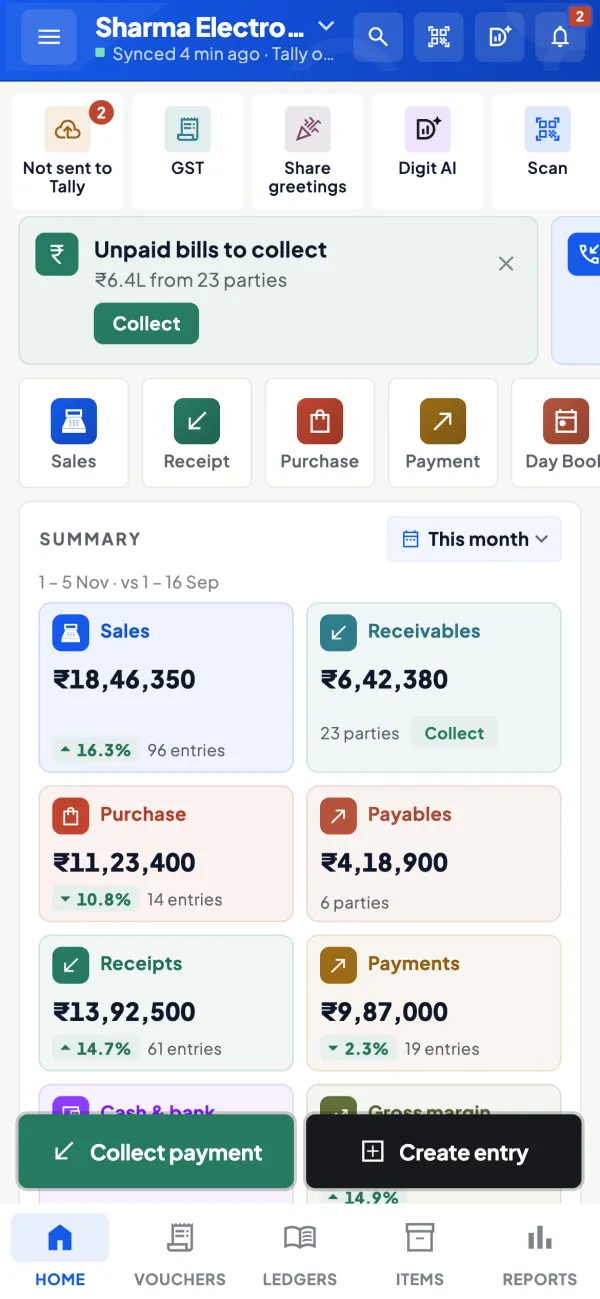
Cashflow OS syncs your TallyPrime books to the phone. Bill-wise outstanding for every garage and retailer is visible, and statements go out on WhatsApp. Distributors can give salesmen route plans, a Today screen of garages to visit, orders that post to Tally as sales orders, and collections. Price lists by customer type fill rates automatically. Barcodes per item help the counter pick the right part. See route planning.
This page is general information for Indian businesses, not tax, legal or financial advice. Rules and rates change — check the official portals or your CA before acting.
Set-up
Up and running in 4 steps
No new software to learn for your accountant — Tally stays as it is.
- 1
Install the Tally Connector on the PC where TallyPrime runs
- 2
Sign in with your mobile number and scan the connector's QR
- 3
Add display names and photos to your fast-moving parts
- 4
Invite counter staff and salesmen with a link, each with a role
Buyer’s checklist
What to look for in software for auto parts dealers
Whatever you choose, check these before you commit.
- Works with the item master you already keep in Tally; no second parts list
- Fast item search on the phone for counter and field staff
- Barcode labels and scanning to cut wrong-part dispatches
- Bill-wise outstanding and ageing for every garage and retailer
- Rates by customer type, so discounts follow a rule
- Field orders that reach Tally as sales orders without retyping
- Roles that keep your accounts private from salesmen
- Returns still handled as credit notes in Tally, so stock and ledgers agree
Plans
Simple yearly plans
- 14-day free trial on your own books
- 3-year term saves up to 25%
- Premium modules (catalogue, field force, price lists, store…) priced extra
Start free trialGet the price for your business
Compare all plans- Growth₹3,000/year + GSTBooks, reports, outstanding and sharing
- Pro₹5,000/year + GSTEverything in Growth, plus entries into Tally
- Pro+₹7,000/year + GSTEverything in Pro, plus e-invoice and e-way bill
Why Cashflow OS
Why auto parts dealers choose Cashflow OS
- No second item masterParts, stock groups and balances come from your Tally; you do not rebuild the catalogue.
- Counter and field togetherThe same items, rates and dues on the counter phone and the salesman's phone.
- Entries go back to TallyOrders and vouchers post through the connector; Tally validates each one.
- Private accountsA salesperson sees items and his own customers, not your books.
- Owner alertsKnow when a bill is changed or deleted in Tally, and get an evening summary.
- Try it free14-day free trial on your own Tally data; support on call or WhatsApp.