
Two-wheelers
Two-wheeler dealers: bookings, finance payouts and the workshop
A two-wheeler dealership is several businesses at once: vehicle sales, finance and insurance, accessories, the workshop and spare parts. Each has its own cash cycle, and the vehicle margin alone rarely pays the rent.
- Financier payouts in view
- Workshop jobs billed same day
- Sub-dealer dues by bill
- Works on your own Tally
Start free trialBook a free demo
Works with your TallyPrime14-day free trialJaipur team, call +91 70738 53555
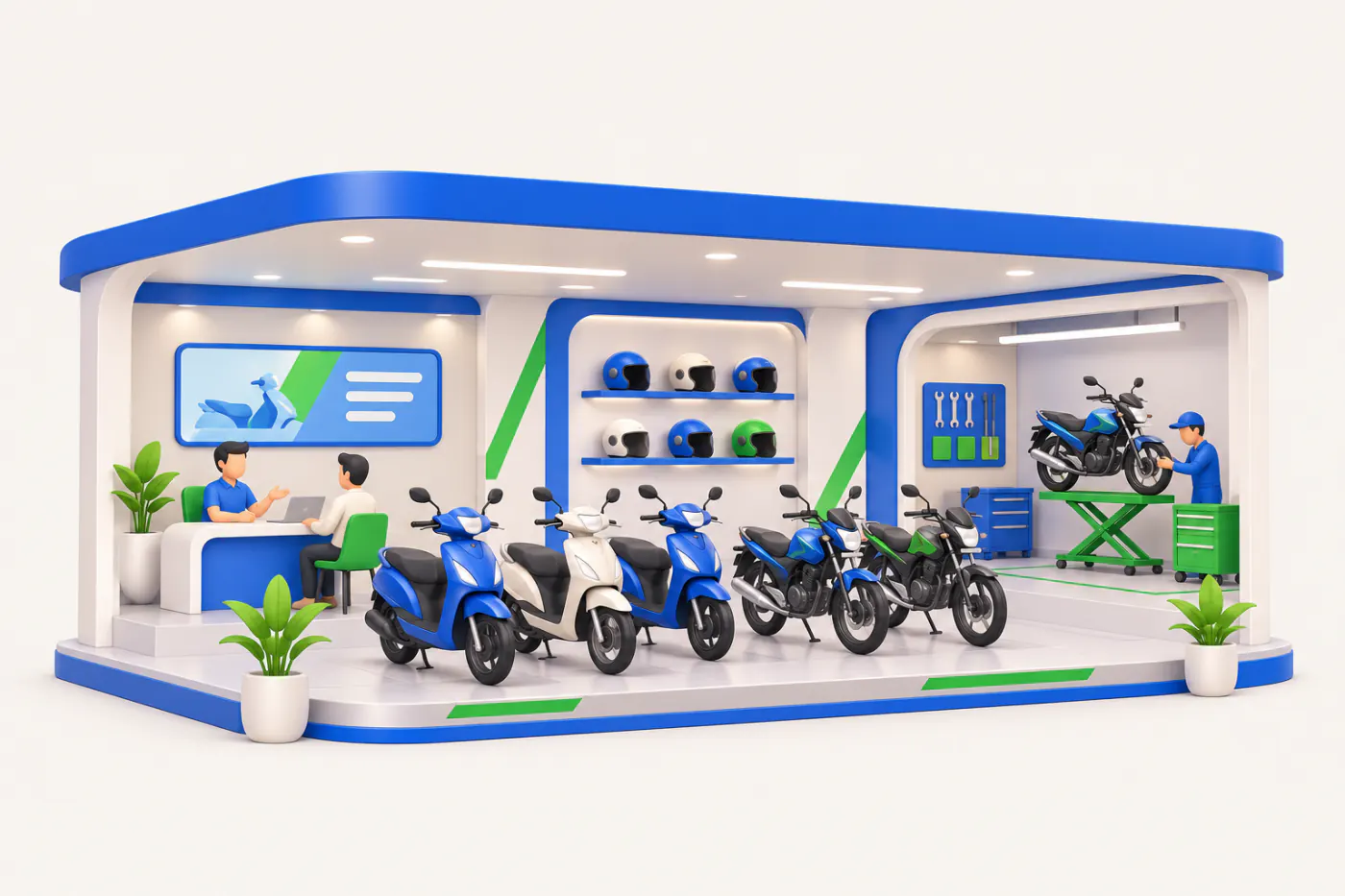
Built for two-wheeler dealers
Who it’s for
- Main dealershipsVehicle sales, finance, insurance, accessories and workshop
- Sub-dealers and branchesSmaller towns, vehicles on credit, payment after harvest
- Electric two-wheeler dealersNewer brands, battery and charger warranties, service
- Authorised service workshopsFree and paid services, repairs and accident jobs
- Accessory and spares countersHelmets, guards, covers, lubricants and parts
- Used two-wheeler dealersBuying, refurbishing and reselling with transfer paperwork
- Multi-brand service garagesWalk-in repairs and parts billed by job
Pain → fix
The problems we fix
The everyday headaches of two-wheeler dealers, and what changes when the books are on every phone.
- The problemFinance company payouts pending after delivery
Dozens of deliveries a week on finance, and payouts that are short or late go unnoticed.
With Cashflow OSEach financier's pending payouts by bill and ageWith each financier kept as a party in Tally, the app shows every pending payout and how many days it has waited.
See how it works - The problemWorkshop jobs and spares billed late
Accessory fitting and small repairs outside the maker's system are written on slips and billed days later.
With Cashflow OSService jobs closed and invoiced the same dayRecord the job, add parts and labour, then close it and invoice it into Tally before the customer leaves.
See how it works - The problemSub-dealer credit in rural areas
Vehicles go out on credit after harvest promises, and the old ones are not yet paid.
With Cashflow OSSub-dealer statements on WhatsApp before more stockShare each sub-dealer's statement in Tally's format and check their ageing before releasing more vehicles.
See how it works - The problemShowroom and branches in separate books
The owner switches PCs and calls accountants to see each firm's position.
With Cashflow OSSeveral Tally companies in one accountSwitch between the main dealership and branch companies on the phone and see each one's sales, cash and dues.
See how it works - The problemInsurance and RTO amounts mixed with income
Pass-through money sits in the wrong ledger and the margin looks better than it is.
With Cashflow OSLive ledger balances on the phone, every dayKeep insurance, registration and financier amounts in their own Tally ledgers and check their balances from anywhere.
See how it works - The problemBills changed at the counter without you knowing
A receipt altered or a voucher deleted in the evening is found only at the audit.
With Cashflow OSAn alert when a voucher is added, changed or deletedOwners get a push notification for voucher changes in Tally and an evening summary of the day.
See how it works
Features
How Cashflow OS works for two-wheeler dealers
Financier payouts you can chase
How it works. Keep each financier as a party in Tally and record the expected payout against each customer's bill. Cashflow OS shows those amounts bill by bill with their age.
- Pending payouts by financier at a glance
- Short or late payouts noticed in days
- Daily review in festive weeks takes minutes
In practiceAfter a Navratri week with 64 deliveries, four financiers owe ₹11,80,000, and ₹2,10,000 of it is older than 10 days. Those files get checked first.
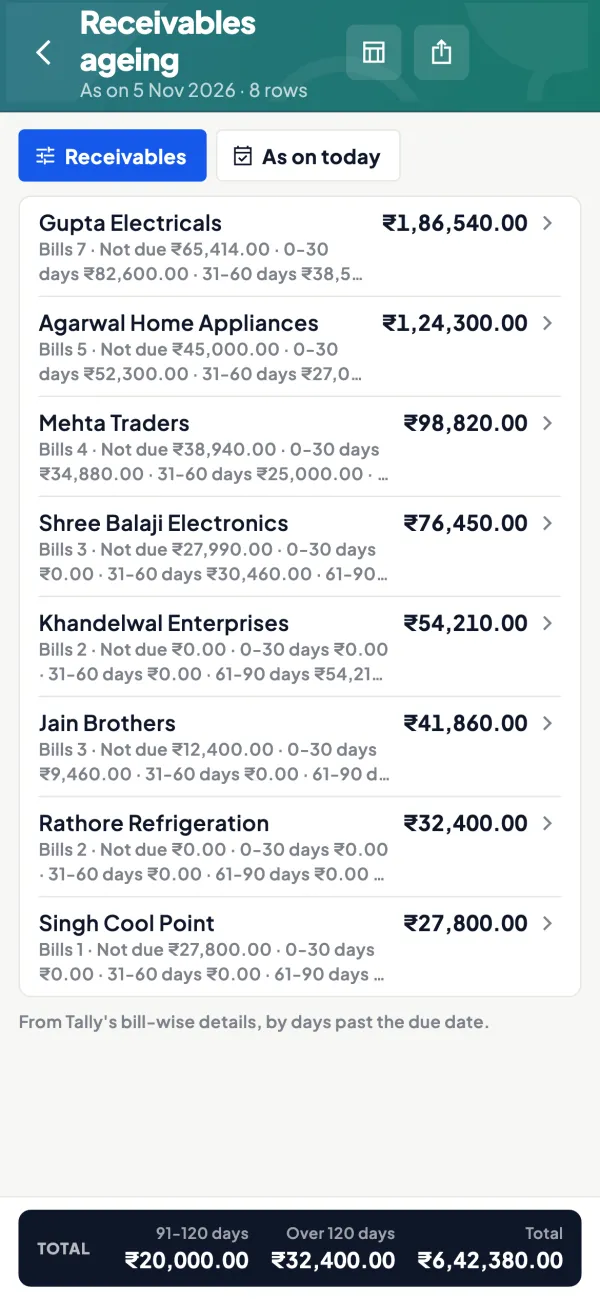
Accessory fitting and workshop jobs
How it works. For work outside the maker's dealer system, open a service job, add parts, accessories and labour, then close it and invoice it into Tally.
- Accessories billed separately from the vehicle
- Parts used are added before closing
- Invoice made before the customer leaves
In practiceA new scooter gets a crash guard, seat cover and number plate frame fitted: ₹2,450 in parts and ₹600 labour, closed and invoiced at delivery.
Sub-dealer dues before the next lot
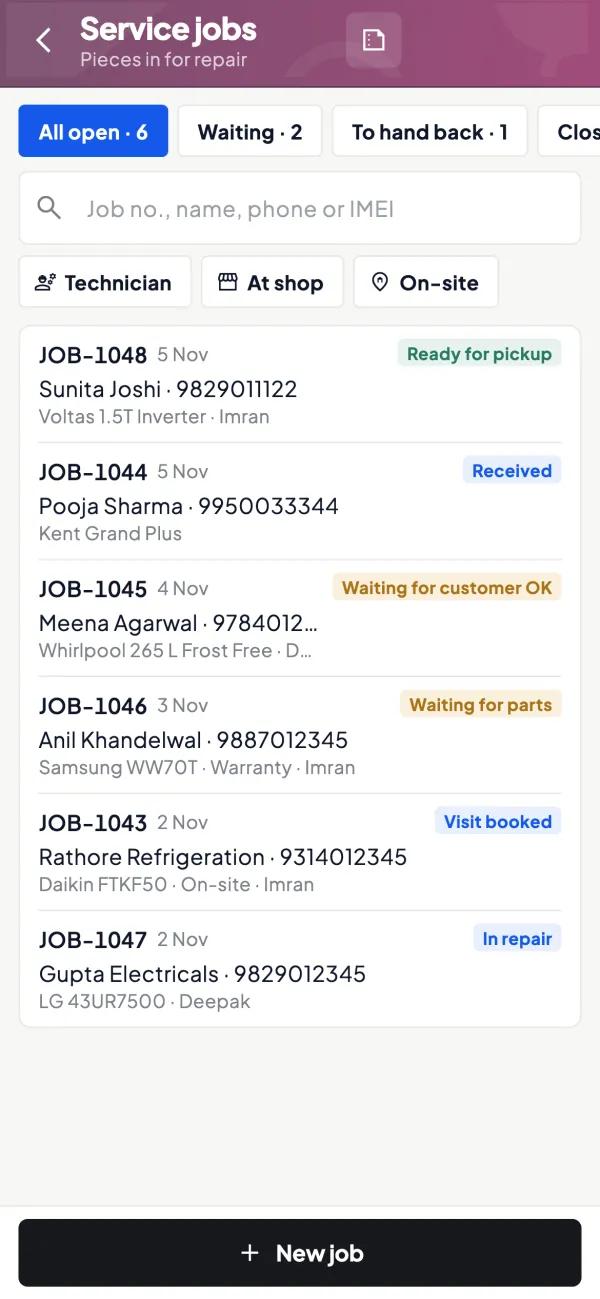
How it works. Each sub-dealer's bill-wise outstanding and statement come from Tally, ready to share on WhatsApp.
- Unpaid vehicles visible by bill
- Statement in Tally's format
- Stock released on facts, not promises
In practiceA sub-dealer in Sikar has taken 9 vehicles on credit with ₹5,40,000 due after harvest. You send the statement before agreeing to send 5 more for Diwali.
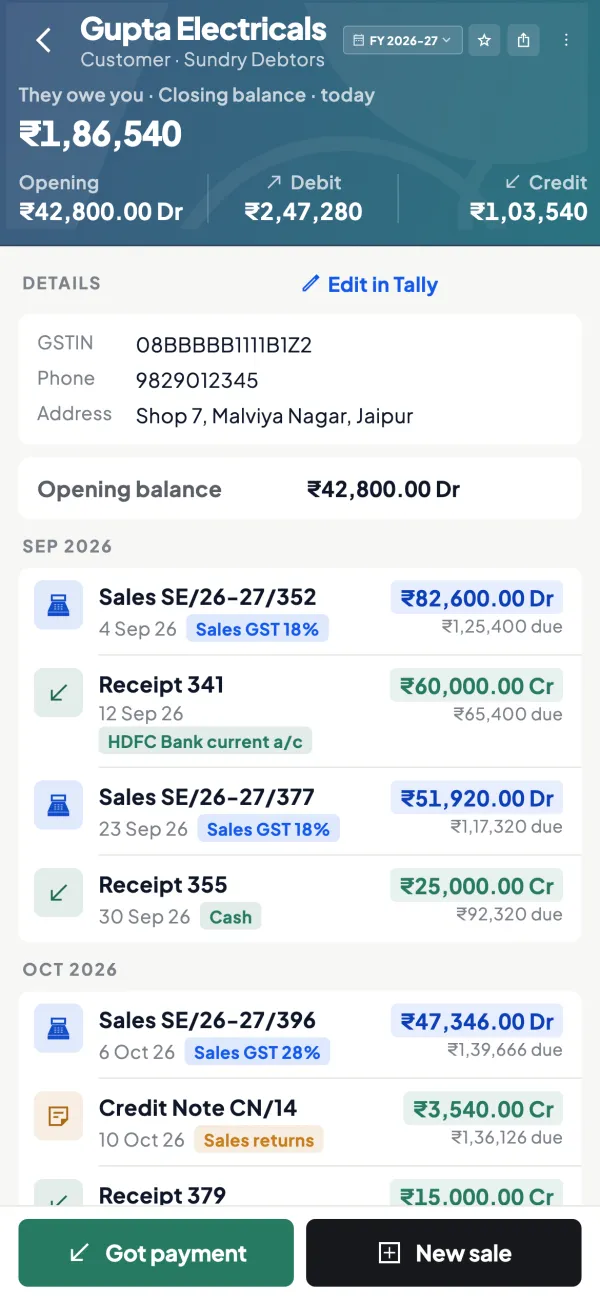
Every company's position on one phone
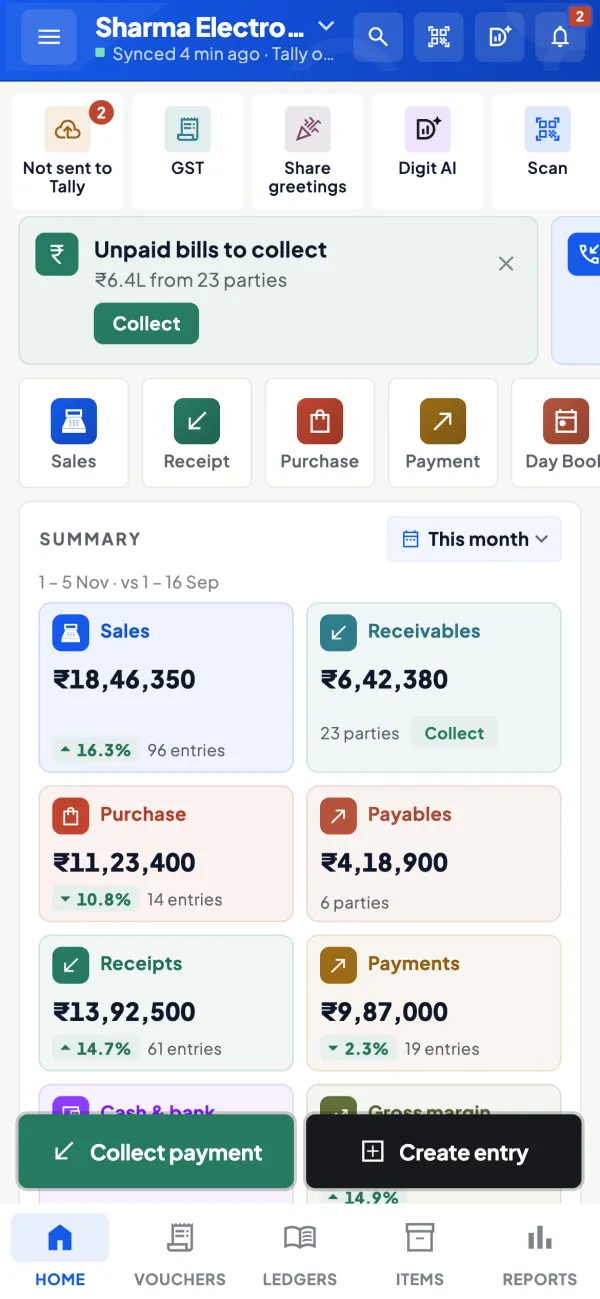
How it works. Several Tally companies sit in one account. Home shows sales, purchases, receipts, payments, cash and bank against the period before for whichever company you pick.
- Main dealership and branches side by side
- Cash and bank checked without calling anyone
- Same numbers your accountant sees in Tally
In practiceFrom a meeting at the company's regional office, you switch between the main showroom and the Alwar branch to check today's receipts and bank in each.
Alerts and the day's summary
How it works. Owners get a push notification when a voucher is added, changed or deleted in Tally, and an evening summary of sales, receipts, payments and purchases.
- Changes to old vouchers do not go unnoticed
- The day closed on your phone at 9 pm
- No need to sit at the Tally PC
In practiceA cash receipt of ₹18,000 from the morning is altered at 7:40 pm. You see the alert and ask the cashier about it the next day.
Know your trade
A guide for two-wheeler dealers
How the business works, where money gets stuck, and the GST points to watch.
How a dealership is organised
Vehicle makers appoint main dealers for a territory, who may in turn appoint sub-dealers or run branches in smaller towns. The main dealer buys vehicles from the company, usually against payment or trade-finance arrangements, and sells to customers and sub-dealers. Most makers require dealers to use their own dealer management system for vehicle sales, registration and warranty; the dealership's overall accounts, receivables and payables are often also kept in TallyPrime.
Income streams include the vehicle margin, incentives on targets, finance and insurance commissions, accessories, extended warranty, workshop labour, and spare parts and lubricants.
Booking to delivery
A typical sale runs: enquiry and test ride, booking amount, finance approval, invoice, insurance, registration, number plate, and delivery. Each step involves money from a different party: the customer's down payment, the financier's disbursement, insurance premium, registration fees and taxes collected and paid on the customer's behalf. If these are not recorded separately, the customer ledger becomes confusing and pass-through amounts get mixed with income.
| Item | Paid by | Nature |
|---|---|---|
| Vehicle price | Customer and financier | Sale |
| Insurance premium | Customer | Collected for insurer |
| Registration and road tax | Customer | Collected for authority |
| Accessories, extended warranty | Customer | Sale |
Ask your accountant to set up separate ledgers for pass-through collections so they never appear as income.
Bookings and advances
During festive seasons, customers book weeks ahead with a booking amount, sometimes for a specific colour or variant that the dealer does not yet have. Each booking is the customer's money until the vehicle is invoiced. Record every booking amount against the customer in Tally, give a receipt that states the variant, colour, expected delivery period and refund terms, and review open bookings weekly. When a customer cancels, refund promptly through the same mode wherever possible, and record the refund against the original receipt. Open bookings that are months old usually mean either a refund owed or a vehicle that should have been delivered; both need attention.
Finance payouts
A large share of two-wheelers are sold on finance. After delivery, the financier releases the loan amount to the dealer, sometimes less a processing charge or subvention. Payouts can take days, and documents missing from the file delay them further. With many financiers and dozens of deliveries a week, unmatched payouts pile up quickly. Keep each financier as a party, record the expected amount against each customer's bill, and review pending payouts daily during festive months. Read ageing analysis to set up the review.
Workshop, spares and accessories
The workshop brings steady income: free services in the warranty period (reimbursed by the company), paid services, repairs, accident jobs with insurance claims, and spares and lubricants sold with each job. Job cards should record the vehicle, complaint, work done, parts and labour, and every job should be closed and billed the same day. Accessories sold at delivery, such as helmets, guards and covers, carry better margins than the vehicle itself and must be billed separately. See job cards and service invoices.
Sub-dealers and seasons
Sub-dealers in rural areas take vehicles on credit and pay after selling, often after the harvest. Demand peaks around Navratri, Dussehra, Diwali, regional new-year festivals and wedding seasons, and dealers stock heavily in advance. Track each sub-dealer's vehicles and dues, and do not release more stock to a sub-dealer whose earlier vehicles are unpaid. The guide on festive season stock planning helps size the pre-festival order.
GST and other taxes
Two-wheelers have their own GST treatment, which can depend on engine capacity; the rates have been revised, so check the current position on the GST portal and with your CA. Spares, accessories, lubricants and services carry different rates. Road tax and registration fees are state levies collected on behalf of the authority. This is general information, not tax advice.
Cashflow OS alongside your dealer system
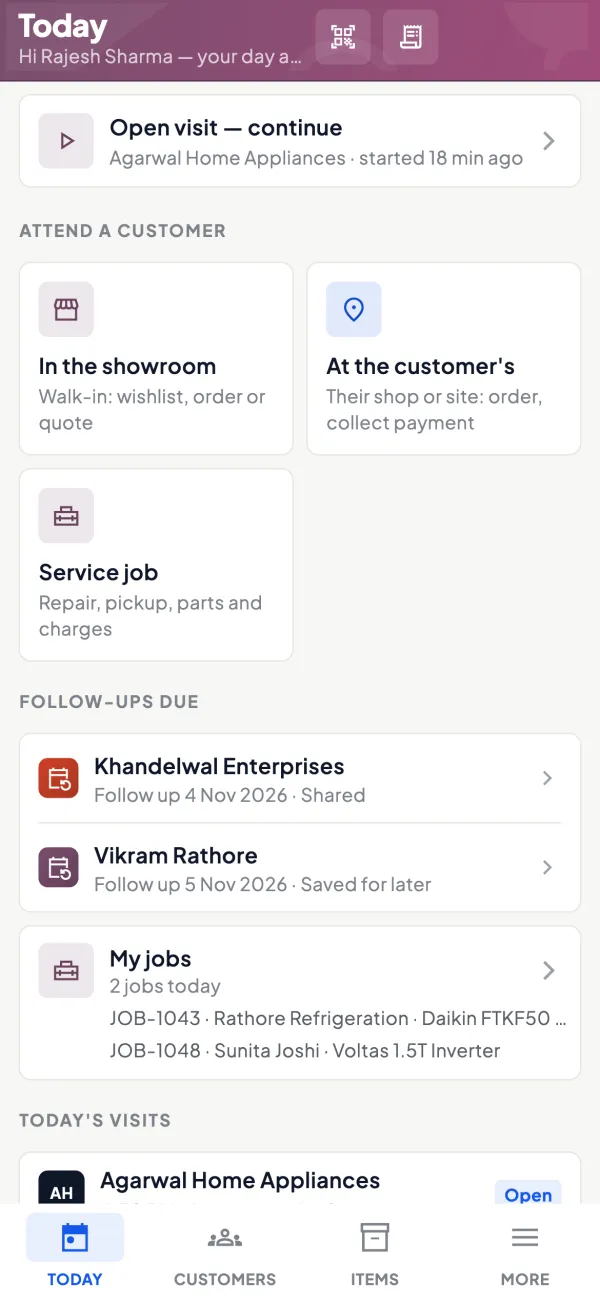
Where your accounts are in TallyPrime, Cashflow OS puts them on the owner's phone: financier receivables, sub-dealer dues and ageing, company payables, and daily sales, receipts and bank balances. Service jobs can be used for workshop or accessory fitting jobs outside the maker's system, with parts and labour, closed and invoiced. Walk-ins can be looked up by mobile number for follow-up. Cashflow OS does not replace the vehicle maker's dealer management system. See outstanding receivables.
This page is general information for Indian businesses, not tax, legal or financial advice. Rules and rates change — check the official portals or your CA before acting.
Set-up
Up and running in 4 steps
No new software to learn for your accountant — Tally stays as it is.
- 1
Install the Tally Connector on the PC where TallyPrime is open
- 2
Sign in with your mobile number and scan the QR the connector shows
- 3
Add each branch's Tally company to the same account
- 4
Invite the accountant, workshop and counter staff with a role each
Buyer’s checklist
What to look for in software for two-wheeler dealers
Whatever you choose, check these before you commit.
- Works alongside the maker's dealer system rather than replacing it
- Financier payouts tracked bill by bill, with their age
- Insurance, registration and taxes kept apart from your income
- Workshop and accessory jobs billed the same day
- Sub-dealer outstanding and statements before more stock goes out
- Branches and firms visible in one place
- Alerts when vouchers are changed or deleted
- Roles, so counter and workshop staff see only what they need
Plans
Simple yearly plans
- 14-day free trial on your own books
- 3-year term saves up to 25%
- Premium modules (catalogue, field force, price lists, store…) priced extra
Start free trialGet the price for your business
Compare all plans- Growth₹3,000/year + GSTBooks, reports, outstanding and sharing
- Pro₹5,000/year + GSTEverything in Growth, plus entries into Tally
- Pro+₹7,000/year + GSTEverything in Pro, plus e-invoice and e-way bill
Why Cashflow OS
Why two-wheeler dealers choose Cashflow OS
- Fits beside your dealer systemWorks on your TallyPrime books; the maker's system stays as it is.
- Payouts and sub-dealers in viewBill-wise dues and ageing for financiers and sub-dealers.
- Workshop jobs billedService jobs with parts and labour, closed and invoiced into Tally.
- All your firms togetherSeveral Tally companies in one account, switched in a tap.
- Know when books changeAlerts for voucher changes and a summary every evening.
- 14-day free trialTry it on your dealership's own Tally data before you pay.