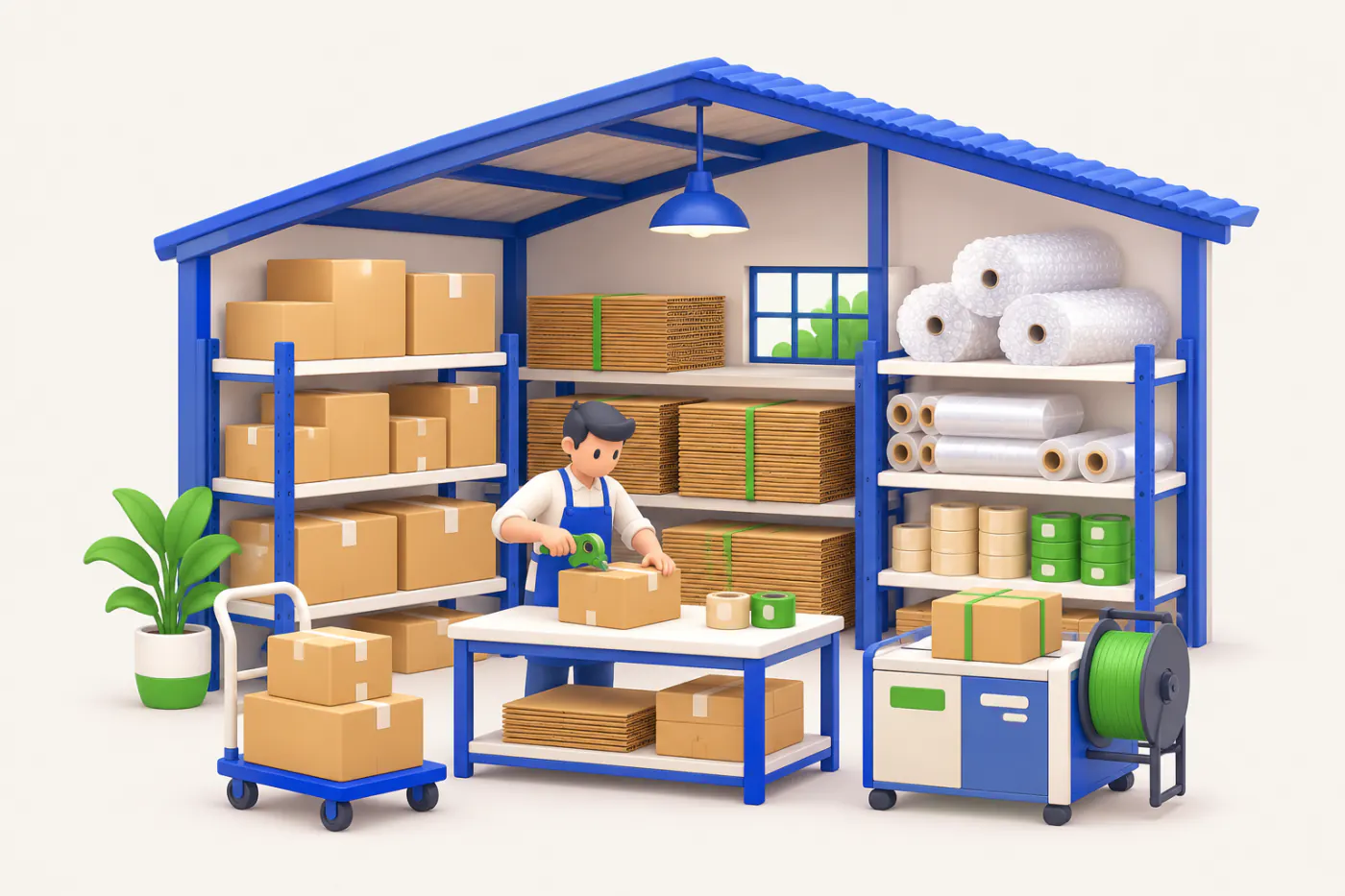
Packaging
Packaging suppliers: custom prints, mixed units and factory credit
Packaging suppliers sell to businesses that sell to everyone else. Orders are repeat, often custom-printed, priced by size and weight, and paid on the buyer's credit cycle.
- Quotes with size, ply and rate
- Purchase orders to suppliers
- Factory dues with ageing
- Orders straight into Tally
Start free trialBook a free demo
Works with your TallyPrime14-day free trialJaipur team, call +91 70738 53555
Built for packaging suppliers
Who it’s for
- Corrugated box makersBoxes by size, ply and paper grade
- Printing and converting unitsMono cartons, printed pouches and labels
- Packaging material tradersStock items for many kinds of buyer
- Tape, strapping and film suppliersBOPP tape, stretch film and strapping by roll or kg
- Food and cloud-kitchen packaging suppliersContainers, bags and pouches in frequent small orders
- E-commerce packaging suppliersMailers, bubble wrap and boxes for online sellers
- Label and sticker printersCustom runs with artwork approval
Pain → fix
The problems we fix
The everyday headaches of packaging suppliers, and what changes when the books are on every phone.
- The problemReprint at a new rate billed at the old one
Paper and polymer costs move, and last month's rate is copied onto this month's bill.
With Cashflow OSQuotation per job, converted when approvedEach job gets a quotation with size, material, quantity tolerance and rate, converted into the order when approved.
See how it works - The problemNew printed design, no advance taken
Custom prints cannot be resold, so a cancelled first order is a straight loss.
With Cashflow OSProforma with bank and UPI details for the advanceSend a proforma invoice as a PDF on WhatsApp or email before printing starts.
See how it works - The problemKraft paper ordered on a phone call
Rates and quantities agreed by phone are disputed when the mill's bill arrives.
With Cashflow OSPurchase orders to suppliers from the phoneMake a purchase order with your letterhead and share it, so the supplier's bill can be checked against it.
See how it works - The problemFactory buyer slipped to 75 days unnoticed
Large buyers pay on their own cycle, and one slow account blocks the money for paper.
With Cashflow OSAgeing by customer, statements on WhatsAppBill-wise receivables with ageing come from Tally, and statements go out on WhatsApp or email.
See how it works - The problemRegular buyer disputes the rate every month
Each salesperson quotes a slightly different price for the same box.
With Cashflow OSStanding rates by customer typePrice lists with dealer types and layered discounts fill the rate automatically on orders and documents.
See how it works - The problemGoods sent on a challan, invoice raised late
Dispatches against running orders go out first and are billed whenever the office catches up.
With Cashflow OSChallans that convert into the Tally invoiceBranded delivery challans go with each dispatch and convert into the Tally sales invoice.
See how it works
Features
How Cashflow OS works for packaging suppliers
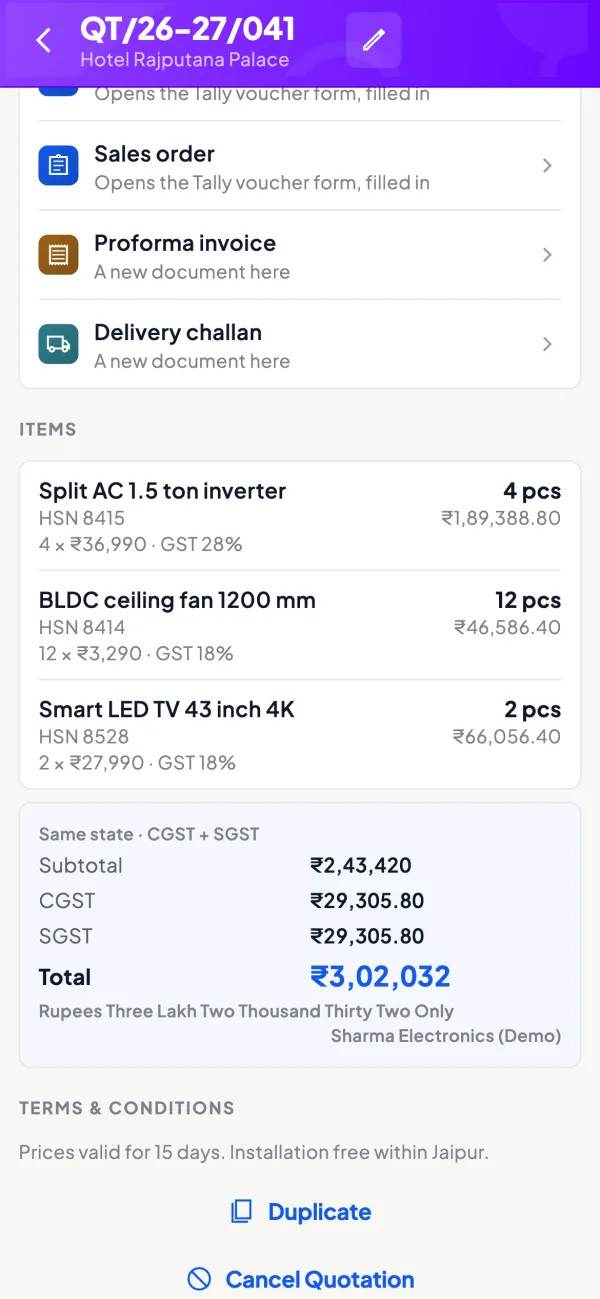
Job quotations with the details that matter
How it works. Quote each printed or custom item with size, ply or micron, quantity, tolerance and rate; send it as a PDF and convert it when approved.
- Tolerance and plate or die costs stated upfront
- Logo, terms, bank and UPI details on every quote
- Approved quote becomes an order without retyping
In practiceA spice maker in Indore asks for 20,000 printed pouches; the ₹1,36,000 quotation states a 5% quantity tolerance and is approved on WhatsApp.
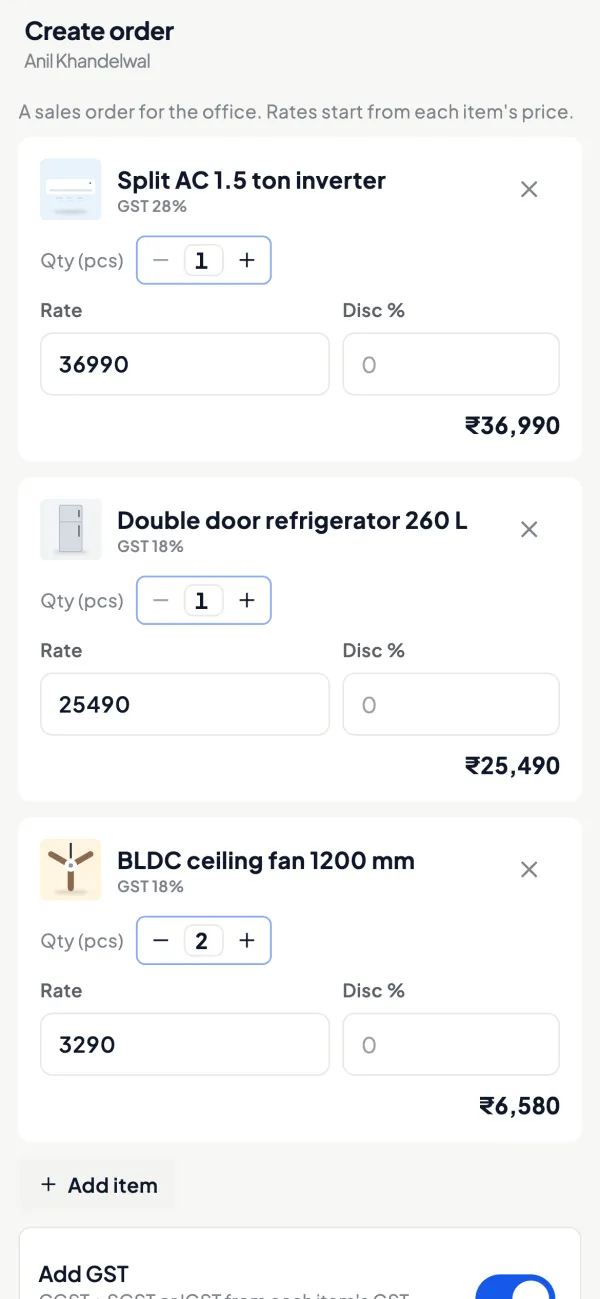
Repeat orders into Tally
How it works. Orders carry items, units and GST and post to Tally as sales orders, so repeat jobs follow the same specification.
- No re-keying of monthly repeat orders
- Right item code for each customer's size
- Owner approval first if you want it
In practiceA pharma unit's monthly order for 8,000 cartons is entered by the salesperson and reaches Tally as a sales order the same day.
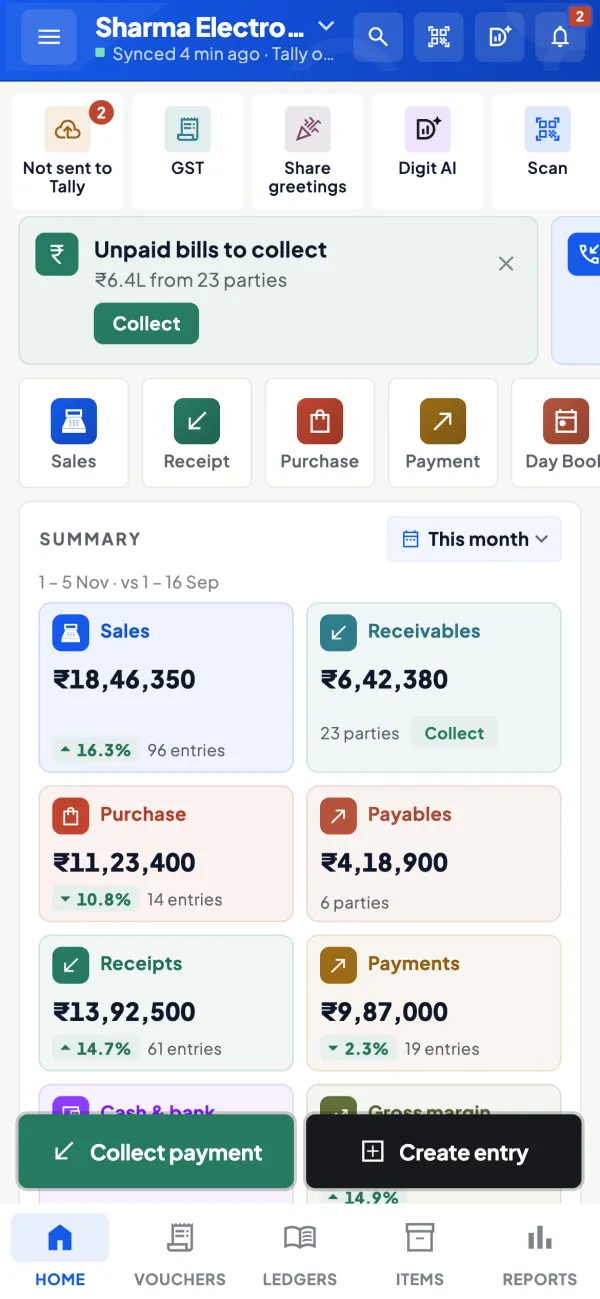
Factory and trade outstanding
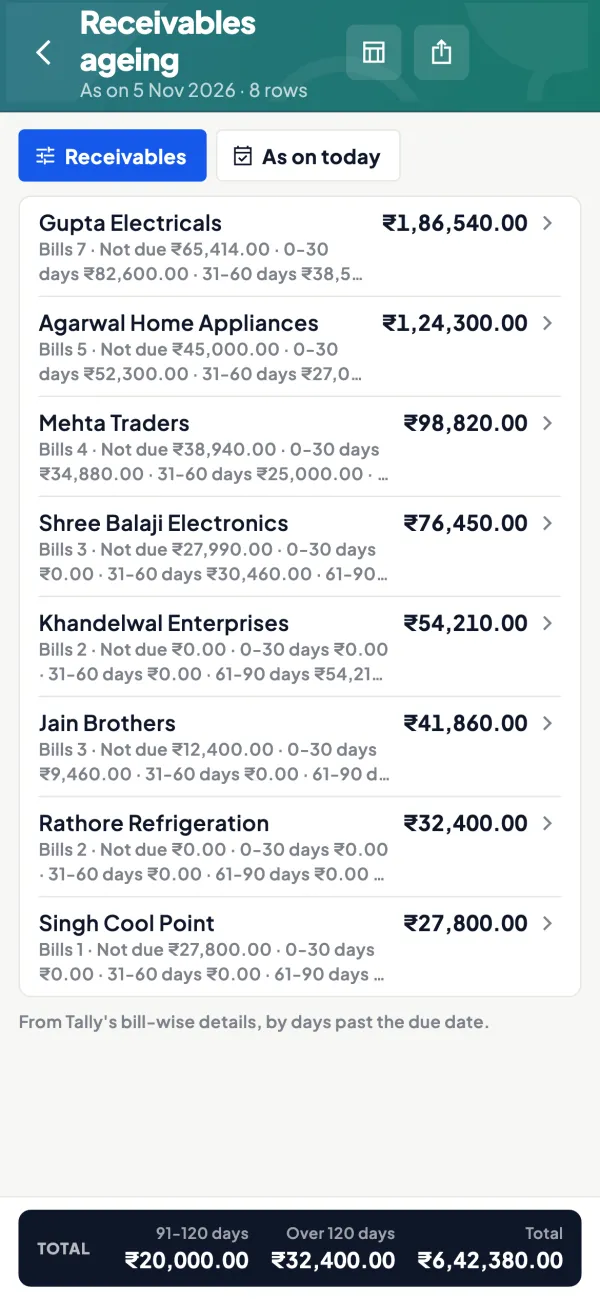
How it works. Receivables come from Tally bill by bill with ageing, so long-cycle factory accounts are watched separately from cash buyers.
- Oldest open bills shown first
- Statements as PDF or a Hindi page
- Checked before the next dispatch
In practiceA biscuit factory owes ₹4,20,000 across six bills; two are past 60 days, so the owner calls before releasing the next truck.
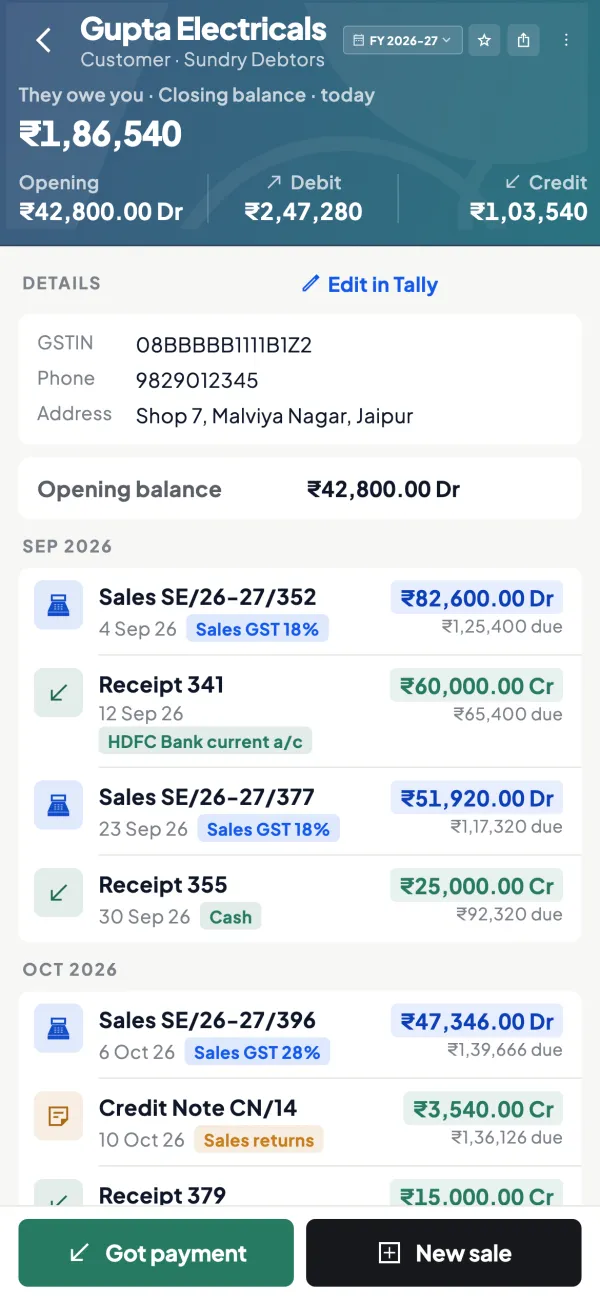
Party statements buyers accept
How it works. Share a party ledger statement as a PDF in Tally's format, or a simple Hindi page, on WhatsApp or email.
- Fewer disputes over what is pending
- Statements without waiting for the accountant
- Same figures as your Tally books
In practiceBefore month end, Gupta Packaging sends statements to 30 regular buyers in an afternoon.
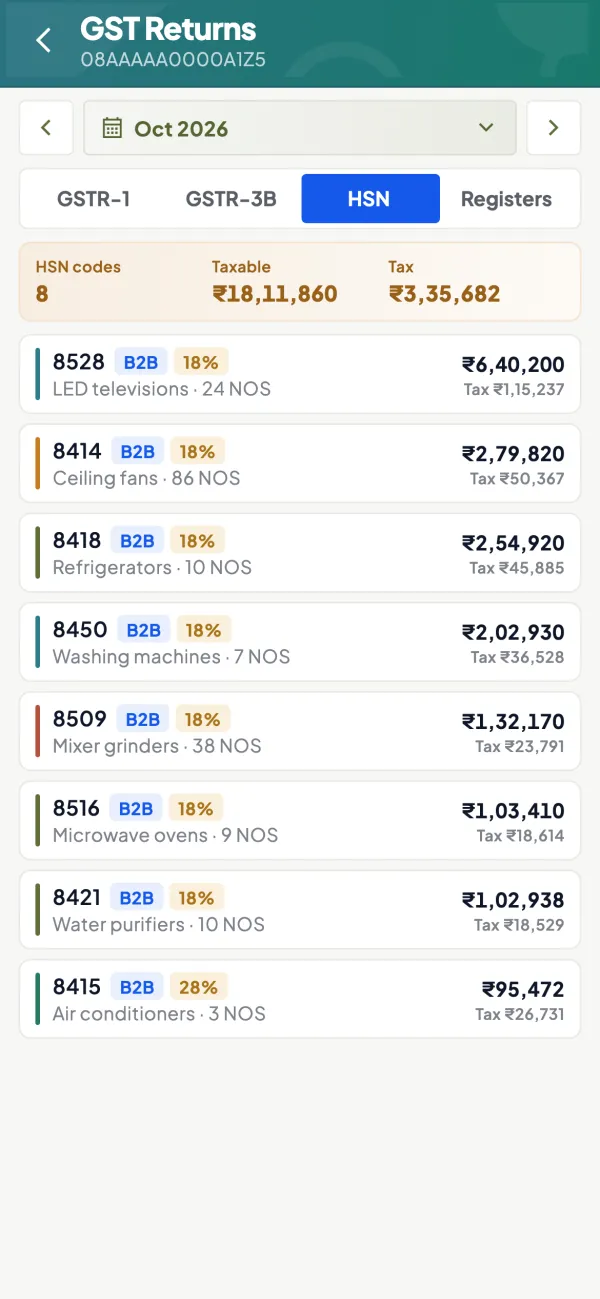
HSN-wise GST view
How it works. GSTR-1 views are prepared from your Tally data, with tiles that open bill-wise and HSN-wise detail and a JSON download.
- Boxes, films, tapes and labels checked by HSN
- Bill-wise detail behind each figure
- Filing itself stays on the GST portal
In practiceThe accountant checks HSN-wise totals for corrugated boxes and plastic films before preparing the return on the GST portal.
Know your trade
A guide for packaging suppliers
How the business works, where money gets stuck, and the GST points to watch.
What the trade covers
Packaging covers corrugated boxes and sheets, mono cartons, paper bags, plastic films and pouches, stretch and shrink film, BOPP tapes, strapping, bubble wrap, foam, labels, containers and food packaging. Some businesses manufacture (corrugation units, printing and converting units), others trade stock items bought from manufacturers and wholesalers, and many do both.
Buyers are manufacturers, food processors, pharma units, e-commerce sellers, retailers, restaurants and cloud kitchens, and logistics companies. Most buy regularly and in predictable quantities, which makes the trade steady when credit is controlled.
Units and pricing
Packaging is priced in different ways for different items: boxes per piece based on size, ply and paper grade; films and pouches per kilogram or per thousand pieces; tapes per roll; strapping per kilogram or roll. One customer can buy all of these on one bill. Raw material costs, such as kraft paper and polymers, move often, and suppliers revise prices accordingly.
| Item | Priced by | Stocked as |
|---|---|---|
| 3-ply box, fixed size | Per piece | Pieces / bundles |
| LD film roll | Per kg | Rolls with weight |
| BOPP tape | Per roll | Boxes of rolls |
| Printed pouches | Per 1,000 | Pieces |
In Tally, use the unit you count in as the main unit and an alternate unit where the price is in another; see alternate units in Tally.
Custom orders
Printed boxes, pouches and labels are made to the customer's design and size. They cannot be sold to anyone else, so the order must be confirmed in writing: size, material, print artwork approval, quantity with an agreed tolerance (printing runs often produce a little more or less than ordered), rate, delivery date and payment terms. Take an advance for first orders and new designs.
- Get artwork approval signed or confirmed in writing before printing.
- State the quantity tolerance on the quotation.
- Quote cylinder, plate or die costs separately and say who owns them.
- Note that a reprint at a revised rate is a new order.
Repeat orders and specifications
Most packaging customers reorder the same items monthly. The risk is that a small change, such as a different size, ply or print, is missed on the repeat order. Keep each customer's specification as part of the item name or code, and confirm changes in writing. For regular buyers, a standing price list with validity dates avoids rate disputes.
Wastage and scrap
Converting and printing units produce trimmings, misprints and set-up waste on every job, and traders lose some stock to damage from moisture and handling. Paper and board waste is usually sold as scrap. Record the scrap sale properly and estimate the normal wastage per job, so that when wastage on a job is unusually high you notice it. For traders, store corrugated stock off the floor and away from damp walls; a monsoon leak can ruin a godown of boxes in a night.
Credit and collections
Factory buyers pay on their own cycles, often 45 to 90 days, and sometimes only after their own goods are sold. If you are a registered micro or small enterprise, the law on delayed payments to MSMEs may help: buyers are expected to pay within limits, and the tax deduction for their expense can depend on it. See the MSME payment rule and Udyam registration benefits. Mention your Udyam number on invoices, and review ageing weekly.
Small online sellers
E-commerce sellers and cloud kitchens buy smaller quantities more often, usually paying in advance or on delivery. They are a good cash-flow balance to factory accounts on long credit.
GST points
Paper and paperboard packaging, plastic packaging, tapes and labels fall under different HSN codes and rates, and rates for some items have been revised; check the current rate for each on the GST portal. Printing services on customer-supplied material can be treated differently from sale of printed goods; ask your accountant. This is general information, not tax advice.
Cashflow OS for packaging suppliers
Cashflow OS syncs your TallyPrime books to the phone. Quotations and proforma invoices with your logo, bank and UPI details go out on WhatsApp or email, and a quotation converts into a sales order or Tally invoice once approved. Purchase orders to your own suppliers can be created the same way. Factory outstanding and ageing are on the phone, and statements can be shared on WhatsApp. See purchase orders.
This page is general information for Indian businesses, not tax, legal or financial advice. Rules and rates change — check the official portals or your CA before acting.
Set-up
Up and running in 4 steps
No new software to learn for your accountant — Tally stays as it is.
- 1
Install the Tally Connector on the PC where TallyPrime is open
- 2
Sign in with your mobile number and scan the connector's QR
- 3
Add your logo, letterhead and bank details for quotes and POs
- 4
Invite sales and dispatch staff with a link and a role
Buyer’s checklist
What to look for in software for packaging suppliers
Whatever you choose, check these before you commit.
- Quotes custom jobs with size, material, tolerance and rate on a branded document
- Converts an approved quotation into an order or invoice without retyping
- Sends purchase orders to paper, film and tape suppliers
- Handles pieces, kilograms, rolls and bundles as your Tally items do
- Keeps standing rates per customer type so salespeople quote the same price
- Shows long-cycle factory dues bill by bill, with ageing
- Gives HSN-wise GST detail for a mixed range of products
- Works on your existing Tally books
Plans
Simple yearly plans
- 14-day free trial on your own books
- 3-year term saves up to 25%
- Premium modules (catalogue, field force, price lists, store…) priced extra
Start free trialGet the price for your business
Compare all plans- Growth₹3,000/year + GSTBooks, reports, outstanding and sharing
- Pro₹5,000/year + GSTEverything in Growth, plus entries into Tally
- Pro+₹7,000/year + GSTEverything in Pro, plus e-invoice and e-way bill
Why Cashflow OS
Why packaging suppliers choose Cashflow OS
- Custom jobs on paperQuotations and proformas record specification, tolerance and advance before you print.
- Both sides of the tradePurchase orders to suppliers and sales documents to buyers from the same app.
- Credit watched closelyFactory dues with ageing and statements on WhatsApp keep long cycles in check.
- Tally keeps the booksOrders and vouchers go into TallyPrime, which validates each entry.
- E-way bill and e-invoicePlans that include them generate both for synced Tally sales vouchers.
- Clear yearly plansGrowth ₹3,000, Pro ₹5,000 and Pro+ ₹7,000 a year; modules are priced extra.