Running the business MSME
Udyam registration and its benefits
Udyam registration is the government's free, online identity for micro, small and medium enterprises. It is based on Aadhaar and PAN, and it is what banks, government buyers and customers ask for when you claim MSME status. This is general information, not legal advice.
- Micro and small manufacturers
- Service providers
- Retail and wholesale traders
- Suppliers to large buyers
- New businesses applying for loans

On this page 11
What Udyam registration is
Udyam replaced the older Udyog Aadhaar system in July 2020. You register once on the official portal, udyamregistration.gov.in, and get a permanent Udyam Registration Number and an e-certificate. There is no fee. Beware of private websites that look official and charge for the same thing.
Details such as investment and turnover are picked up largely from your PAN and GST records, so the classification is based on what you have already filed.
How enterprises are classified
Classification uses two tests together: investment in plant, machinery or equipment, and annual turnover. The limits were revised with effect from 1 April 2025:
| Category | Investment up to | Turnover up to |
|---|---|---|
| Micro | ₹2.5 crore | ₹10 crore |
| Small | ₹25 crore | ₹100 crore |
| Medium | ₹125 crore | ₹500 crore |
Limits are set by notification and can change again; check the current figures on the Udyam portal before relying on them. Exports are excluded from turnover for this purpose.
Who can register
- Manufacturers and service providers of any legal form: proprietor, partnership, LLP, company, trust or society.
- Retail and wholesale traders can also register; for them, the benefits are mainly linked to priority sector lending.
- Very small informal units without GST or PAN can use the Udyam Assist route through designated agencies.
Benefits worth knowing
- Bank credit: loans to registered MSMEs count as priority sector lending, and collateral-free loans under the government's credit guarantee scheme generally require Udyam registration.
- Protection against delayed payment: micro and small manufacturers and service providers can claim interest on late payments under the MSMED Act and file cases on MSME Samadhaan. Buyers who pay late can also face an income-tax disallowance; see the MSME 45-day payment rule.
- Government purchases: the public procurement policy for micro and small enterprises gives registered units preference in government tenders, often including exemption from earnest money deposit.
- Invoice financing: TReDS platforms let MSME sellers discount invoices raised on large buyers.
- State schemes: many states link subsidies and incentives to Udyam registration. Check your state industries department.
Benefits depend on the scheme and its current rules, so read the conditions of each one before applying.
How to register: the short version
- Keep ready the Aadhaar of the proprietor, managing partner or authorised signatory, the business PAN and GSTIN (where applicable).
- Open udyamregistration.gov.in and choose new registration.
- Verify Aadhaar by OTP, then validate PAN.
- Fill in business details: name, address, bank account, activity (NIC code), employees and units.
- Submit, verify by OTP, and download the certificate once issued.
Update the registration when details change, and keep the certificate where your customers' accounts teams can get it quickly.
Common mistakes to avoid
- Paying an agent or a lookalike website for what is a free government registration.
- Choosing the wrong activity. Manufacturing, services and trading are treated differently for some benefits; pick the NIC codes that match what you actually do.
- Not updating details after a change of address, partners or bank account.
- Assuming every benefit is automatic. Most schemes need a separate application to the bank, department or buyer.
- Forgetting to tell customers. A buyer's accounts team cannot treat you as a micro or small supplier unless they have your certificate on file.
Using your Udyam status day to day
- Mention your Udyam number on quotations and invoices if you are micro or small, so buyers know your payment terms are protected. Our invoice payment terms guide covers wording.
- Ask your own suppliers for their Udyam certificates and record their category against each supplier ledger, so you pay micro and small suppliers on time.
- Track receivables from large buyers bill-wise. If they cross the agreed period, a polite reminder that you are a registered micro or small unit often helps.
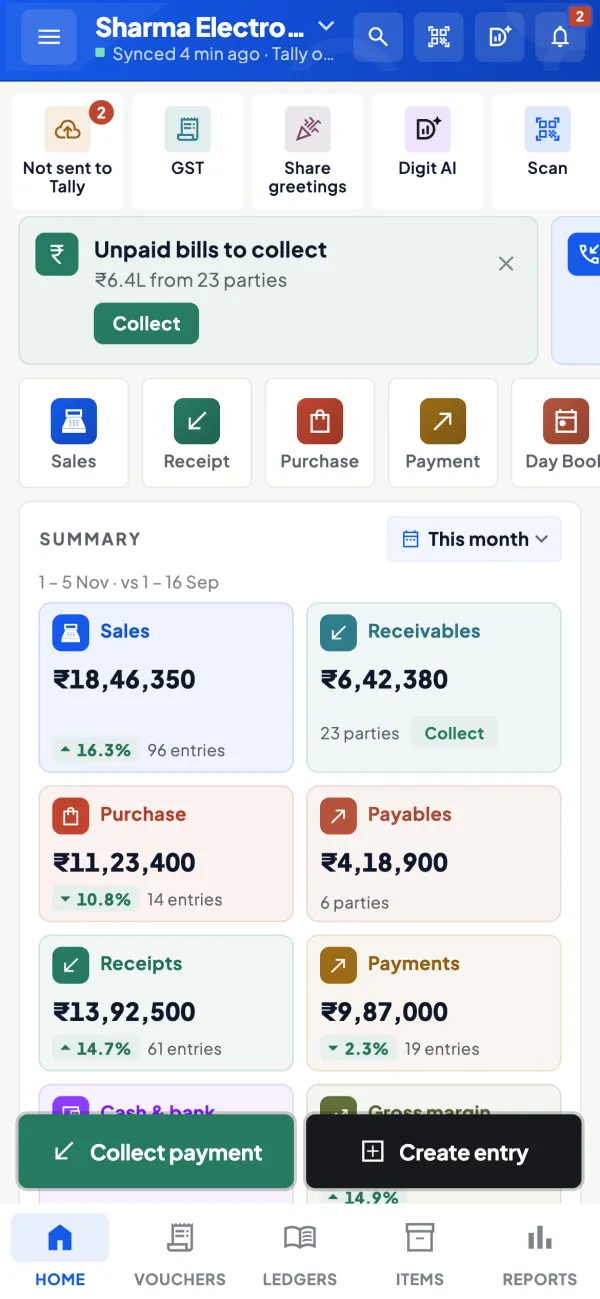
If your books are in TallyPrime, Cashflow OS shows receivables and payables with ageing on your phone, which makes those dates easy to watch. This is general information, not legal or tax advice.
Avoid these
Common mistakes
- MistakePaying a lookalike website for the registrationDo this instead
Register only on the official portal; there is no fee.
- MistakeChoosing NIC codes that do not match the businessDo this instead
Pick activity codes for what you actually do, since manufacturing, services and trading are treated differently.
- MistakeNot sharing the certificate with buyersDo this instead
Send your Udyam certificate to customers' accounts teams so they can treat you as a micro or small supplier.
- MistakeNot updating details after a changeDo this instead
Update the registration when address, partners or bank account change.
Keep handy
Checklist
Udyam registration and its benefits — 7 checks. Tick them as you go.
In Cashflow OS
How Cashflow OS helps
Cashflow OS puts your TallyPrime books on every phone in the team. Where it fits this topic:
Watch what large buyers owe
Bill-wise receivables with ageing from your Tally books show which buyers have crossed the agreed credit period, so you can follow up in time.
See Outstanding receivables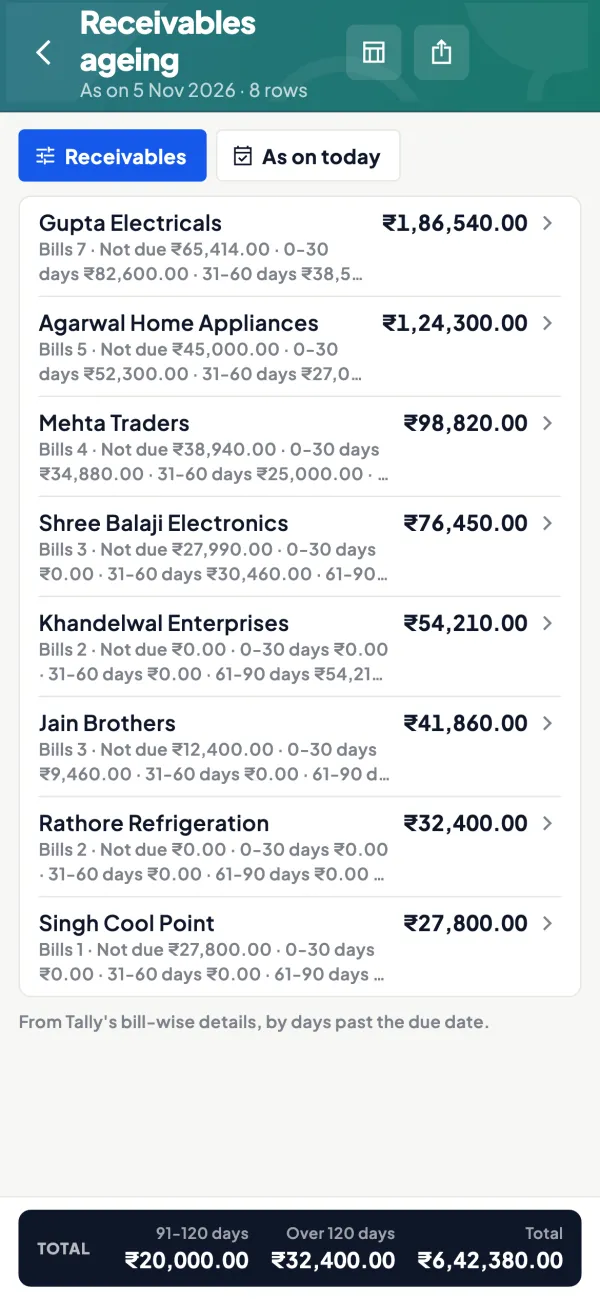
Pay micro and small suppliers on time
Payables with ageing show which supplier bills are due, which helps you plan payments to registered micro and small suppliers.
See Payables trackingQuestions people ask
Is Udyam registration free?
Do traders get the delayed-payment protection?
Do I need to renew Udyam registration?
Can a business with more than one unit register separately for each?
Is Udyam the same as Udyog Aadhaar?
Are exports counted in turnover for classification?
Can a business without GST register?
Should I print my Udyam number on invoices?
This page is general information for Indian businesses, not tax, legal or financial advice. Rules and rates change — check the official portals or your CA before acting.