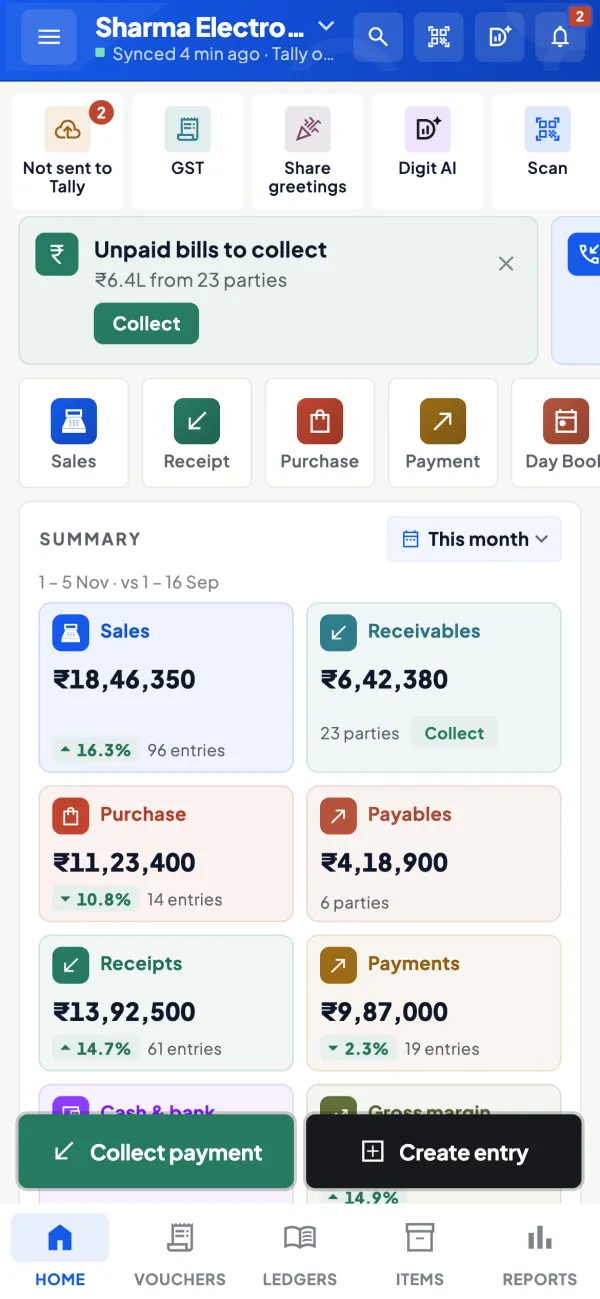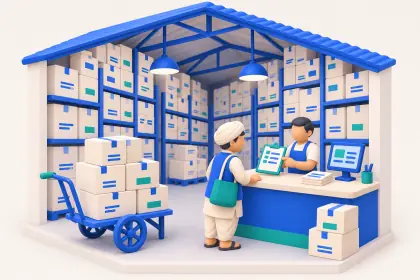
Grocery wholesale
Grocery wholesale: staples by the bag and the udhaar book
A grocery wholesaler in a mandi or market lane moves staples by the bag and packaged goods by the case, mostly on udhaar to kirana shops, with prices that change with every crop and season.
- Hindi हिसाब on WhatsApp
- Udhaar dues shop by shop
- Morning orders into Tally
- Day's summary every evening
Start free trialBook a free demo
Works with your TallyPrime14-day free trialJaipur team, call +91 70738 53555
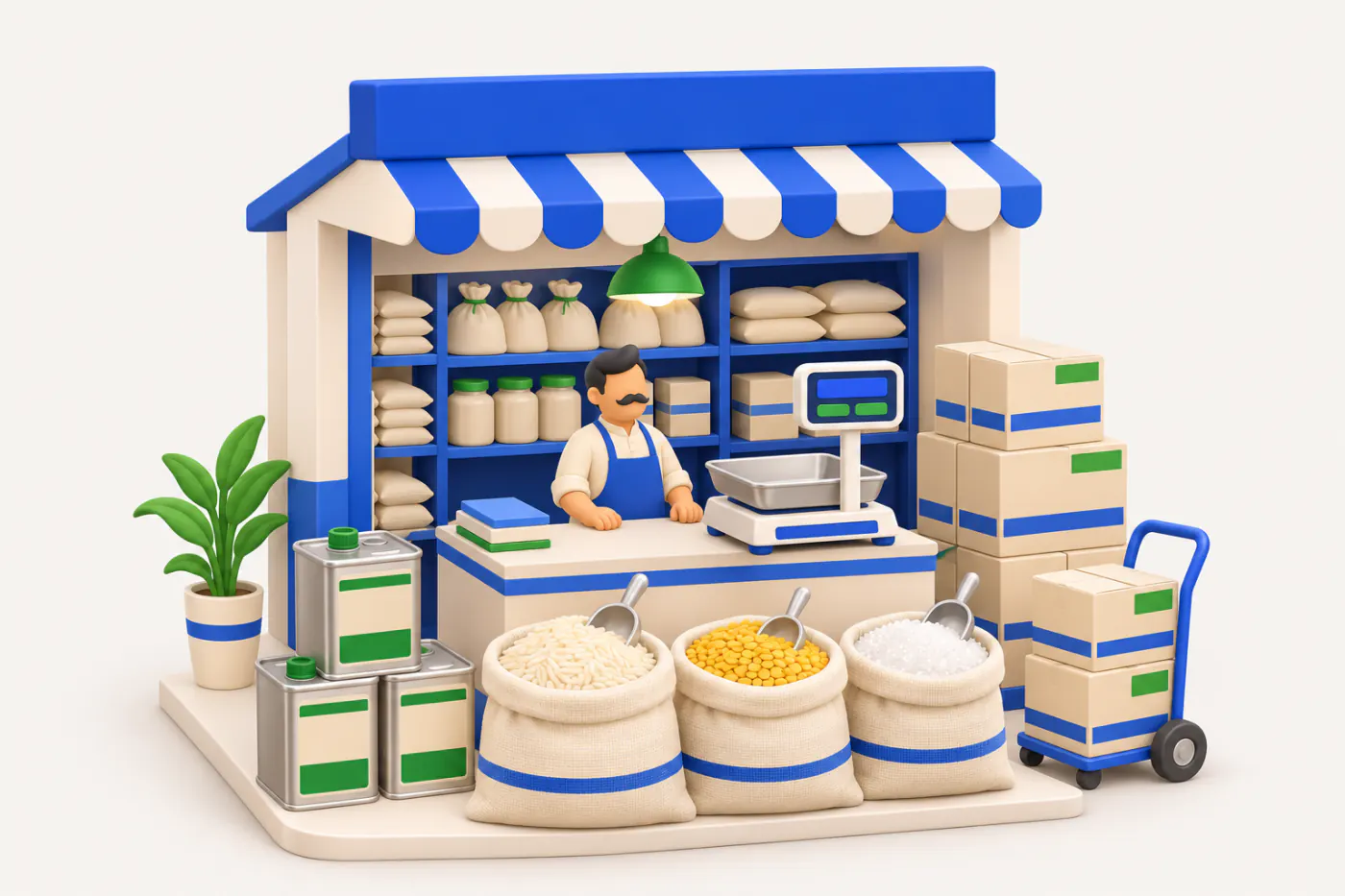
Built for grocery wholesale businesses
Who it’s for
- Kirana wholesalersStaples and packaged goods to shops on udhaar
- Dal, rice and atta tradersBags and quintals, prices changing with the crop
- Edible oil dealersTins, jars and litres from one stock
- Dry fruit and spice wholesalersHigh value, festive peaks, loose and packed
- Packaged goods wholesalersCases, dozens and pieces for small retailers
- Hotel and caterer suppliersBulk orders, wedding season, monthly credit
- Repackers with their own brandLoose goods packed into labelled small packs
Pain → fix
The problems we fix
The everyday headaches of grocery wholesale businesses, and what changes when the books are on every phone.
- The problemShopkeeper disputes the balance every month
He remembers paying ₹5,000; the khata says ₹4,000, and the argument takes an hour.
With Cashflow OSHindi हिसाब statement on WhatsAppShare the party statement as a simple Hindi हिसाब page or a PDF in Tally's format, straight from the phone.
See how it works - The problemUdhaar across hundreds of shops, no idea who is late
Small balances grow quietly until one shop closes with ₹60,000 unpaid.
With Cashflow OSBill-wise dues and ageing for every shopOutstanding comes from Tally's bill-wise details, so you see the oldest bills, not just a total.
See how it works - The problemPhone orders noted on a chit and missed
The morning rush ends with one shop's sugar not loaded and another billed twice.
With Cashflow OSOrder entered on the phone, sent to TallyOrders entered in the app post to Tally as sales orders through the connector, ready to bill and load.
See how it works - The problemDelivery boy's cash collections not reported
Money comes in on the tempo round, but the ledger catches up days later.
With Cashflow OSCollections recorded against the shop on the spotStaff record what they collected from each shop, and the owner sees it the same day.
See how it works - The problemStaff read Hindi better than English
Reports in English sit unread, and every balance is asked of the munim.
With Cashflow OSApp and reports in Hindi or EnglishEach person picks the language they read best; the numbers are the same for everyone.
See how it works - The problemAway from the shop, no idea how the day went
At the mandi or a wedding, the owner calls the counter three times for the sales figure.
With Cashflow OSEvening summary of sales, receipts and paymentsOwners get a summary of the day and a push alert when vouchers are added, changed or deleted in Tally.
See how it works
Features
How Cashflow OS works for grocery wholesale businesses
A हिसाब the shopkeeper actually reads
How it works. Send any shop's ledger on WhatsApp as a simple Hindi हिसाब page or as a PDF in Tally's format, with bills and payments in date order.
- Fewer disputes over round-offs and part payments
- Sent from the phone, no printout needed
- Same figures as your Tally ledger
In practiceKailash Kirana Store's हिसाब for November: opening ₹18,400, two bills, a ₹10,000 payment on 5 Nov and the balance, sent on WhatsApp in Hindi.
Udhaar, bill by bill
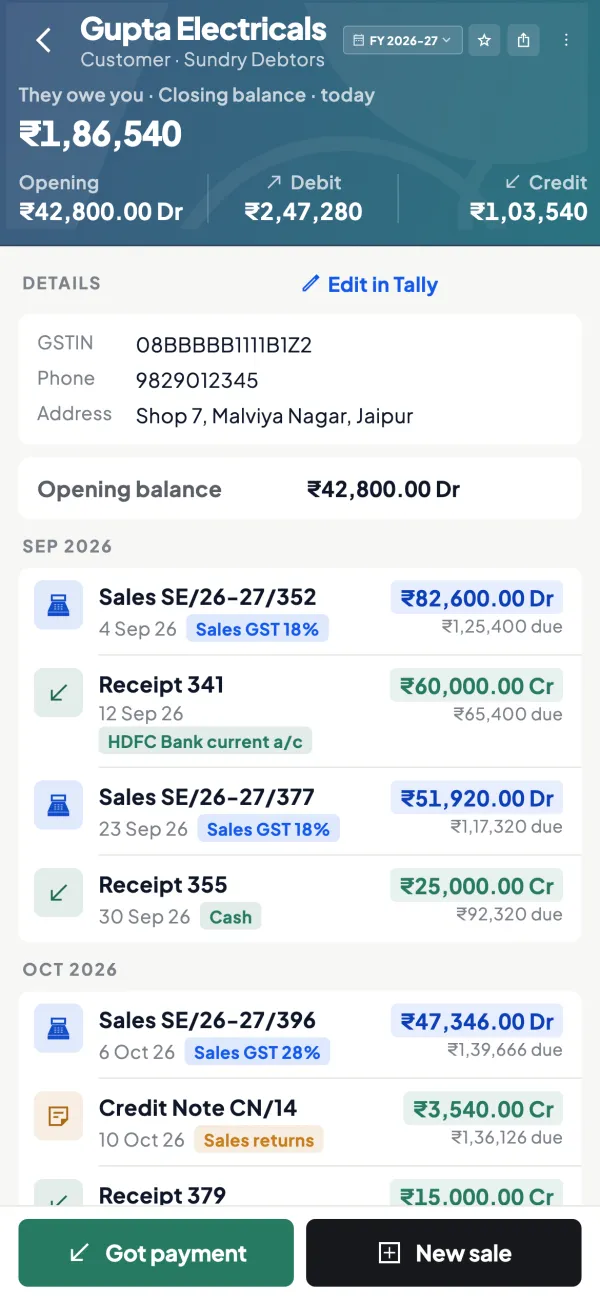
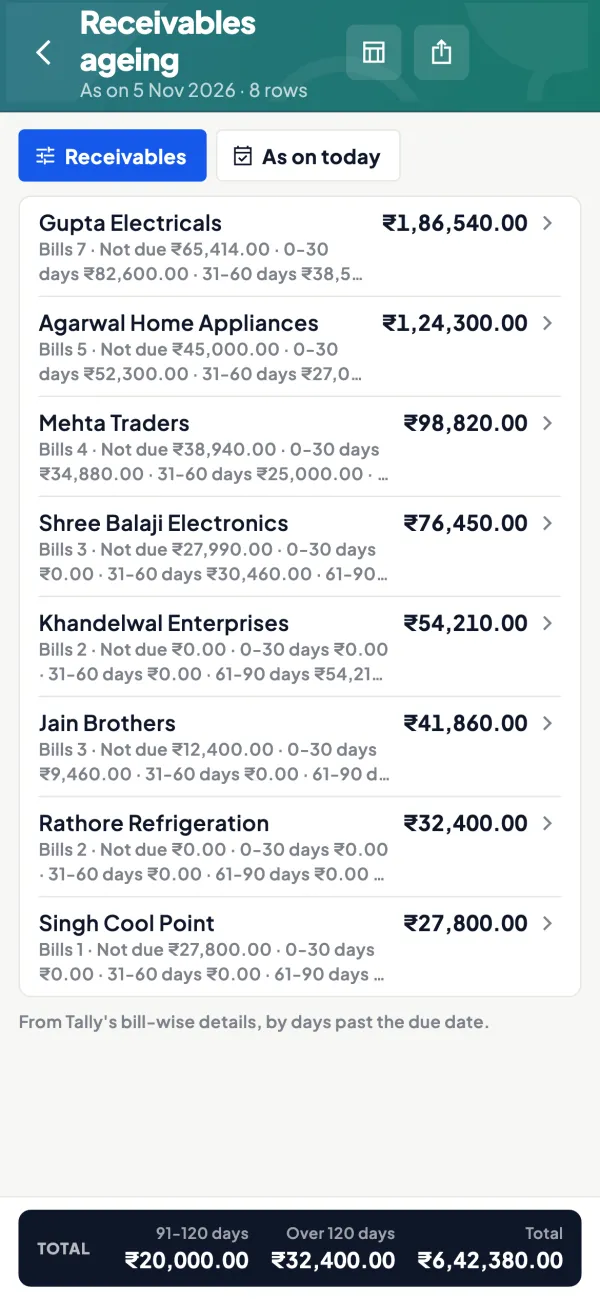
How it works. Bill-wise receivables with ageing for every shop, synced from Tally, so you know which old bills to ask for before giving more credit.
- Oldest bills first, not just the running total
- Decide credit before loading the next order
- Share the statement in one tap
In practiceAnnapurna Stores owes ₹46,300, but ₹21,000 of it is from September; today's order goes only after that bill is cleared.
The whole business in Hindi
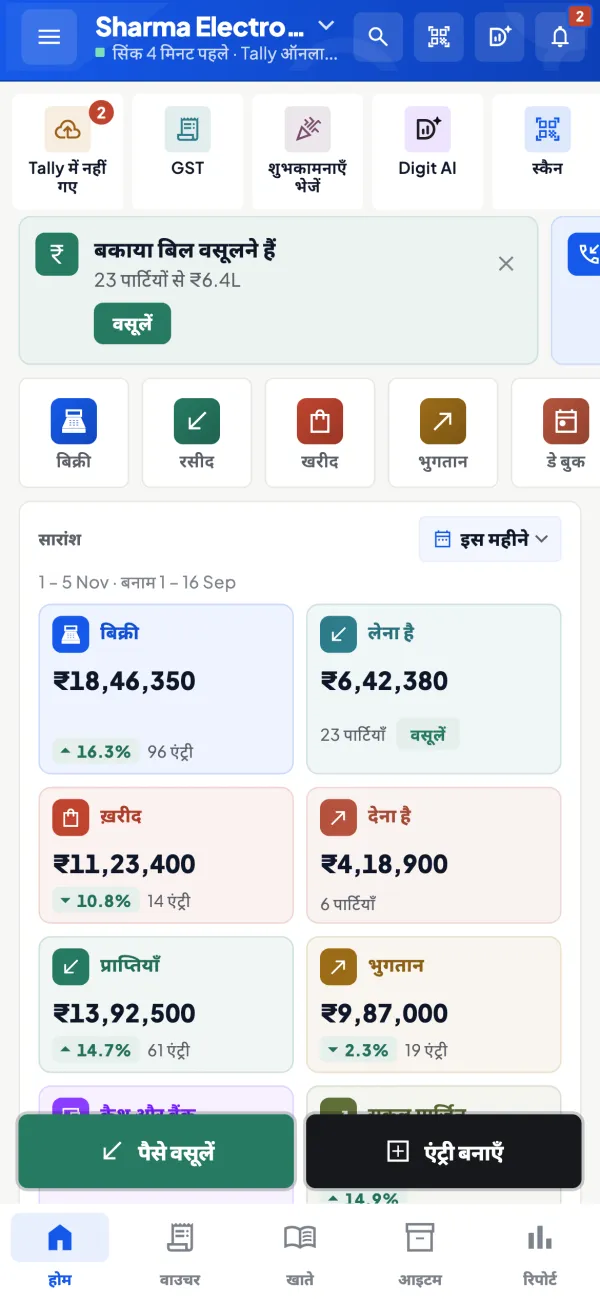
How it works. Home, ledgers and reports work in Hindi or English, chosen per person, on the phone and the web.
- The munim and the owner read the same data
- No training in English report formats
- Switch language any time
In practiceThe owner reads the home screen in Hindi while his son, who handles the accountant, keeps it in English.
Bills from the phone, in bags or kilos
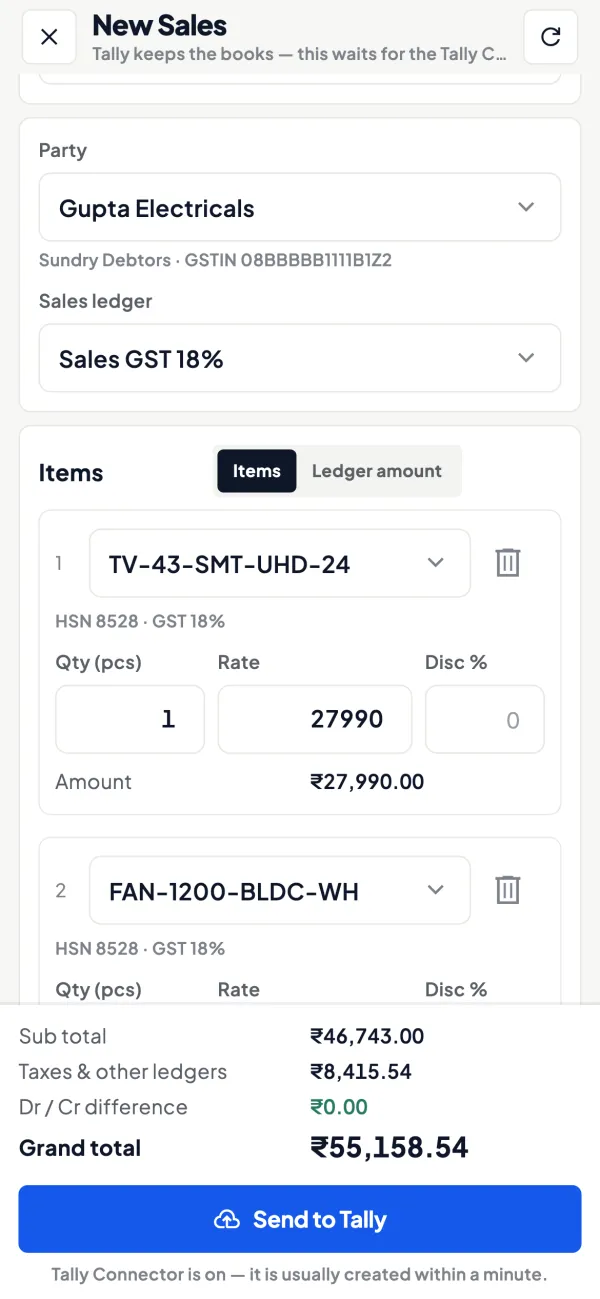
How it works. With writing to Tally switched on, create sales vouchers from the phone or web. Tally validates each one, and GST is worked out from the item and the party's state.
- Bill a caterer's order from the godown
- Tally refuses wrong entries with its reason
- Units and GST follow your Tally item setup
In practiceA caterer's order of 10 bags of sugar, 4 tins of oil and 25 kg of dal is billed from the godown and appears in Tally at once.
Reports for the season ahead
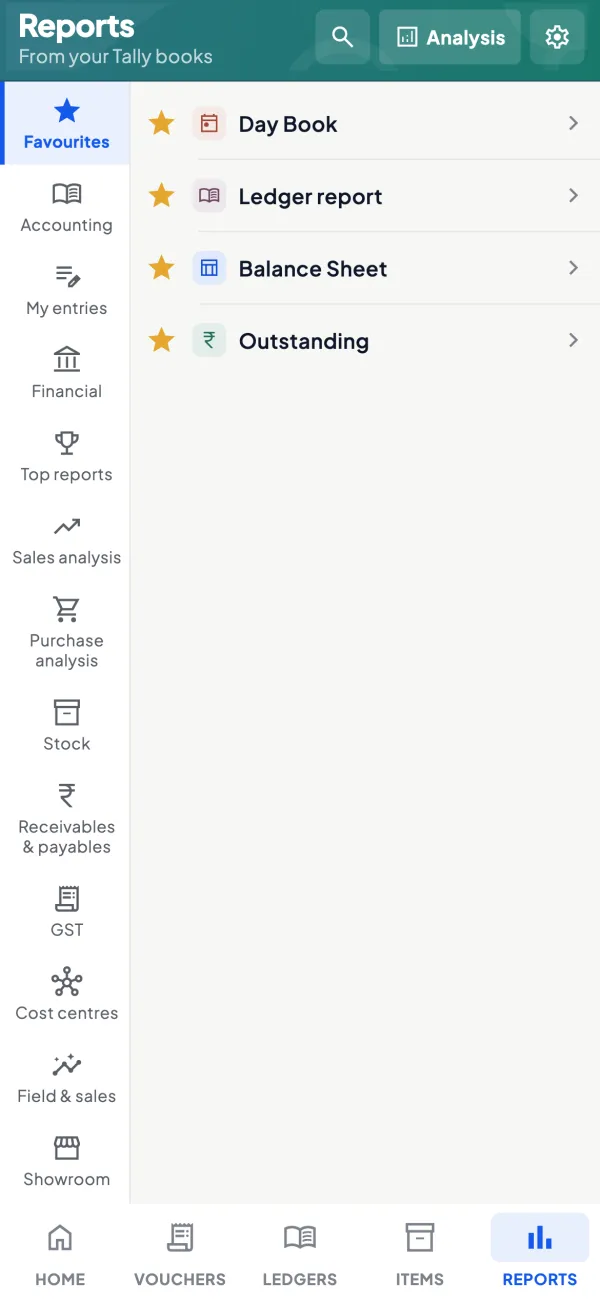
How it works. Stock summaries, top customers, day book and cashflow forecast from Tally, for any financial year or a custom range, with Excel and PDF export.
- Compare this Diwali with last year's
- See top shops by sales
- Export to Excel for your CA
In practiceBefore Diwali, the owner checks last year's October sales of dry fruits and sugar to decide how much to stock this time.
Know your trade
A guide for grocery wholesale businesses
How the business works, where money gets stuck, and the GST points to watch.
What a grocery wholesaler handles
The range splits into two kinds of goods. Staples such as rice, wheat and atta, pulses, sugar, edible oil, spices and dry fruits are bought from mills, processors, commission agents in mandis, and importers. Packaged goods such as biscuits, noodles, beverages, soaps and detergents come from company distributors or are bought in bulk from other wholesalers.
Buyers are kirana stores, small supermarkets, hotels and restaurants, caterers, canteens and institutions. Many shopkeepers order by phone or WhatsApp in the morning and expect delivery the same day, and almost all of them expect credit.
Units, weight and price movement
Staples are bought in quintals or large bags and sold in smaller bags, by kilogram, or repacked under the wholesaler's own name. Oil is bought in tankers or tins and sold by tin, jar or litre. Packaged goods are bought by the case and sold by the case, dozen or piece. In Tally, set each item with the unit you count in and an alternate unit for selling, for example 1 bag = 50 kg. See alternate units in Tally.
Prices of pulses, sugar, oil and spices move with harvests, imports and government policy. A wholesaler who updates rates late either loses margin or loses customers. Note the purchase rate of each lot, and review selling rates every morning for the items that move most.
Shrinkage and storage
Grains and pulses lose or gain weight with moisture, oil tins leak, and pests damage stock if godowns are not clean. Repacking loose goods adds packing material and labour costs, and some weight is always lost in handling. Record these losses periodically as stock adjustments, otherwise Tally will show more stock than the godown holds and your profit will be overstated. A simple monthly count of the top twenty items by value catches most problems; see the stock audit checklist.
The udhaar book
Credit to kirana shops is the core of the business and its biggest risk. Shopkeepers pay partly, round off amounts, and remember balances differently from the wholesaler. The fix is a clear statement, sent regularly, in a format the shopkeeper understands.
| Date | Particulars | Debit | Credit | Balance |
|---|---|---|---|---|
| 1 Nov | Opening balance | ₹18,400 | ||
| 2 Nov | Bill: atta, sugar, oil | ₹22,600 | ₹41,000 | |
| 5 Nov | Cash received | ₹20,000 | ₹21,000 | |
| 8 Nov | Bill: dal, spices | ₹9,850 | ₹30,850 |
A shopkeeper who sees this every week argues less and pays more regularly. Our payment reminder templates include Hindi versions.
Seasons, orders and same-day delivery
Demand rises before Diwali, Holi, Eid, Navratri and wedding seasons, with specific items peaking: dry fruits and sugar before Diwali, certain flours and oils during fasting periods, and bulk orders from caterers in wedding months. Harvest seasons change both prices and the cash available to rural customers. Plan purchases for these windows, and remember that perishable items such as some flours and spices have a limited life.
Morning orders and same-day delivery
A typical day starts with orders arriving by phone, WhatsApp voice notes and written lists photographed by shopkeepers. The counter staff turn these into bills, the godown picks and packs, and a tempo or van goes out by noon. Errors creep in at each step: an item misheard, a rate from last week, a bag loaded for the wrong shop.
Three habits reduce mistakes. First, read each order back to the shopkeeper or reply with the list before billing. Second, print the bill before loading and have the loader tick each line. Third, get the delivered bill signed or photographed at the shop, with any shortage noted on the spot. When a shopkeeper later disputes a bill, the signed copy and the order message settle it quickly. If the delivery person also collects cash, record the amount against the shop the same evening so the next morning's statement is right.
GST in grocery wholesale
GST treatment in groceries depends on the item and on how it is sold: some unbranded, loose staples are exempt, while pre-packaged and labelled goods and many processed items are taxable, and the rules on what counts as pre-packaged have changed over time. Check the current position for each item with your accountant and on the GST portal, and keep item masters accurate. If your turnover is under the threshold or you are in the composition scheme, different rules apply. This is general information, not tax advice.
Cashflow OS with Tally for grocery wholesalers
Cashflow OS syncs your TallyPrime books to the phone. Every shop's balance and bill-wise dues are visible, and a party statement goes out on WhatsApp as a PDF in Tally's format or as a simple Hindi हिसाब page that shopkeepers read easily. The app and reports work in Hindi and English, chosen per person. If you have delivery staff or salesmen, they can record collections, and the owner sees them the same day. See Hindi and English.
This page is general information for Indian businesses, not tax, legal or financial advice. Rules and rates change — check the official portals or your CA before acting.
Set-up
Up and running in 4 steps
No new software to learn for your accountant — Tally stays as it is.
- 1
Install the Tally Connector on the PC where TallyPrime runs
- 2
Sign in with your mobile number and scan the connector's QR
- 3
Pick Hindi or English for yourself and each staff member
- 4
Invite counter and delivery staff with a link and set their roles
Buyer’s checklist
What to look for in software for grocery wholesale businesses
Whatever you choose, check these before you commit.
- Bill-wise udhaar and ageing for every shop, not just a total
- Statements shopkeepers can read, in Hindi as well as English
- Orders taken on the phone reach billing without a paper chit
- Cash collected on delivery rounds recorded the same day
- Handles bags, kilos, tins and cases through alternate units
- Correct GST per item, as some staples are exempt and others are taxable
- Works with your existing accounting software, not a second set of books
- Owner can check sales and receipts without being at the shop
Plans
Simple yearly plans
- 14-day free trial on your own books
- 3-year term saves up to 25%
- Premium modules (catalogue, field force, price lists, store…) priced extra
Start free trialGet the price for your business
Compare all plans- Growth₹3,000/year + GSTBooks, reports, outstanding and sharing
- Pro₹5,000/year + GSTEverything in Growth, plus entries into Tally
- Pro+₹7,000/year + GSTEverything in Pro, plus e-invoice and e-way bill
Why Cashflow OS
Why grocery wholesale businesses choose Cashflow OS
- हिसाब in HindiStatements shopkeepers read and accept, sent on WhatsApp.
- Udhaar under controlBill-wise dues and ageing for every shop on the phone.
- Your Tally, unchangedThe connector syncs TallyPrime; entries go back into it.
- Language per personHindi or English, chosen by each user.
- Ask DigitAsk the AI assistant who owes the most or how sales compare, from your synced books.
- 14-day free trialTry it on your own shops and Tally data first.