
Running the business Inventory
Stock audit checklist
A stock audit compares what is physically in your godown with what your books say should be there, and explains every difference. Done properly once or twice a year, with smaller cycle counts in between, it catches errors, theft and damage before they grow.
- Traders and distributors
- Retailers with godowns
- Manufacturers
- Godown in-charges
- Accountants and auditors

On this page 11
Before the count
- Fix the date and time. Choose a low-activity day, ideally a holiday or after closing.
- Decide the cut-off: all sales, purchases, returns and stock transfers up to the cut-off are entered in the books; nothing moves during the count.
- Note the last invoice, delivery challan and goods receipt numbers before the count.
- Arrange stock neatly, item-wise, with loose pieces gathered and labelled.
- Separate damaged, expired, returned-by-customer and third-party goods (job work, goods held for customers).
- Print or prepare count sheets by location and rack, without the book quantity, so counters count what they see.
- Form teams of two: one counts, one records. Ideally not the staff who handle that stock daily.
During the count
- Count location by location; mark each rack as done.
- Count in the unit used in the books (boxes, pieces, kg). Note loose quantities separately.
- Open a sample of sealed cartons to check contents match the label.
- Record batch and expiry where relevant.
- Note condition: good, damaged, obsolete.
- A supervisor re-counts a sample of high-value items.
- Counters sign each sheet.
Reconcile with the books
Compare physical with book quantity for each item and list differences:
| Item | Book qty | Physical qty | Difference | Value at cost |
|---|---|---|---|---|
| MCB 32A | 480 | 468 | −12 | −₹2,640 |
| Wire 1.5 sq mm (coil) | 96 | 98 | +2 | +₹3,100 |
| LED panel 18W | 250 | 214 | −36 | −₹10,800 |
Investigate the large ones first. Common causes:
- Sale or delivery made but invoice not yet entered (or the reverse).
- Goods received but purchase not entered.
- Wrong item selected on a bill (sold the 20W, billed the 18W).
- Unit mix-ups between boxes and pieces; see alternate units.
- Free goods or samples given without an entry.
- Breakage, theft or counting error.
Adjust and close
- Correct genuine entry errors with the right vouchers.
- For the remaining unexplained shortages and excesses, pass a stock adjustment (in TallyPrime, typically a physical stock voucher or stock journal) with approval from the owner.
- Record damaged or obsolete stock for valuation review with your CA.
- Under GST, input tax credit on goods lost, stolen, destroyed or written off is generally not allowed and may need reversal; discuss with your CA. See blocked input tax credit. This is general information, not tax advice.
- File the signed count sheets and the reconciliation.
After the audit
- Fix the process behind repeated differences: billing checks, receiving checks, godown access.
- Start monthly cycle counts of high-value (A class) items so the annual count has fewer surprises.
- Use the count to list slow and dead stock for action; see inventory turnover and dead stock.
- Compare shrinkage value with the previous audit.
Share a one-page summary with the owner: total book value, total physical value, net difference, the five largest differences with their causes, and the actions agreed. Keep these summaries year to year; a rising shrinkage figure is a signal to tighten godown controls.
Cycle counting between full audits
Cycle counting means counting a few items every week instead of everything once a year. A simple schedule:
| Class | How often counted | Example |
|---|---|---|
| A (high value) | Monthly | Top 50 items by value, about 12 a week |
| B | Quarterly | Next 150 items, about 12 a week |
| C | Once or twice a year | Remaining items, at the full audit |
Count at the start of the day, before any movement, and enter the result the same day. Differences found in a cycle count are investigated while the transactions are still fresh, which makes the cause much easier to find than at a year-end count.
Help from Tally and Cashflow OS
With Cashflow OS, the stock summary from TallyPrime is available on a phone in the godown, so a supervisor can check book quantities item by item during reconciliation. Barcodes and labels, with camera scanning, can make identifying items quicker. Stock journals can be entered from the phone and posted to Tally once the owner allows writing back. See barcodes and labels.
Avoid these
Common mistakes
- MistakeCounting while goods are still movingDo this instead
Fix a cut-off, note the last bill, challan and receipt numbers, and stop all movement until the count ends.
- MistakeGiving counters the book quantityDo this instead
Use count sheets without the book figure, so staff count what they actually see.
- MistakeWriting off differences without investigatingDo this instead
Check unentered bills, wrong items, unit mix-ups and free goods first; adjust only what stays unexplained.
- MistakeIgnoring GST on lost or written-off stockDo this instead
Input tax credit on goods lost, stolen, destroyed or written off is generally not allowed; discuss reversal with your CA.
Keep handy
Checklist
Stock audit checklist — 8 checks. Tick them as you go.
In Cashflow OS
How Cashflow OS helps
Cashflow OS puts your TallyPrime books on every phone in the team. Where it fits this topic:
Book stock on a phone in the godown
The stock summary from TallyPrime is available on the phone, so a supervisor can check book quantities item by item during reconciliation.
See Tally on mobile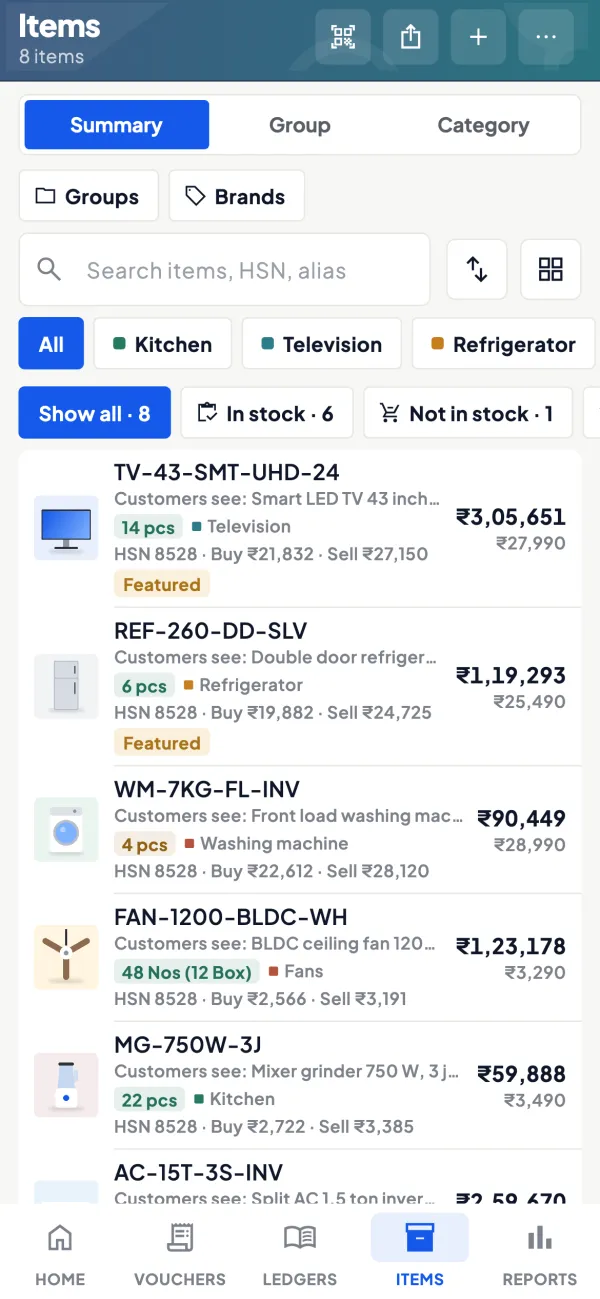
Barcodes and adjustments
Barcode labels with camera scanning can make identifying items quicker, and stock journals can be entered from the phone once writing to Tally is switched on.
See Barcodes and labels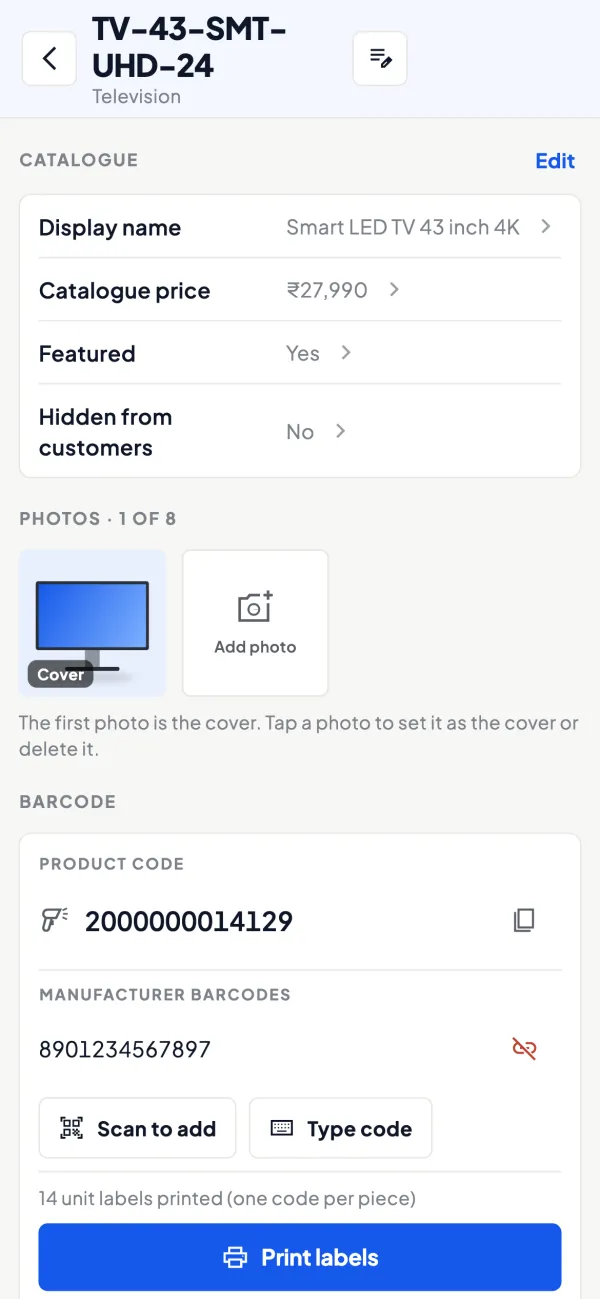
Questions people ask
How often should a business do a full stock audit?
Should the counting staff know the book quantity?
Who should approve stock adjustments?
Should stock held for customers be counted?
How long does a stock audit take?
What is the difference between a stock audit and a cycle count?
Should near-expiry stock be counted separately?
What if the count shows more stock than the books?
This page is general information for Indian businesses, not tax, legal or financial advice. Rules and rates change — check the official portals or your CA before acting.



