Running the business Controls
Internal controls for small businesses
Internal controls are the simple rules that make mistakes and fraud hard to hide: no single person handles a transaction from start to finish, approvals have limits, and the owner checks a few numbers regularly. You do not need an auditor's manual — you need a dozen habits.
- Owners of growing businesses
- Traders with cash counters
- Distributors issuing credit notes
- Multi-branch businesses
- Accountants setting up checks
- Family-run firms

On this page 11
Why small businesses need them most
Large companies have audit teams. A 20-person trading business usually has one trusted accountant, a cashier and the owner. Trust is necessary, but it is not a control. Most losses in small businesses come from ordinary gaps: a credit note nobody questioned, cash receipts not deposited for weeks, stock that left without a bill, a supplier paid twice.
Good controls also protect honest staff. When every entry has an owner and a check, nobody is wrongly suspected.
The four principles
- Split duties. The person who handles cash should not be the one who records it, and the person who records should not be the one who reconciles.
- Approve before, not after. Credit limits, discounts, payments and write-offs above set amounts need approval before they happen.
- Document everything. Every voucher has a source document: bill, challan, receipt, slip.
- Check regularly and by surprise. Reconciliations, counts and reviews on a fixed schedule, plus occasional surprise checks.
In a very small team, full separation is not always possible. If one person must both record and handle cash, the owner's review becomes the second pair of hands: a quick daily look at receipts and the cash balance, and a monthly look at the bank statement yourself.
Controls by area
| Area | Risk | Control |
|---|---|---|
| Cash sales | Sales not billed; cash kept | Every sale billed; daily cash count matched to cash book; deposit next day |
| Receipts from customers | Collection not deposited; posted to wrong party | Receipts given only from the system; party statements sent monthly |
| Payments | Duplicate or fake payments | Payment only against an entered bill; two people involved above a limit |
| Credit notes and discounts | Profit given away quietly | Approval above a threshold; monthly list reviewed by owner |
| Stock | Goods leave without bills; shrinkage | Gate pass or challan for every dispatch; cycle counts |
| Masters | Fake parties; changed rates | Only senior users create parties or change prices |
| Bank | Unrecorded transfers | Monthly reconciliation by someone who does not make payments |
A worked example: the credit note leak
A paint dealer gives retailers a 2% rate difference by credit note when they complain about price. Nobody reviews the notes. Over a year, the billing clerk issues ₹4,80,000 of credit notes, of which ₹1,10,000 are to two customers who are the clerk's relatives, for complaints that never happened.
The controls that would have caught it:
- Credit notes above ₹2,000 need the owner's approval in the system.
- A monthly report of credit notes by customer, read by the owner.
- Party statements sent to every customer each month — a genuine customer would ask why they received an unexpected credit.
None of these needs extra staff. See credit notes and debit notes in GST for how they should be issued.
Access and software controls
- One login per person; no shared passwords.
- Restrict alteration and deletion of vouchers, and closed periods, to senior users.
- Keep an audit trail switched on. Under company law, many companies are required to use accounting software with an edit log; check with your CA whether it applies to you.
- Back up data daily and keep one copy off the premises. See backing up accounting data.
- Remove access the day someone leaves, including phone apps.
An owner's control checklist
Daily: cash and bank balance; sales and receipts; any cancelled or altered bill.
Weekly: overdue receivables; payments made; credit notes issued; stock transfers in transit.
Monthly: bank reconciliation reviewed; petty cash surprise count; party statements sent; new parties and price changes reviewed; GST books vs returns.
Quarterly / yearly: full or cycle stock count; balance confirmations from major parties; review of who has access to what.
Controls that fit with Cashflow OS
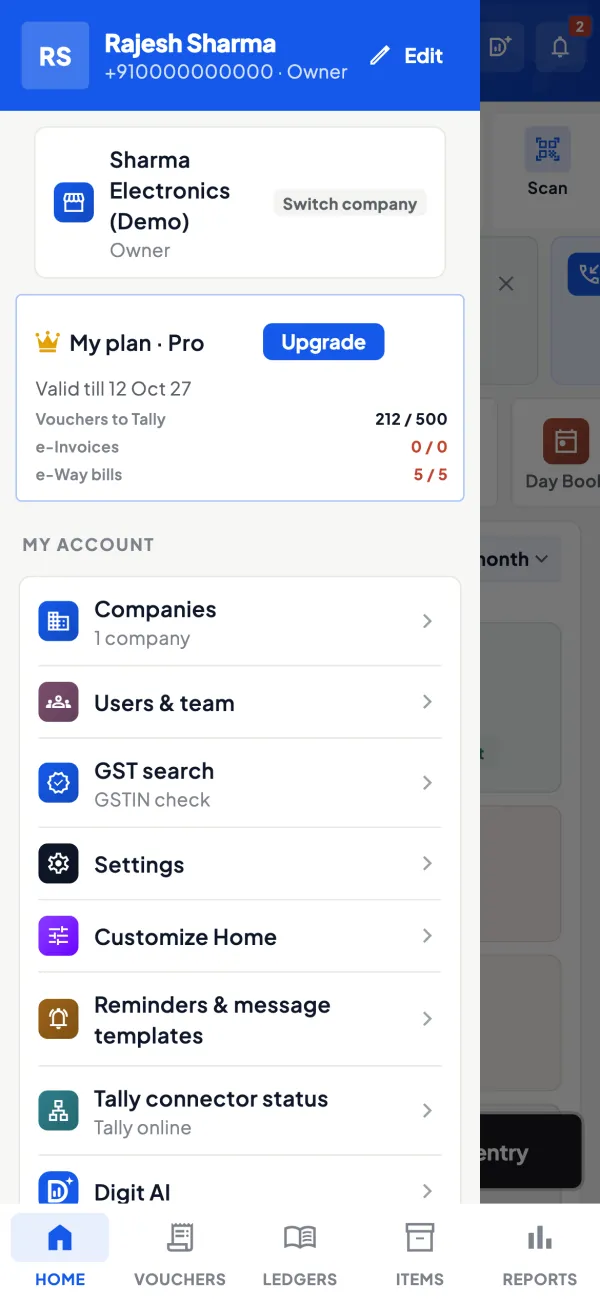
Cashflow OS supports several of these habits with your Tally data. Roles per company limit who sees accounts; salespeople see only items and their own customers. Writing back to Tally is off until the owner turns it on, frontline orders can need approval, and deleting a voucher needs a reason and an authorised user. The owner can see team activity, check the Day Book and cash and bank books from the phone, and send party statements on WhatsApp. See team roles.
Avoid these
Common mistakes
- MistakeTreating trust as a controlDo this instead
Keep the trust and add checks: a second person on payments above a limit, and the owner reading a few reports regularly.
- MistakeShared logins for the accounts teamDo this instead
Give one login per person, restrict alter and delete rights, and remove access the day someone leaves.
- MistakeNobody reviewing credit notes and discountsDo this instead
Require approval above a threshold, and have the owner read a monthly list of credit notes by customer.
- MistakeReconciling the bank only at year-endDo this instead
Reconcile every month, done by someone who does not make payments, or reviewed by the owner.
Keep handy
Checklist
Internal controls for small businesses — 8 checks. Tick them as you go.
In Cashflow OS
How Cashflow OS helps
Cashflow OS puts your TallyPrime books on every phone in the team. Where it fits this topic:
Roles that limit who sees what
Each company has roles: owner, admin, accountant, staff and salesperson. Salespeople see items and their own customers, and frontline orders can need approval before they go to Tally.
See Team roles and access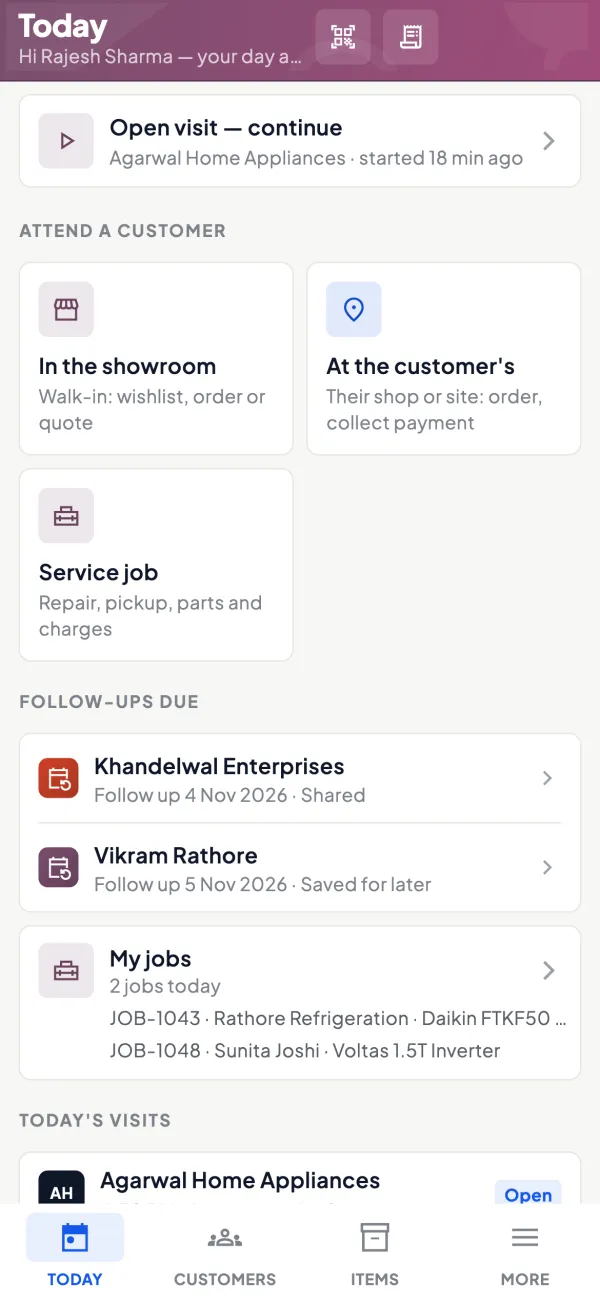
Owner's checks from the phone
Read the Day Book and cash and bank books, get alerts when vouchers are added, changed or deleted in Tally, and send party statements on WhatsApp.
See Party ledger statements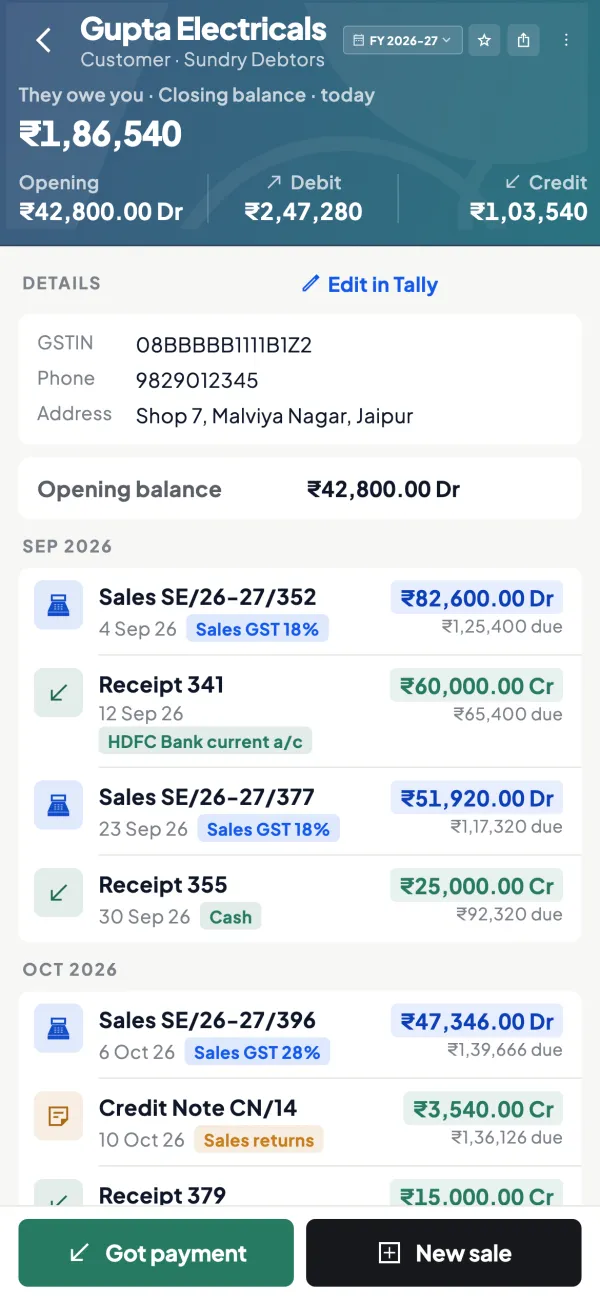
Questions people ask
What is segregation of duties in a small business?
I trust my accountant. Do I still need controls?
Which control gives the most value for the least effort?
How often should stock be counted?
What is an audit trail?
How do I control cash at a counter?
Should the accountant also make payments?
What should I do when an employee who handled cash leaves?
This page is general information for Indian businesses, not tax, legal or financial advice. Rules and rates change — check the official portals or your CA before acting.