Running the business Bank and cash
Bank reconciliation basics
Bank reconciliation means matching the bank ledger in your books with the bank's statement and explaining every difference. Done monthly, it catches missed entries, double payments, bank charges and cheques that never cleared.
- Accountants
- Owners checking their books
- Businesses with many UPI receipts
- Firms with several bank accounts
- Businesses with a CC limit

On this page 11
Why the two balances differ
Your books and the bank record the same money at different moments. You book a cheque the day you issue it; the bank records it when the supplier deposits it. The bank deducts charges you have not yet entered. A customer pays by UPI and your accountant enters it two days later. None of this is an error, but each difference must be explained.
Differences that cannot be explained are the ones that matter: a payment entered twice, a receipt posted to the wrong party, or money that left the account without anyone booking it.
The four usual reasons for a difference
| Reason | In books? | In bank? | Action |
|---|---|---|---|
| Cheques issued, not yet presented | Yes | No | Wait; follow up if older than a few weeks |
| Cheques deposited, not yet credited | Yes | No | Wait; check for returns |
| Bank charges, interest, direct debits | No | Yes | Enter in books |
| Direct credits (NEFT/UPI from customers) | No | Yes | Identify party and enter receipt |
A worked reconciliation
Mehta Hardware, current account, 31 August.
| Item | ₹ |
|---|---|
| Balance as per books (bank ledger in Tally) | 3,62,400 |
| Add: cheques issued but not presented (Supplier A ₹48,000, Supplier B ₹22,500) | 70,500 |
| Less: cheque deposited, not yet credited (Customer X) | −35,000 |
| Add: NEFT from Customer Y not entered in books | 18,200 |
| Less: bank charges and GST on charges not entered | −1,180 |
| Balance as per bank statement | 4,14,920 |
The last two lines are entries missing from the books. After you post the ₹18,200 receipt and the ₹1,180 charges, the books show ₹3,79,420 and the only remaining differences are timing items: the two cheques and the uncleared deposit.
Step-by-step monthly routine
- Download the bank statement for the month (PDF or Excel from net banking).
- Open the bank ledger in Tally for the same period.
- Tick off each entry that appears in both, by amount and date. Cheque numbers and UTR references help.
- List entries in the bank but not in books. Post them: charges, interest, direct receipts, auto-debits.
- List entries in books but not in the bank. Note them as timing differences with dates.
- Set the bank date for cleared items in Tally's bank reconciliation screen, so next month starts clean.
- Investigate anything older than 30 days on the timing list. Stale cheques and unidentified receipts do not fix themselves.
If your business has several bank accounts and a CC limit, reconcile each one separately. Transfers between your own accounts should be entered as contra vouchers and appear on both statements on the same or next day; an unmatched transfer is a common source of differences.
Unidentified receipts: the hardest part
Customers often pay by NEFT or UPI with no bill reference. Do not park these in a suspense ledger for months. Instead:
- Match the amount against outstanding bills of customers with similar names.
- Ask the salesperson who handles that area.
- Ask customers to mention bill numbers in the payment remark, and say so on your payment reminders.
- If still unknown after a week, book it on account to the most likely party and confirm with them.
Booking receipts against the right bills keeps ageing reports accurate and avoids reminding a customer who has already paid.
Receipts from payment apps and card machines often arrive as one settlement net of charges. Book the gross sales, the charges and the net settlement separately so the bank line matches and the charges are visible as an expense.
Red flags to look for
- The same amount paid to the same supplier twice in a month.
- Payments to a party who is not in your supplier list.
- Cash deposits that do not match the cash book.
- Cheque returns that were not reversed in the customer's ledger.
- Large round-figure transfers with no voucher behind them.
Reconciliation is one of the simplest internal controls you can have. Ideally the person who reconciles is not the person who makes payments.
Where Cashflow OS helps
The reconciliation itself happens in Tally against your bank statement; Cashflow OS does not connect to bank feeds. What it does give you is the bank book and cash book synced from Tally on your phone, so you can check balances and spot unusual entries any day. Accountants with the right role can post a missed receipt, payment or contra voucher from the phone or web app, and Tally validates it before it is saved. See create vouchers from your phone.
Avoid these
Common mistakes
- MistakeParking unidentified receipts in suspense for monthsDo this instead
Match by amount against outstanding bills, ask the salesperson, and within a week book it to the likely party and confirm.
- MistakeBooking card or payment app settlements as one net amountDo this instead
Book gross sales, charges and net settlement separately so the bank line matches and charges show as an expense.
- MistakeReconciling only at year endDo this instead
Reconcile at least monthly, or weekly with many daily receipts, while payments are still easy to trace.
- MistakeLetting the person who makes payments also reconcileDo this instead
Where possible, have someone other than the payer reconcile, as a basic internal control.
Keep handy
Checklist
Bank reconciliation basics — 8 checks. Tick them as you go.
In Cashflow OS
How Cashflow OS helps
Cashflow OS puts your TallyPrime books on every phone in the team. Where it fits this topic:
Bank and cash book on your phone
The bank book and cash book synced from Tally let you check balances and spot unusual entries any day. Reconciliation itself is done in Tally; there are no bank feeds.
See Financial reports from Tally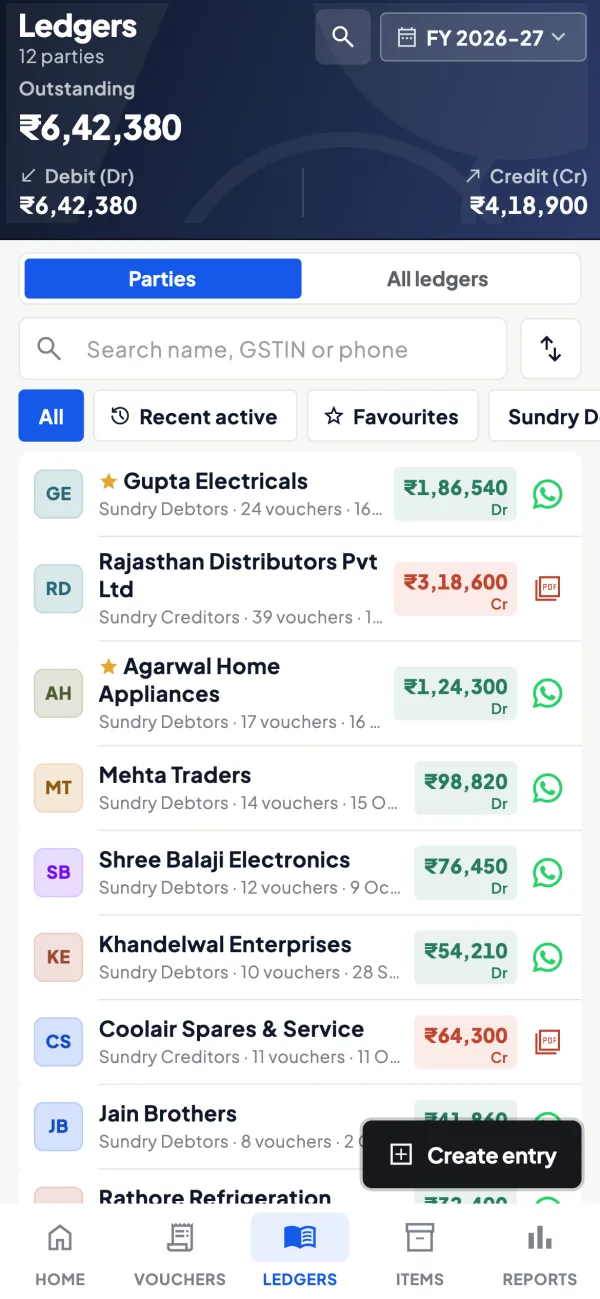
Post a missed entry from phone or web
Accountants with the right role can post a missed receipt, payment or contra voucher; Tally validates it before it is saved.
See Create Tally vouchers from your phone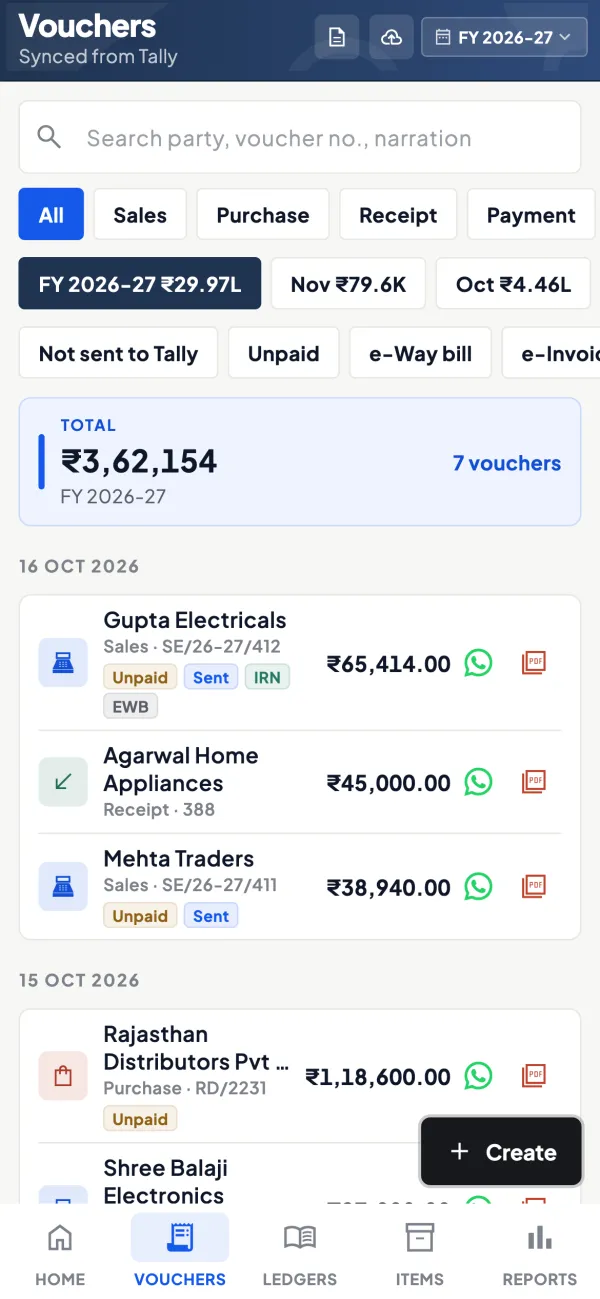
Questions people ask
How often should I reconcile my bank account?
What is a bank reconciliation statement?
Should bank charges be entered in the books?
What if a cheque I issued is never presented?
What red flags can a bank reconciliation show?
How do I reconcile transfers between my own accounts?
What do I do with a returned cheque?
How can customers make receipts easier to identify?
This page is general information for Indian businesses, not tax, legal or financial advice. Rules and rates change — check the official portals or your CA before acting.