
Running the business Bank and cash
Petty cash management for small businesses
Petty cash is the small float kept at the shop, office or godown for daily expenses like tea, courier, auto fare and minor repairs. Keep a fixed float, demand a slip for every rupee, and top it up only against bills.
- Shops and showrooms
- Branch and godown in-charges
- Small offices
- Accountants
- Multi-branch businesses

On this page 11
Why petty cash goes wrong
In most small businesses petty cash is the least controlled money. Amounts are small, so nobody checks. Over a year, though, ₹500 a day of unexplained spending is over ₹1,50,000 — and the same loose habits often spread to bigger cash.
Typical problems:
- Petty cash mixed with sales cash in the same drawer.
- No slips, or slips written days later from memory.
- The same person spending, recording and topping up.
- Personal expenses of the owner or staff paid from the box and never recorded.
- Large payments (₹10,000 to a contractor) made from petty cash to avoid approval.
The imprest system: a fixed float
The simplest reliable method is the imprest system. You decide a fixed float — say ₹10,000 for a branch — and the custodian always holds either cash or bills adding up to exactly that amount.
| Date | Event | Cash in box (₹) | Bills in box (₹) | Total (₹) |
|---|---|---|---|---|
| Mon | Float handed over | 10,000 | 0 | 10,000 |
| Tue | Courier ₹350, tea ₹420 | 9,230 | 770 | 10,000 |
| Thu | Electrician ₹1,800, auto fare ₹260 | 7,170 | 2,830 | 10,000 |
| Sat | Stationery ₹640, loading charges ₹1,200 | 5,330 | 4,670 | 10,000 |
| Sat | Top-up ₹4,670 against bills | 10,000 | 0 | 10,000 |
At any surprise check, cash plus bills must equal ₹10,000. A shortfall is visible at once.
Setting the float and limits
- Float size: roughly one to two weeks of normal small spending. Too large invites misuse; too small means daily top-ups.
- Single-payment limit: for example, nothing above ₹2,000 from petty cash. Larger payments go through the bank or the accounts head.
- What petty cash is for: list it — courier, tea and refreshments, local conveyance, minor repairs, small stationery, loading and unloading.
- What it is not for: salaries or advances, supplier payments, the owner's personal spending, anything regular enough to be paid monthly.
These limits sit inside your wider expense approval rules.
A sample petty cash voucher
Use a printed pad or a simple format like this. Every payment, even ₹50, gets one.
| Field | Example |
|---|---|
| Voucher no. and date | PC-0142, 12 September |
| Paid to | Ramesh (electrician) |
| Purpose | Replaced two tube lights in godown |
| Amount | ₹1,800 |
| Bill attached? | Yes / No (if no, reason) |
| Received by (signature) | Ramesh |
| Approved by | Branch in-charge |
Where no bill is possible — an auto fare, a tip to a loader — the receiver's signature on the voucher becomes the proof.
Recording petty cash in Tally
Create a separate cash ledger, such as Petty Cash – Main Branch, under Cash-in-Hand. This keeps it apart from the sales counter cash.
- Funding the float: a contra voucher from bank or main cash to Petty Cash for ₹10,000.
- Expenses: payment vouchers from Petty Cash to the right expense ledgers — courier, conveyance, repairs. Enter weekly from the slips, or daily if volume is high.
- Top-up: another contra for the total of the bills, ₹4,670 in the example.
The Petty Cash ledger balance in Tally should then always equal the cash physically in the box. If GST bills are received for eligible expenses, enter them as purchase or expense vouchers with tax so input credit is not lost — ask your accountant which ones qualify.
Weekly and surprise checks
- Weekly: custodian totals slips, accountant checks them against the cash left, enters vouchers, and releases the top-up.
- Monthly: review petty cash spending by head. If conveyance keeps growing, ask why.
- Surprise count: once a month or so, the owner or accounts head counts the box without warning. Cash plus slips must equal the float.
- Different people: the person who spends should not be the one who tops up. This is one of the cheapest internal controls you can put in place.
For multi-location businesses, give each branch its own float and ledger; see managing multiple branches.
Petty cash with Tally and Cashflow OS
Cashflow OS shows the cash book and every cash ledger synced from Tally, so the owner can check the petty cash balance of each branch from the phone. When writing back to Tally is switched on, an accountant can enter payment and contra vouchers from the phone or web app; Tally validates each entry. Team roles keep salespeople out of the accounts. See create vouchers from your phone.
Avoid these
Common mistakes
- MistakePetty cash kept in the sales cash drawerDo this instead
Keep a separate box and a separate Petty Cash ledger under Cash-in-Hand, so each balance can be checked on its own.
- MistakeWriting slips days later from memoryDo this instead
Fill a petty cash voucher at the time of each payment, with the receiver's signature when there is no bill.
- MistakeThe same person spends, records and tops upDo this instead
Let the custodian spend, the accountant check slips and enter vouchers, and someone else release the top-up.
- MistakePaying contractors or suppliers from petty cashDo this instead
Set a single-payment limit and route larger or regular payments through the bank or the accounts head.
Keep handy
Checklist
Petty cash management for small businesses — 8 checks. Tick them as you go.
In Cashflow OS
How Cashflow OS helps
Cashflow OS puts your TallyPrime books on every phone in the team. Where it fits this topic:
Petty cash balances on your phone
The cash book and every cash ledger are synced from Tally, so the owner can check each branch's petty cash balance from the phone.
See Tally on mobile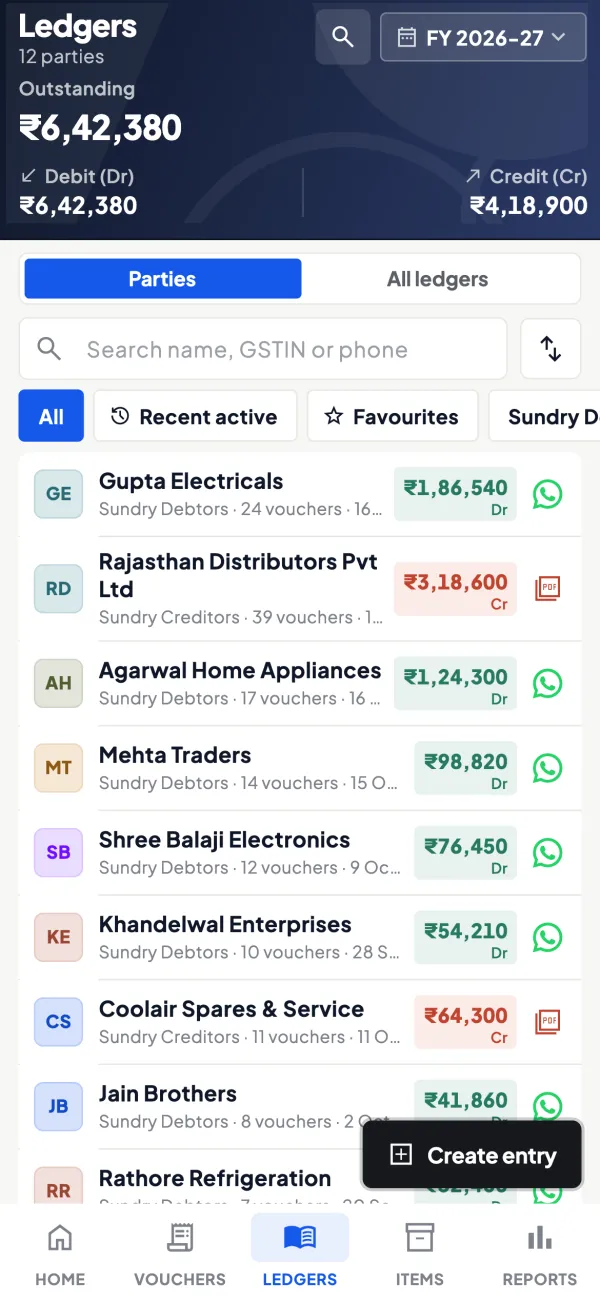
Payment and contra vouchers from phone or web
When writing back to Tally is switched on, an accountant can enter payment and contra vouchers that Tally validates; team roles keep salespeople out of the accounts.
See Create Tally vouchers from your phone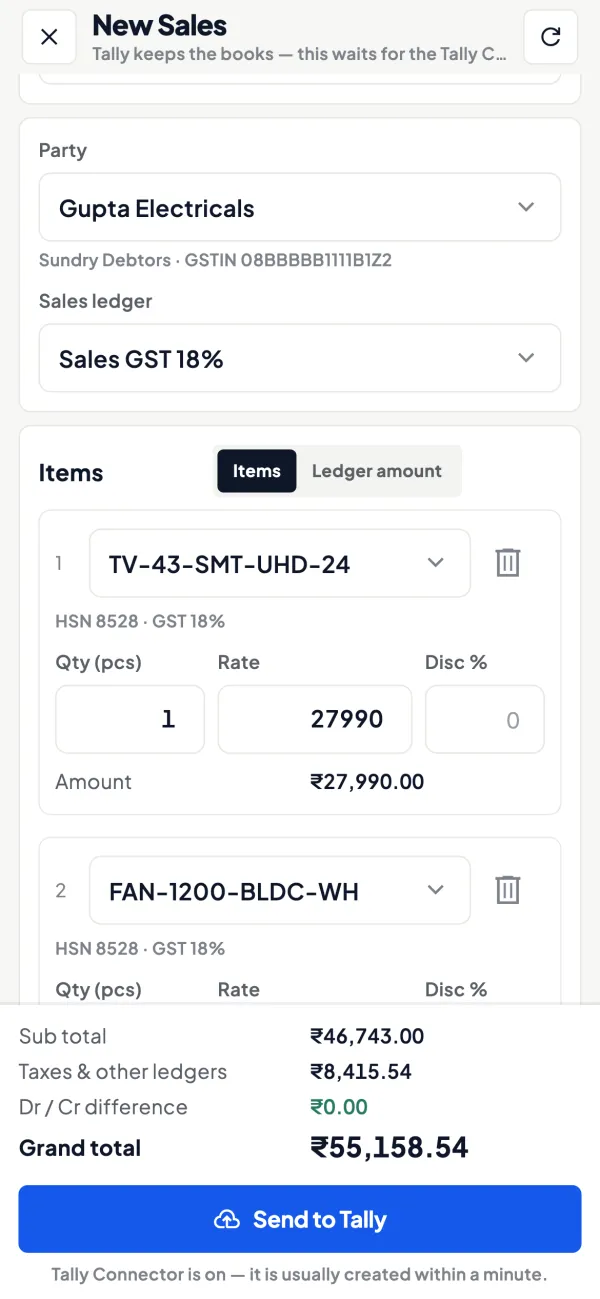
Questions people ask
How much petty cash should a small business keep?
What is the imprest system of petty cash?
Should petty cash be a separate ledger in Tally?
What if there is no bill for a small expense?
Can petty cash be used to pay suppliers?
How often should petty cash be topped up?
Who should be the petty cash custodian?
What should I do if there is a shortage during a count?
This page is general information for Indian businesses, not tax, legal or financial advice. Rules and rates change — check the official portals or your CA before acting.