Textile wholesale
Textile wholesale: metres, bales, agents and long credit
Fabric wholesale runs through mills, processors, agents and retailers, measured in metres and bales, and settled on some of the longest credit periods in Indian trade.
- Metres, thans and bales sorted
- Ageing by bill, every week
- Designs shared on a link
- Works on your own Tally
Start free trialBook a free demo
Works with your TallyPrime14-day free trialJaipur team, call +91 70738 53555

Built for textile wholesale businesses
Who it’s for
- Fabric wholesalersMarket shops selling running fabric to retailers and tailors
- Saree wholesalersPieces, sets and designs sold through agents
- Suiting and shirting tradersMetres and thans to retailers and tailoring shops
- Dress material and unstitched suit dealersSets by design, festival-season peaks
- Grey fabric tradersWeaver to processor, job work and long credit
- Home textile wholesalersBedsheets, curtains and made-ups by piece and set
- Sub-wholesalers in smaller citiesBuying through agents, selling to town retailers
Pain → fix
The problems we fix
The everyday headaches of textile wholesale businesses, and what changes when the books are on every phone.
- The problemLong and uncertain credit through agents
Bills of 60 or 90 days stretch further, and problems hide until they are large.
With Cashflow OSBill-wise ageing for every retailer, every weekEach retailer's unpaid bills and their age come from your Tally books, so the weekly review takes minutes.
See how it works - The problemRetailers asking for their hisaab again and again
Agents ask for account copies before every collection round.
With Cashflow OSStatement as a PDF or a Hindi हिसाब pageShare a party statement on WhatsApp in Tally's format or as a simple Hindi page the retailer can read.
See how it works - The problemJob-work goods out at processors
Grey fabric sits at dyeing and printing houses and nobody knows how many metres are where.
With Cashflow OSBranded delivery challans for every lot sent outEach lot leaves on a challan with metres and thans, so goods at each processor can be reconciled when they return.
See how it works - The problemDesign photos forwarded in bits on WhatsApp
Agents show retailers old photos, and orders come for designs you no longer have.
With Cashflow OSAn online catalogue link with design photosItems carry photos and your design names, and retailers browse the link and enquire on WhatsApp.
See how it works - The problemCredit running past March, books split in two
A bill from January is still open in June, and the account now spans two financial years.
With Cashflow OSLedgers and reports across financial yearsCustom date ranges can span several financial years, so a party's full running account is one report.
See how it works - The problemMetres, thans and bales on the same bill
Fabric in metres, sarees in pieces and suits in sets make billing slow and error-prone.
With Cashflow OSBills in the units Tally already holdsItems keep their units from Tally, including alternate units for thans and bales, when bills are made from the phone.
See how it works
Features
How Cashflow OS works for textile wholesale businesses
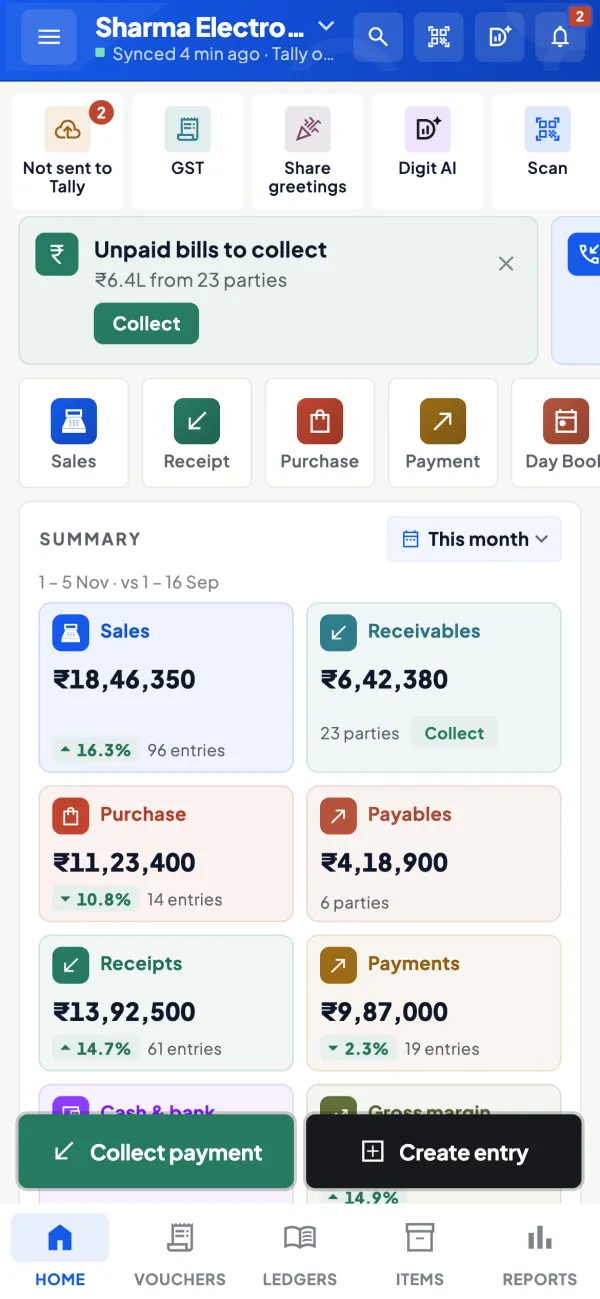
Weekly ageing for every retailer
How it works. Bill-wise outstanding and ageing come from your Tally books. Sort by oldest bill and send the list to the agent before his round.
- Oldest bills of each retailer first
- Problems seen at 90 days, not 200
- Same numbers as your Tally
In practiceShree Balaji Saree Centre, Indore owes ₹3,62,000 across seven bills, the oldest 118 days. The agent gets the list and the statement before his visit.
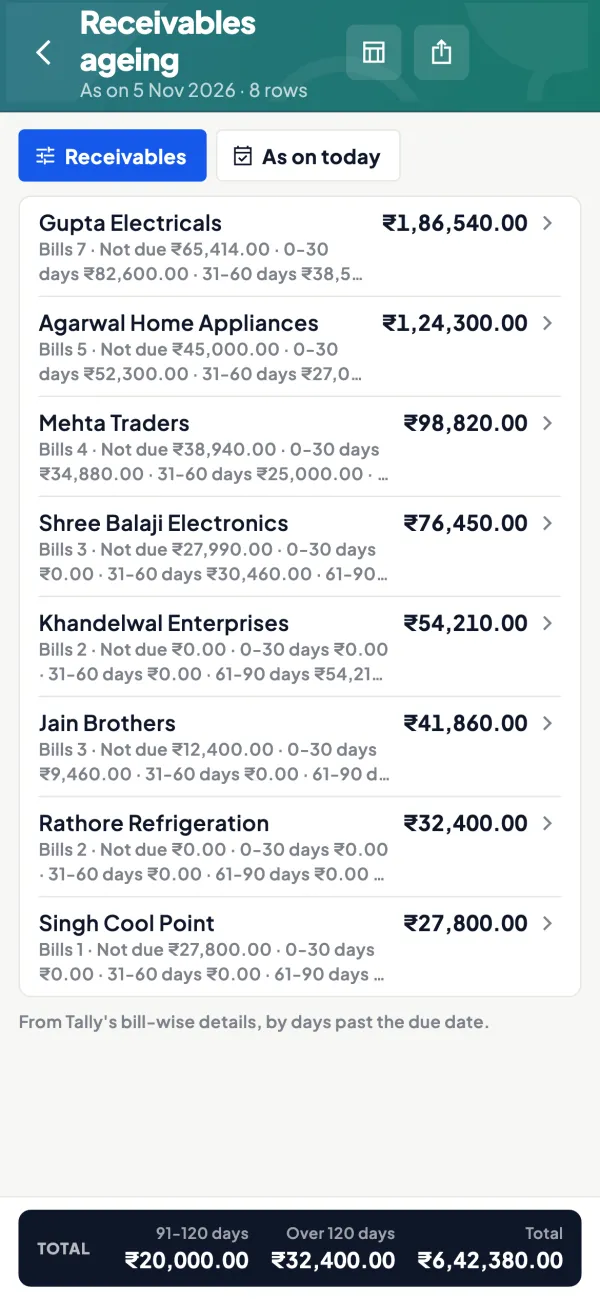
Statements retailers can read
How it works. Share any party's statement as a PDF in Tally's format or as a simple Hindi हिसाब page, for any date range.
- Hindi page for town retailers
- Tally format for their accountant
- Ranges that cross 31 March
In practiceA retailer in Bhilwara asks for his account from last Diwali to now. You send the हिसाब page on WhatsApp in a minute.
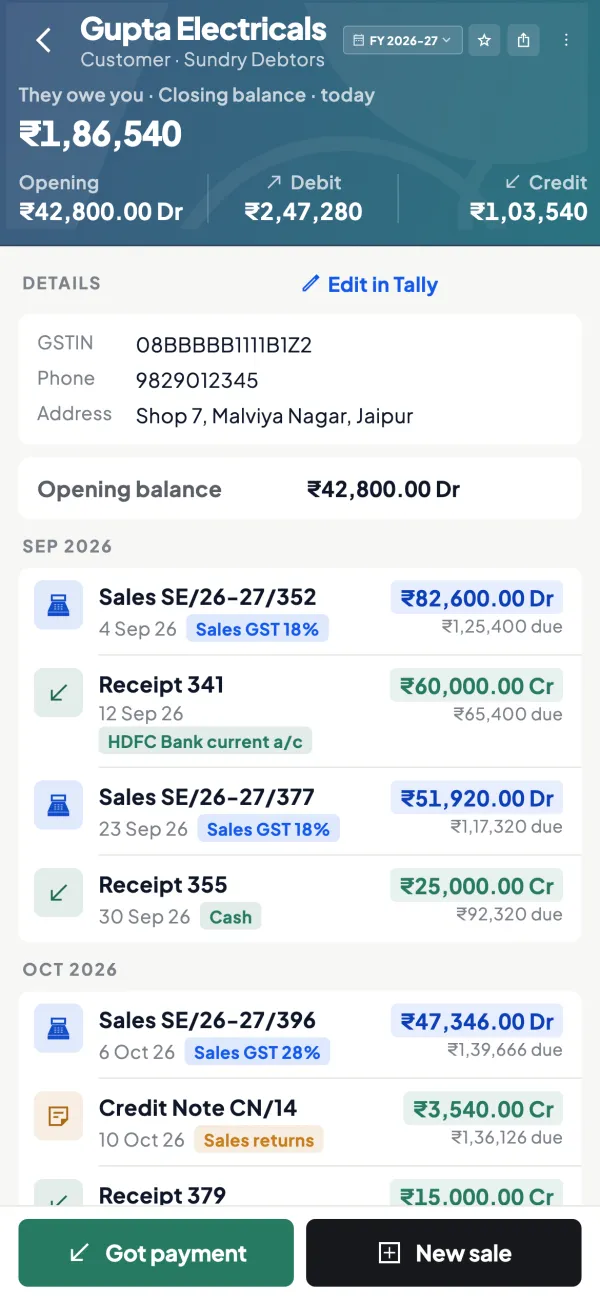
Challans for goods at processors
How it works. Send grey or finished fabric to dyeing, printing or embroidery units on a branded delivery challan with metres and thans, and record the receipt when it comes back.
- Metres at each processor on record
- Processing loss recorded, not lost
- Challans shared as PDF with the unit
In practice4,800 m of grey poplin goes to a dyeing house in Pali on a challan. 4,690 m comes back, and the 110 m loss is recorded instead of left as a stock gap.
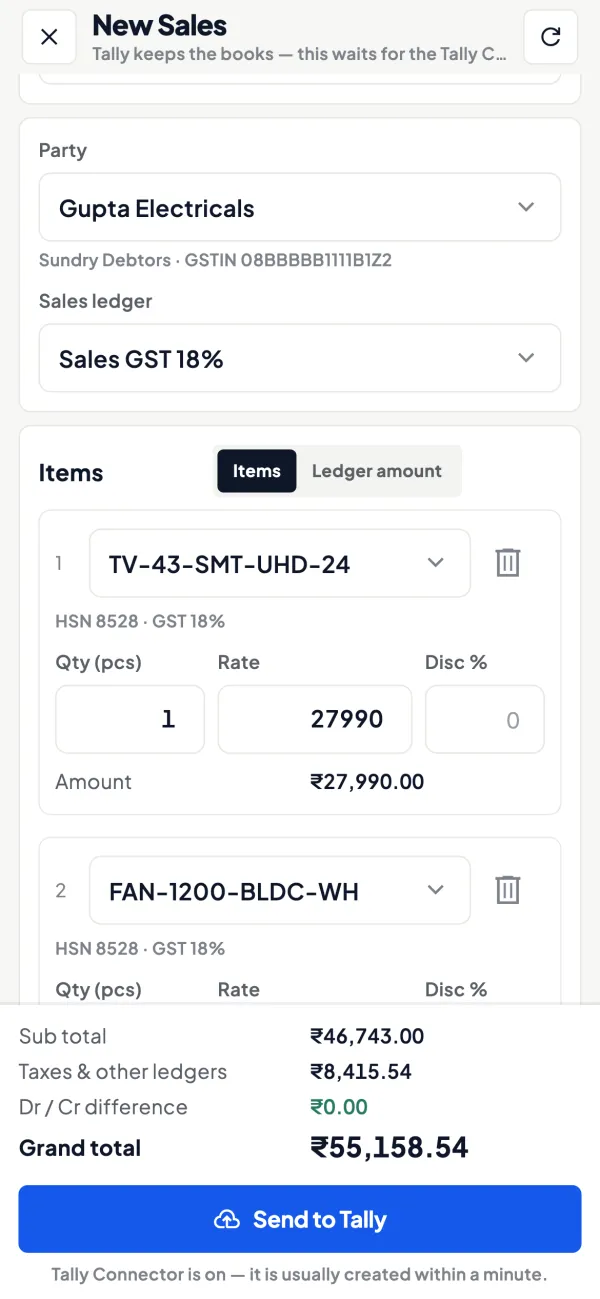
Designs on a link, not in old photos
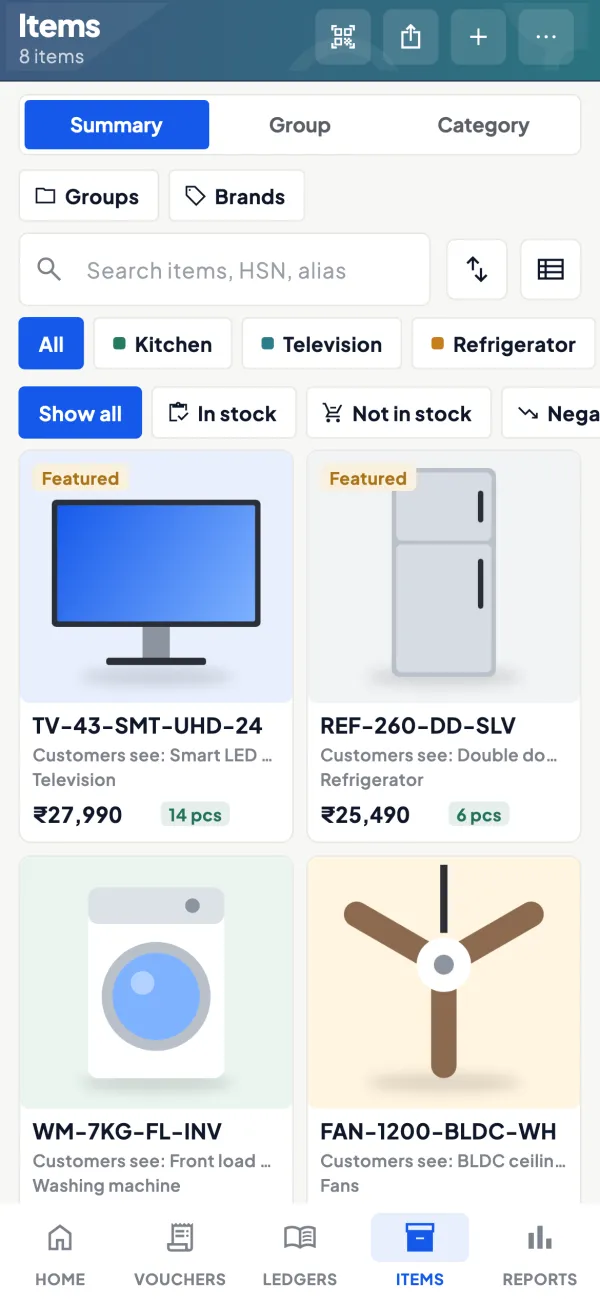
How it works. Each design carries photos and your own display name beside the Tally name, grouped by stock group. Agents forward one catalogue link; enquiries come on WhatsApp.
- Retailers see the current range
- Design numbers stay consistent
- Enquiries name the exact design
In practiceYour agent in Lucknow forwards the link with 36 new festive prints, and retailers reply on WhatsApp with design numbers and quantities.
Collections recorded on the spot
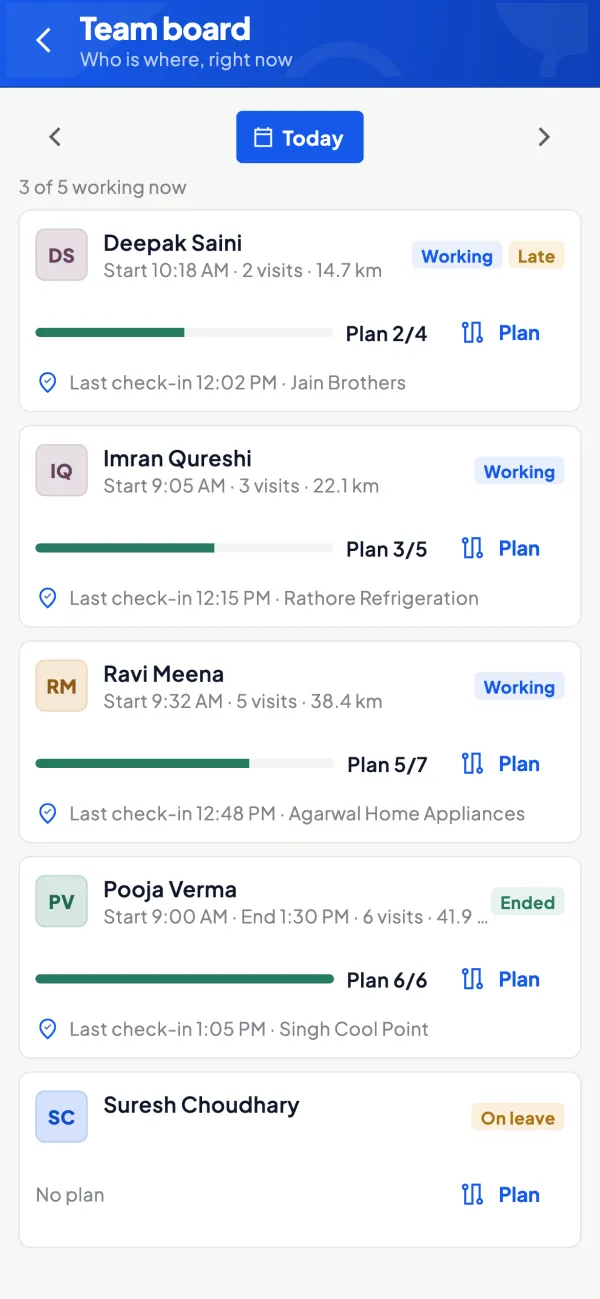
How it works. Salespeople and collection staff record what they collected in the app, and the owner sees the team's activity.
- Collections noted the same day
- Owner sees who collected what
- Fewer surprises at month end
In practiceYour collection man records ₹45,000 from three shops in Chandni Chowk before lunch, and you see it while the accountant posts the receipts in Tally.
Know your trade
A guide for textile wholesale businesses
How the business works, where money gets stuck, and the GST points to watch.
The fabric chain
Yarn goes to weavers and mills, grey fabric goes to processors for dyeing and printing, and finished fabric reaches wholesalers in textile markets. Wholesalers sell to retailers of fabric, tailoring shops, garment manufacturers and sub-wholesalers in other cities. Sarees, suiting and shirting, dress materials, home textiles and unstitched suits each have their own markets and clusters.
Brokers and commission agents are central. A retailer in a small town may buy through an agent who visits several wholesalers, places orders, and later helps collect payment. The agent's commission and the retailer's credit period are usually agreed at the time of the deal.
Units: metres, thans, bales and pieces
Fabric is bought and sold in metres but handled in thans (rolls) and bales. A single bill may list fabric in metres, sarees in pieces and suit sets in sets. In Tally, keep metres as the base unit for running fabric and use an alternate unit for than or bale where the length is standard; for fixed-length items like sarees, use pieces. See alternate units in Tally.
Short length (a than that measures less than stated) and damage found on unrolling are common claims. Measure inward goods on receipt where practical, note shortages on the receipt note, and raise a debit note to the supplier the same week.
Credit and how money gets stuck
Long credit is the defining feature. Bills of 60, 90 or more days are common, and in practice payment often comes later still, sometimes in parts. Some markets also give a cash discount for early payment. Because most trade passes through agents, the wholesaler may not deal directly with the retailer for collection.
- Record the agent on every bill, so outstanding can be viewed by agent as well as by party.
- Review bill-wise ageing every week; long credit hides problems until they are large.
- Agree in writing how returns, short-length claims and cash discounts will be settled.
- Stop new supplies to parties whose oldest bill is far past the agreed period, whatever the agent says.
For payments to micro and small enterprise suppliers, there are legal time limits that also affect the tax deduction for the buyer; see the MSME payment rule.
Job work and processing
Many wholesalers send grey fabric to processors for dyeing, printing or finishing, or send finished fabric to embroidery units. The goods leave your godown but still belong to you. Record these movements with delivery challans and receipt notes so you know how many metres are lying at each processor, and reconcile when the goods come back. Processing losses, a few percent of length, should be recorded rather than left as a stock gap. The guide on GST on job work covers the tax side.
Designs, seasons and samples
Printed and dyed fabrics follow fashion and festival seasons. Wholesalers send swatches and photos to retailers through agents and on WhatsApp, and book orders before goods are processed. Designs that do not sell become dead stock, sold later by weight or at deep discount. Track stock by design and age, and decide early which designs to clear.
| Age of design stock | Suggested action |
|---|---|
| Up to one season | Normal selling, push through agents |
| Second season | Offer to sub-wholesalers at a discount |
| Older | Clear as a lot; do not keep carrying it |
GST points for textile traders
Yarn, grey fabric, processed fabric, made-ups and garments can fall under different HSN codes and rates, and textile rates have been revised more than once. Check the current rate for each on the GST portal, and keep HSN codes accurate because they appear in your returns. Job-work charges, transport and agent commission each have their own GST treatment; agree it with your accountant. This is general information, not tax advice.
Cashflow OS with Tally for textile wholesalers
Cashflow OS syncs your TallyPrime books to the phone and web. Bill-wise outstanding and ageing for every retailer is a tap away, and statements go to retailers or agents on WhatsApp as a PDF in Tally's format or a simple Hindi हिसाब page. Delivery challans with your branding track goods sent to processors. Item photos and an online catalogue help agents show designs. Reports can cover custom date ranges across financial years, useful when credit runs past March. See party ledger statements.
This page is general information for Indian businesses, not tax, legal or financial advice. Rules and rates change — check the official portals or your CA before acting.
Set-up
Up and running in 4 steps
No new software to learn for your accountant — Tally stays as it is.
- 1
Install the Tally Connector on the PC where TallyPrime is open
- 2
Sign in with your mobile number and scan the connector's QR
- 3
Add photos and design names to the current season's items
- 4
Invite agents, salesmen and the munim with a link and a role
Buyer’s checklist
What to look for in software for textile wholesale businesses
Whatever you choose, check these before you commit.
- Metres, thans, bales, pieces and sets handled as Tally units
- Bill-wise outstanding and ageing for every retailer
- A way to see dues by agent, if agents are recorded in your books
- Delivery challans for goods sent to processors and job workers
- Statements in Hindi for retailers and in Tally's format for accountants
- Design photos agents can share without forwarding old images
- Reports and ledgers that run across financial years
- Works with the Tally books your accountant already keeps
Plans
Simple yearly plans
- 14-day free trial on your own books
- 3-year term saves up to 25%
- Premium modules (catalogue, field force, price lists, store…) priced extra
Start free trialGet the price for your business
Compare all plans- Growth₹3,000/year + GSTBooks, reports, outstanding and sharing
- Pro₹5,000/year + GSTEverything in Growth, plus entries into Tally
- Pro+₹7,000/year + GSTEverything in Pro, plus e-invoice and e-way bill
Why Cashflow OS
Why textile wholesale businesses choose Cashflow OS
- Long credit, kept visibleBill-wise ageing from Tally for every retailer, any time.
- Hindi हिसाब pagesStatements retailers in small towns can read, shared on WhatsApp.
- Goods at processors on recordBranded challans for every lot sent for dyeing, printing or embroidery.
- Designs in one linkOnline catalogue with photos and your own design names.
- Accounts across yearsCustom date ranges over several financial years.
- 14-day free trialTry it with your own Tally data before you pay.