GST GST for manufacturers
GST on job work
A registered principal can send inputs and capital goods to a job worker without paying GST, on a delivery challan. The goods must come back within one year (inputs) or three years (capital goods), and the movement is reported in Form ITC-04.
- Manufacturers using job workers
- Job workers and fabricators
- Garment and embroidery units
- Furniture and polishing units
- Accountants filing ITC-04

On this page 12
How job work is treated
Job work means processing done on goods belonging to someone else. A furniture maker sending plywood to a polishing unit, or a garment unit sending fabric for embroidery, is the principal; the unit doing the work is the job worker. Section 143 of the CGST Act lets the principal send goods out without treating it as a sale, and keeps the principal's input tax credit intact.
Two supplies are involved: the movement of goods (not taxed if the conditions are met) and the job worker's service (taxed).
Step by step
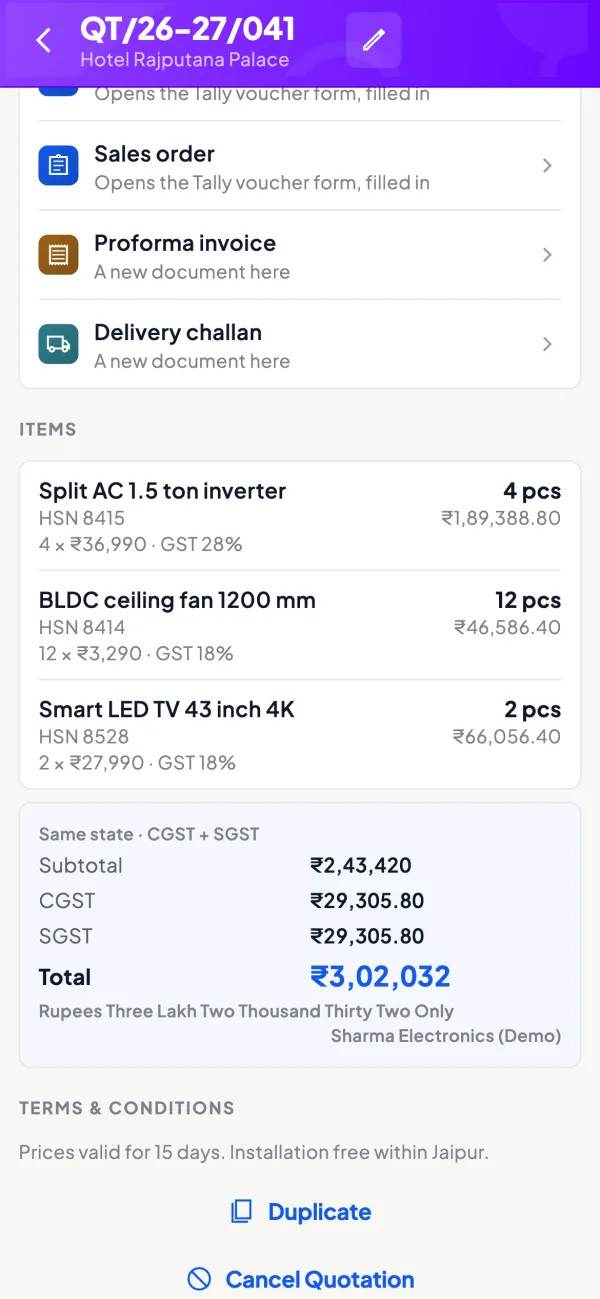
- Issue a delivery challan for the goods sent, with description, quantity, value and the job worker's details. See delivery challan under GST.
- Generate an e-way bill where required. Job work movements have specific e-way bill rules, including some inter-state movements below the usual value limit; check the current rule.
- The job worker processes the goods and returns them on its own challan, with a tax invoice for its charges.
- The principal claims ITC on the job worker's invoice.
- File ITC-04 with details of goods sent and received.
Time limits and what happens if missed
| Goods | Must return within | If not returned |
|---|---|---|
| Inputs | 1 year from the date sent | Deemed supplied on the day they were sent; pay GST with interest |
| Capital goods | 3 years from the date sent | Same |
| Moulds, dies, jigs, tools | No time limit | Not applicable |
Example. On 1 May 2025 a manufacturer sends steel worth ₹2,00,000 (GST rate 18%) to a fabricator. By 30 April 2026 only part has come back, worth ₹1,50,000. The remaining ₹50,000 is treated as supplied on 1 May 2025: GST of ₹9,000 is payable, with interest from the original due date. The department can extend the limits on request, so ask before the year runs out if delays are expected.
The job worker's side
- The job worker registers if its turnover crosses the threshold (see GST registration threshold).
- It charges GST on its processing charges, not on the value of the principal's goods.
- Job work rates depend on the type of processing and the goods; rates were revised in the 2025 rationalisation, so confirm the current rate for your service code.
- Materials the job worker adds from its own stock are part of its charges.
ITC-04 and scrap
ITC-04 is the principal's report of goods sent to and received from job workers. Larger principals (annual aggregate turnover above ₹5 crore) file it half-yearly; others file annually. Due dates and frequency can change, so check gst.gov.in.
Waste and scrap generated at the job worker can be sold by the job worker on payment of tax if it is registered, or by the principal if it is not. Account for the quantity so input and output reconcile.
A simple challan register
A register like this, kept monthly, answers most questions and shows when the time limit is coming up:
| Challan no. and date | Job worker | Item and qty sent | Qty received back | Balance | Return due by |
|---|---|---|---|---|---|
| JW/015, 01-05-2025 | Shree Fabricators | MS sheet, 2,000 kg | 1,500 kg | 500 kg | 30-04-2026 |
| JW/016, 12-06-2025 | Om Polishers | Table tops, 120 nos | 120 nos | Nil | Closed |
Review the open lines every month and follow up any that are more than nine months old.
Common mistakes
- Sending goods on a sales invoice 'to be safe', which creates tax and confuses stock.
- No register of challans out and in, so the one-year limit is missed.
- Job worker charging GST on the full value of goods instead of the processing charge.
- Stock at the job worker not shown in the principal's inventory.
This is general information, not tax advice.
Job work in Tally and Cashflow OS
TallyPrime has job work features using material out and material in vouchers, with the job worker's location set as a godown so stock stays in your books. Cashflow OS syncs your Tally items and godown-wise stock summaries, so you can see on the phone how much material is lying with each job worker. If writing back is switched on, a delivery note or stock journal can be posted from the phone; Tally validates it. ITC-04 is filed on the portal.
Avoid these
Common mistakes
- MistakeSending goods for job work on a sales invoiceDo this instead
Use a delivery challan with description, quantity, value and the job worker's details; an invoice creates tax and confuses stock.
- MistakeNo register of challans out and backDo this instead
Keep a monthly challan register with balance and return-due date, and follow up lines older than nine months.
- MistakeJob worker charging GST on the full value of goodsDo this instead
GST is charged only on the processing charges, including any of the job worker's own material used.
- MistakeStock at the job worker left out of your inventoryDo this instead
Track material with each job worker as your stock, for example as a separate godown, so books and ITC-04 agree.
Keep handy
Checklist
GST on job work — 7 checks. Tick them as you go.
In Cashflow OS
How Cashflow OS helps
Cashflow OS puts your TallyPrime books on every phone in the team. Where it fits this topic:
Stock lying with each job worker
Cashflow OS syncs your Tally items and godown-wise stock summaries, so you can see on the phone how much material sits with each job worker.
See Tally on mobile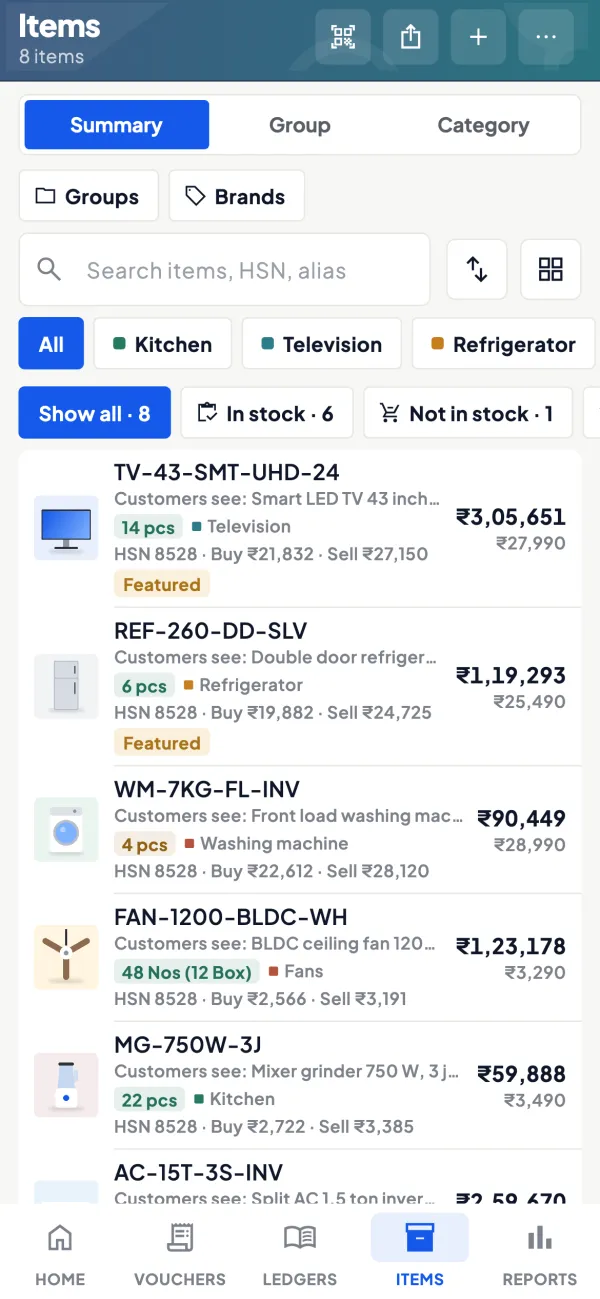
Challans and stock journals from the phone
With writing back on, a delivery note or stock journal can be posted to Tally from the app; Tally validates it. ITC-04 is still filed on the portal.
See Delivery challans
Questions people ask
Is GST payable when sending goods for job work?
What is ITC-04?
On what value does the job worker charge GST?
What if goods are sold directly from the job worker's premises?
Is there a time limit for moulds and dies sent to a job worker?
What happens if inputs are not returned within one year?
Does a job worker need GST registration?
Who sells the scrap generated at the job worker?
This page is general information for Indian businesses, not tax, legal or financial advice. Rules and rates change — check the official portals or your CA before acting.