Steel trade
Steel and iron traders: weight, daily rates and large credit
Steel trading runs on weight, rates that change daily and large credit. A few rupees per kilogram decides the margin, so the trader needs exact weights and up-to-date outstanding at all times.
- Rates and weights in writing
- Dues checked before each load
- Statements on WhatsApp
- Works on your own Tally
Start free trialBook a free demo
Works with your TallyPrime14-day free trialJaipur team, call +91 70738 53555

Built for steel and iron traders
Who it’s for
- TMT and structural stockistsBars, angles, channels and beams for builders and fabricators
- Authorised distributorsPrimary producer material with schemes and fixed terms
- Sheet, plate and coil tradersSold by weight, often cut or slit to size
- Pipe and tube dealersLengths, sizes and classes billed by weight or piece
- Brokers and back-to-back tradersTruck goes straight from stockyard to buyer
- Scrap and re-rolling tradersWeighbridge-led buying and selling
- Hardware-cum-steel shopsSmall towns, masons and contractors on running credit
Pain → fix
The problems we fix
The everyday headaches of steel and iron traders, and what changes when the books are on every phone.
- The problemDaily price changes and rate disputes
The rate agreed on the phone in the morning is argued over when the bill arrives.
With Cashflow OSA dated quotation with rate, basis and validitySend the quotation on WhatsApp the moment the deal is struck, with theoretical or actual weight written on it.
See how it works - The problemTheoretical weight versus actual weight
Pieces are ordered, tonnes are billed, and the weighbridge says something slightly different.
With Cashflow OSBill in tonnes with pieces as the second unitItems set in Tally with tonnes or kg as the main unit and pieces or bundles as the alternate unit keep entries and stock in step.
See how it works - The problemLarge credit to fabricators and builders
One fabricator takes ₹10 lakh of material a month, and one bad debt wipes out the margin on many loads.
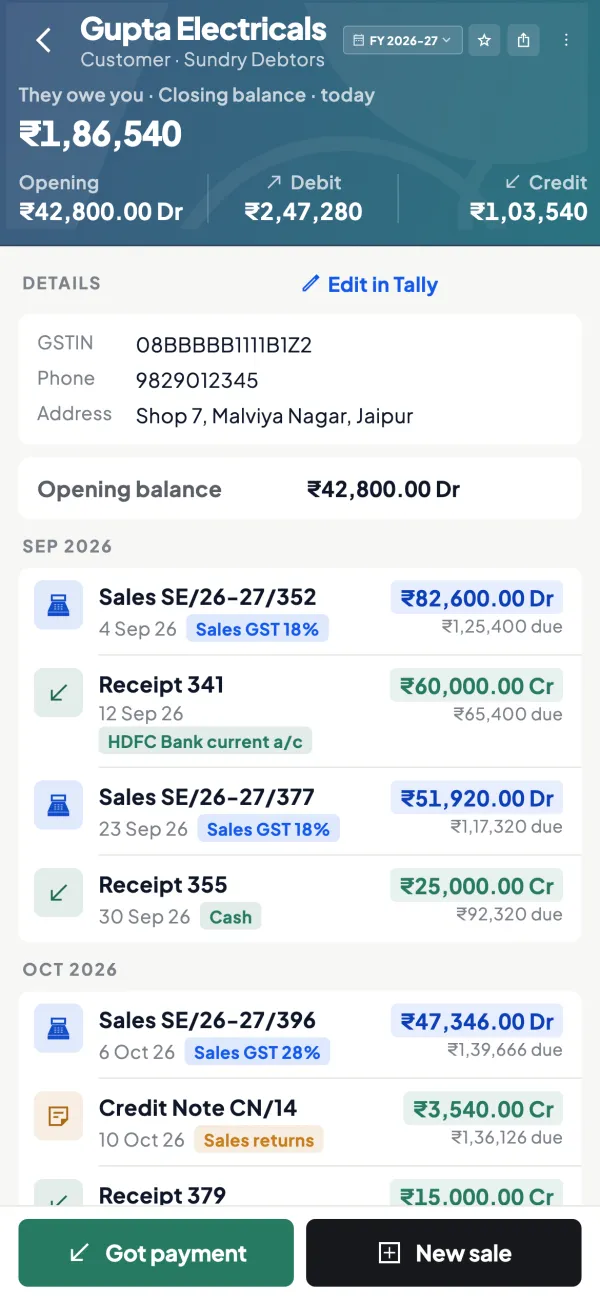
With Cashflow OSBill-wise dues and ageing before you loadSee the customer's unpaid bills and their age on the phone from your Tally books before confirming the next truck.
See how it works - The problemRate agreed on the phone, bill made at night
By the time the bill is typed, the day's rate has moved and nobody is sure which one was agreed.
With Cashflow OSA sales order on the phone at the agreed rateBook the order from the phone when the deal is made; it goes into Tally with that rate for the invoice.
See how it works - The problemStockyard and mill payments falling due
Purchases on short credit come due while your own customers are still on 60 days.
With Cashflow OSSupplier payables beside customer receivablesBill-wise payables from Tally show what is due to each supplier this week, next to what is due to you.
See how it works - The problemTruck movements and e-way bills every day
The truck is waiting at the gate while someone logs in to make the e-way bill.
With Cashflow OSE-way bill from the synced Tally sales voucherOn plans that include it, generate the e-way bill through a GST Suvidha Provider with your own API login and update vehicle details later.
Features
How Cashflow OS works for steel and iron traders
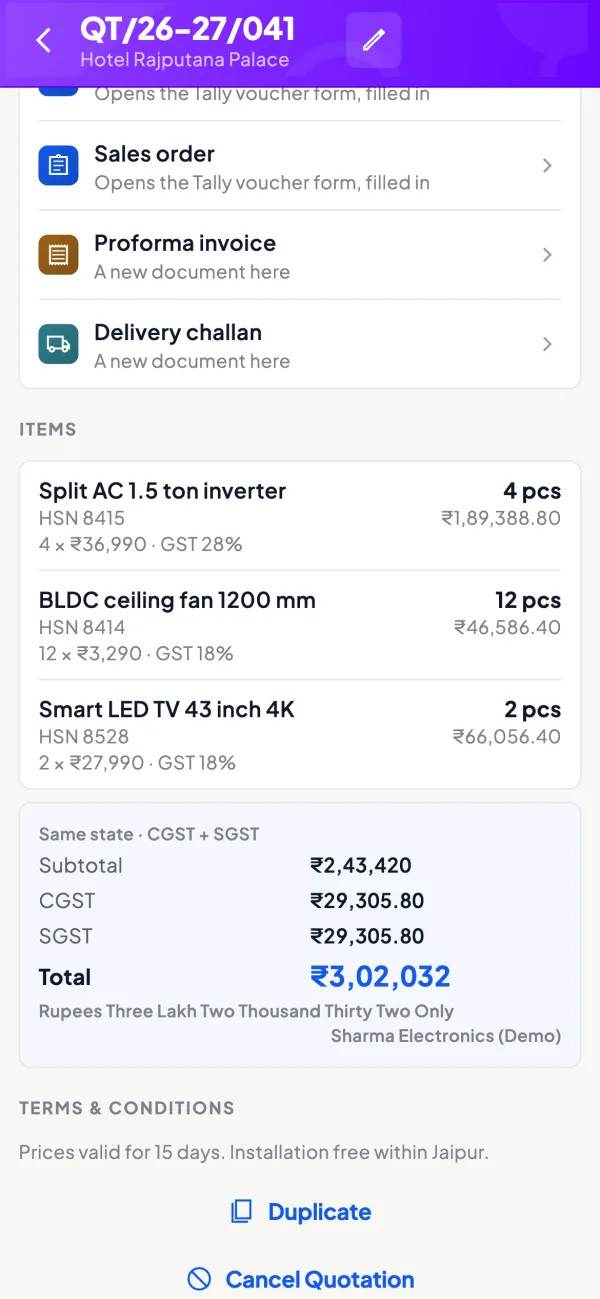
Dated quotations that settle rate disputes
How it works. Put the rate per tonne, the weight basis and the validity on a quotation with your letterhead, and send it on WhatsApp when the deal is made. Convert it into a sales order or Tally invoice when the load goes out.
- Rate and weight basis in writing the same hour
- Validity like 'till today's dispatch' printed
- No retyping when the truck is loaded
In practicePatel Fabricators, Rajkot: 5 t of TMT 12 mm at ₹56,500 per t, theoretical weight, valid till today's dispatch. ₹2,82,500 before GST.
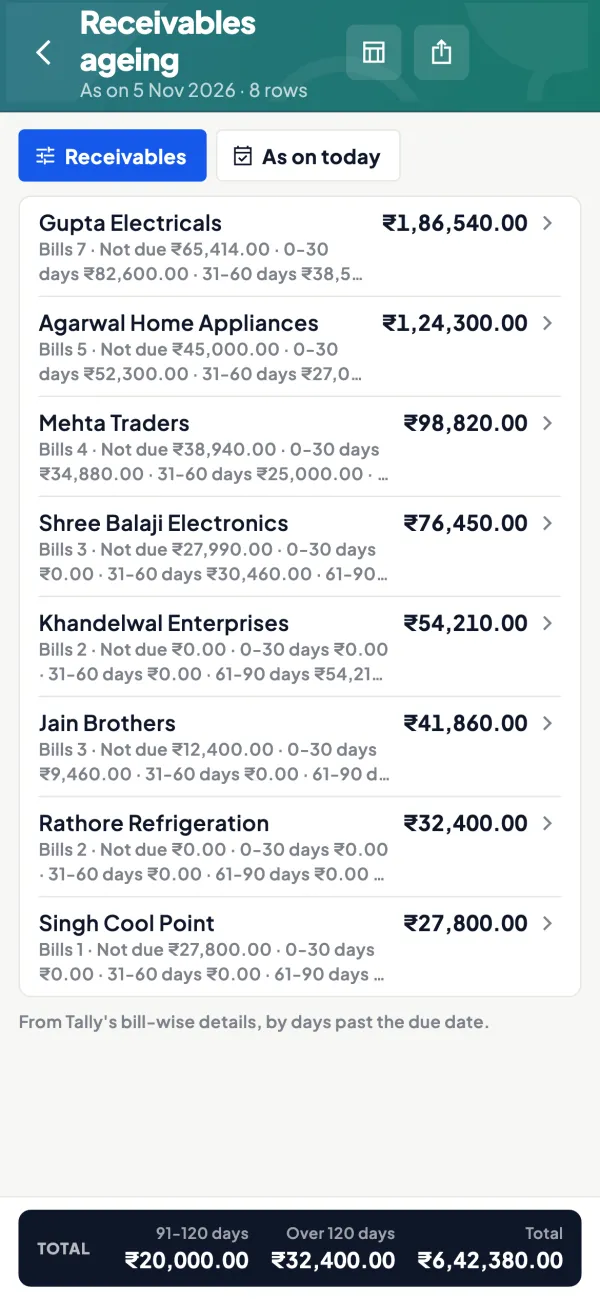
Credit check before the truck leaves
How it works. Bill-wise outstanding and ageing for every buyer come from your Tally books, so the decision to load is made on facts, not memory.
- Oldest bills and amounts at a glance
- Check from the yard, not the office
- Share the statement when asking for payment
In practiceBefore loading 8 t for Singh Constructions you see ₹9,40,000 outstanding, ₹3,10,000 of it past 60 days, and ask for a part payment first.
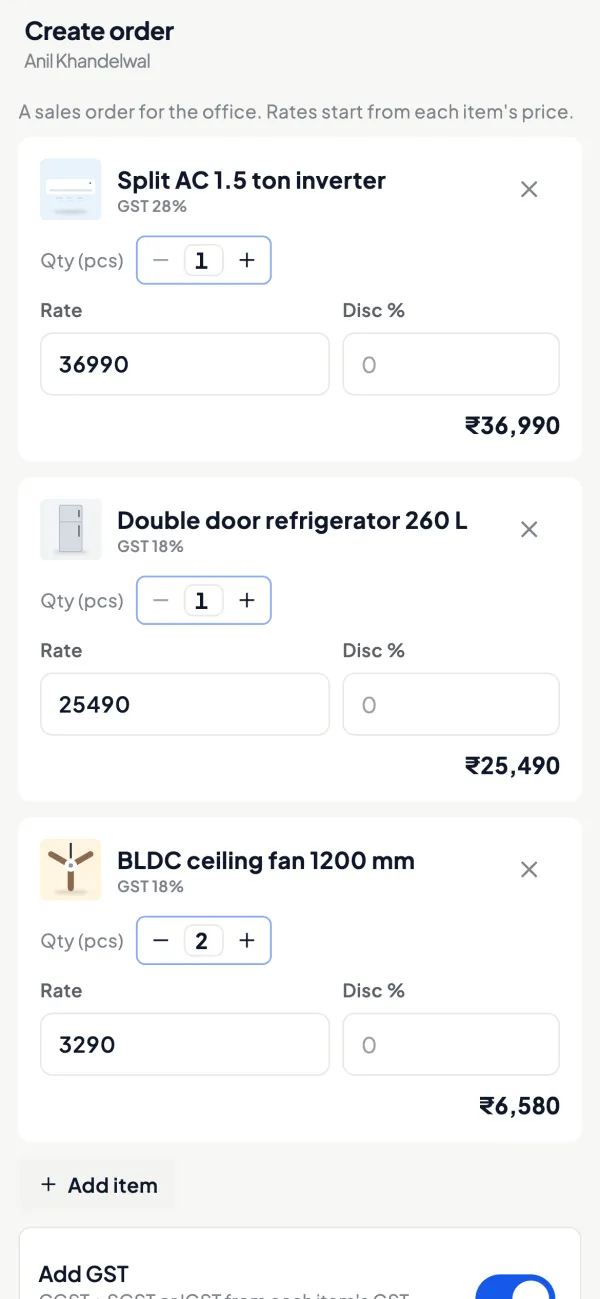
Orders booked at the agreed rate
How it works. Create the sales order on the phone when the broker or buyer confirms. It goes into Tally through the connector, and Tally validates it.
- The agreed rate is fixed in the books at once
- Back-to-back deals booked the same day
- A refused entry comes back with Tally's reason
In practiceA broker confirms 3 t of MS angle 50 x 50 x 5 at ₹54,200 per t at 11 am. The order goes in at ₹1,62,600 before GST, and the bill later uses that rate.
Statements in Tally's format on WhatsApp
How it works. Share any party's ledger statement as a PDF in Tally's format for any date range, including across financial years.
- The buyer's accountant sees a familiar format
- Disputed bills checked in seconds
- Ranges that cross 31 March
In practiceSharma Steel Works questions a June bill. You send the statement from April to October and the dated quotation for that load.
Stock by weight for yard counts
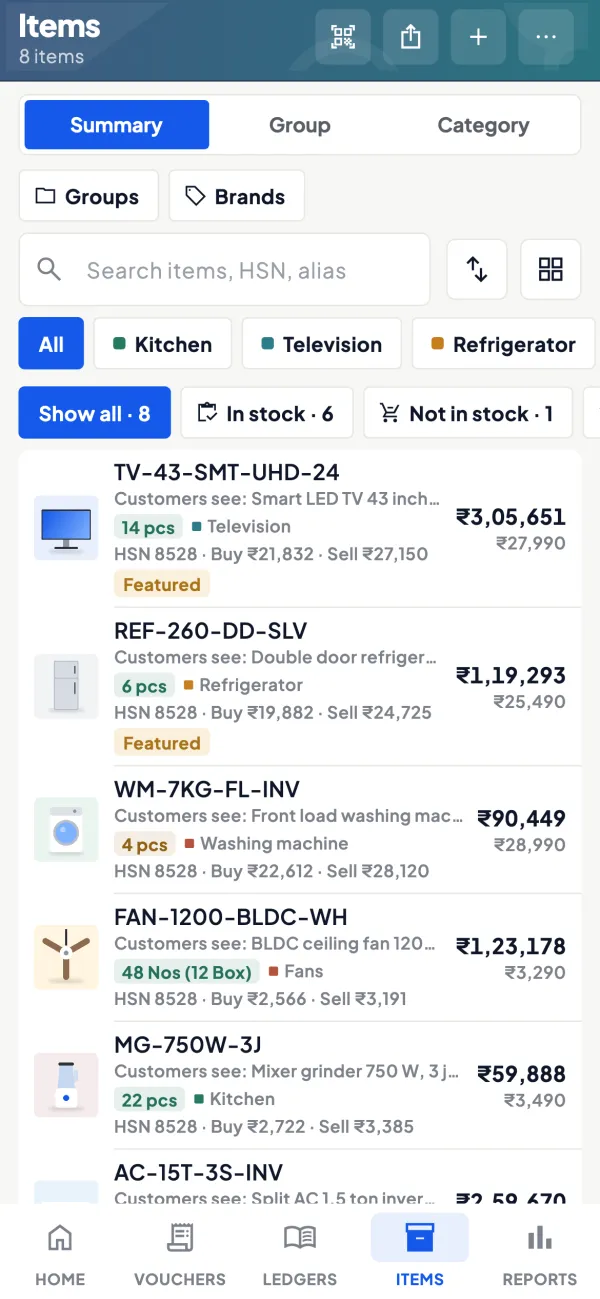
How it works. Stock and item summaries from Tally show quantities by item, and export to Excel for the monthly count.
- Book stock in tonnes beside the yard count
- Cutting loss and scrap gaps show early
- Excel export for your accountant
In practiceMonth-end stock shows 42.6 t of TMT; the yard count by weight is 41.9 t. The 0.7 t gap goes to your accountant for a stock journal.
Know your trade
A guide for steel and iron traders
How the business works, where money gets stuck, and the GST points to watch.
What steel traders deal in
Steel traders handle TMT bars, structural sections (angles, channels, beams), plates and sheets, coils, pipes and tubes, wire, and in some markets scrap. Primary producers sell through authorised distributors and stockyards; secondary producers sell directly or through brokers. Traders buy in truckloads or directly from a stockyard and sell to builders, fabricators, contractors, small manufacturers and retailers.
Prices move with raw material costs, demand and producer announcements, and may change every day. Many deals are struck on the phone at the day's rate, with the bill made later, which is why rate disputes are common.
Selling by weight
Most steel is sold per tonne or per kilogram, even when the customer orders pieces. TMT bars may be sold on theoretical weight (standard weight per metre) or actual weight from the weighbridge, and the two can differ. Agree up front which applies and write it on the quotation.
| Item | Pieces | Weight | Rate | Value |
|---|---|---|---|---|
| TMT 12 mm, 12 m length | 100 | about 1.07 t | ₹58,000 per t | about ₹62,000 |
The rate shown is only an example; prices change constantly. In Tally, set the item with tonnes or kilograms as the main unit and pieces or bundles as an alternate unit where needed. See alternate units in Tally.
Weighbridge, cutting and scrap
Keep the weighbridge slip with every inward and outward load. Small weight differences across many loads add up to real money. If you cut sheets or bars to size, record the cutting charge on the bill and book offcuts and scrap separately, otherwise your stock in Tally will slowly show more steel than you actually have. A monthly stock audit by weight keeps this honest.
Credit and risk
Steel bills are large. A single fabricator may take ₹10 lakh of material in a month and pay over 60 to 90 days. Because margins are thin, one bad debt can wipe out the profit from dozens of good customers. Practical steps:
- Set limits per customer and check them before confirming an order.
- Charge interest on overdue amounts only if agreed in writing; otherwise use it as a negotiation point.
- Collect post-dated cheques or written payment schedules for large orders, as your policy allows.
- Watch the ageing of every large account weekly.
If you buy from registered MSME suppliers, note that payments to micro and small enterprises have time limits under law, which also affects the tax deduction of the expense; see the MSME payment rule.
Movement of goods and GST
Steel moves by truck almost every day, so e-way bills are routine for loads above the threshold. Different steel products can fall under different HSN codes; check the current GST rate for each on the GST portal. Ensure the GSTIN of each registered buyer is correct, because input credit for large bills is closely watched. Purchases from unregistered scrap sellers can have special rules; ask your accountant. This is general information, not tax advice.
Daily rates, quotations and broker deals
Because rates change daily, quotes should carry a date and a validity, for example valid till today's dispatch. Send the quotation in writing even when the deal is made on the phone, so the bill rate matches what was agreed. When a customer disputes a rate weeks later, the dated quotation settles it.
Broker deals and back-to-back trades
A large share of steel trade happens through brokers, or as back-to-back deals where the trader buys from a stockyard and the truck goes straight to the buyer without touching the trader's godown. These deals are quick and need little space, but they create their own risks: the purchase and sale must be booked on the same day at the agreed rates, the brokerage must be recorded, and the weight on the purchase bill should match the weight on the sale bill.
When back-to-back trades are entered late or from memory, the stock in Tally shows material that was never in the godown, or the sale is booked at a rate different from the one agreed. Record both sides of each deal together, attach the weighbridge slip and the vehicle number, and review a list of the day's trades every evening. For brokers, keep a separate ledger so brokerage paid can be checked against the deals they brought.
Cashflow OS for steel traders
Cashflow OS syncs your TallyPrime books to the phone, so you can see every customer's bill-wise outstanding and ageing before you agree to the next load, and check supplier payables. Quotations with your letterhead carry the date and terms and convert into a sales order or Tally invoice. Party statements can be shared on WhatsApp in Tally's format. Reports such as stock summary and top customers export to Excel. See quotations for how documents are created.
This page is general information for Indian businesses, not tax, legal or financial advice. Rules and rates change — check the official portals or your CA before acting.
Set-up
Up and running in 4 steps
No new software to learn for your accountant — Tally stays as it is.
- 1
Install the Tally Connector on the PC where TallyPrime is open
- 2
Sign in with your mobile number and scan the QR the connector shows
- 3
Check items are set in tonnes or kg with pieces as alternate unit
- 4
Invite your munim and salesmen with a link and set their roles
Buyer’s checklist
What to look for in software for steel and iron traders
Whatever you choose, check these before you commit.
- Items in kg or tonnes, with pieces or bundles as an alternate unit
- Quotations with date, rate per tonne, weight basis and validity
- Bill-wise outstanding and ageing you can check before every load
- Supplier payables to stockyards and mills in the same view
- E-way bills made from the sales voucher, not typed separately
- Ledger statements in a format your buyers' accountants accept
- Stock summary by weight for monthly yard counts
- Works with your Tally books, with no second set of accounts
Plans
Simple yearly plans
- 14-day free trial on your own books
- 3-year term saves up to 25%
- Premium modules (catalogue, field force, price lists, store…) priced extra
Start free trialGet the price for your business
Compare all plans- Growth₹3,000/year + GSTBooks, reports, outstanding and sharing
- Pro₹5,000/year + GSTEverything in Growth, plus entries into Tally
- Pro+₹7,000/year + GSTEverything in Pro, plus e-invoice and e-way bill
Why Cashflow OS
Why steel and iron traders choose Cashflow OS
- Rates in writing, fastDated quotations on WhatsApp the hour the deal is made.
- Credit on factsBill-wise dues and ageing on the phone before every load.
- Orders straight into TallySales orders and vouchers from the phone, validated by Tally.
- E-way bill from the voucherOn plans that include it, through your own GST Suvidha Provider login.
- Both sides of the cashPayables to mills and stockyards beside receivables from buyers.
- 14-day free trialTry it on your own Tally data before you pay.