Chemicals and dyes
Chemical and dye traders: drums, batches and industrial credit
Chemical and dye traders sell by the kilogram and the drum to factories that need consistent quality, documented batches and on-time delivery, and that pay on long industrial credit cycles.
- Quotes with validity dates
- Factory dues by bill
- HSN-wise GSTR-1 view
- Stays in your Tally
Start free trialBook a free demo
Works with your TallyPrime14-day free trialJaipur team, call +91 70738 53555

Built for chemical and dye traders
Who it’s for
- Industrial chemical tradersAcids, alkalis and solvents by the drum and tanker
- Dye and pigment dealersTextile processors and dyeing units, shade-checked lots
- Textile auxiliary suppliersProcess chemicals for dyeing and finishing houses
- Water treatment chemical suppliersPlants, factories and housing societies on contract
- Solvent distributorsPaint, ink, pharma and adhesive makers
- Speciality chemical distributorsApproved-supplier business with samples and trials
- Importers and indenting tradersPrices tied to exchange rates and import costs
- Leather and rubber chemical suppliersTanneries and processors on long credit
Pain → fix
The problems we fix
The everyday headaches of chemical and dye traders, and what changes when the books are on every phone.
- The problemPrice quoted last week no longer holds
Rates move with crude and the rupee, and an old quote turns into a billing dispute.
With Cashflow OSQuotations with validity and freight termsState validity, freight and payment terms on a branded quote; convert it into an order when confirmed.
See how it works - The problemProcessors paying in 90 days, suppliers want 30
The trader finances the gap, and one slow factory can strain the business.
With Cashflow OSBill-wise outstanding and ageing for every factorySee which bills are pending and how old they are, from Tally, every week.
See how it works - The problemImporter and manufacturer dues due all at once
Without a view of payables, a large payment surprises you in a bad week.
With Cashflow OSBill-wise payables beside receivablesSee supplier dues by bill and date alongside what factories owe you.
See how it works - The problemDrums sent to factory without a document
Material sent on approval or ahead of the bill is hard to trace later.
With Cashflow OSBranded delivery challans that convert to billsMake a challan for each dispatch and convert it into a Tally invoice when billed.
See how it works - The problemWrong HSN on an item shows up in returns
Hundreds of chemicals across many HSN codes make mistakes easy to miss.
With Cashflow OSGSTR-1 view with HSN-wise detail from TallyGSTR-1 tiles open bill-wise and HSN-wise detail, so odd codes stand out before filing on the portal.
See how it works - The problemLarge buyers want ledgers in their own format
Reconciling with a factory's accounts team means sending data they can work with.
With Cashflow OSReports and ledgers in Excel and PDFExport ledgers and reports from Tally data to Excel or PDF and share them.
See how it works
Features
How Cashflow OS works for chemical and dye traders
Quotes that protect your rate
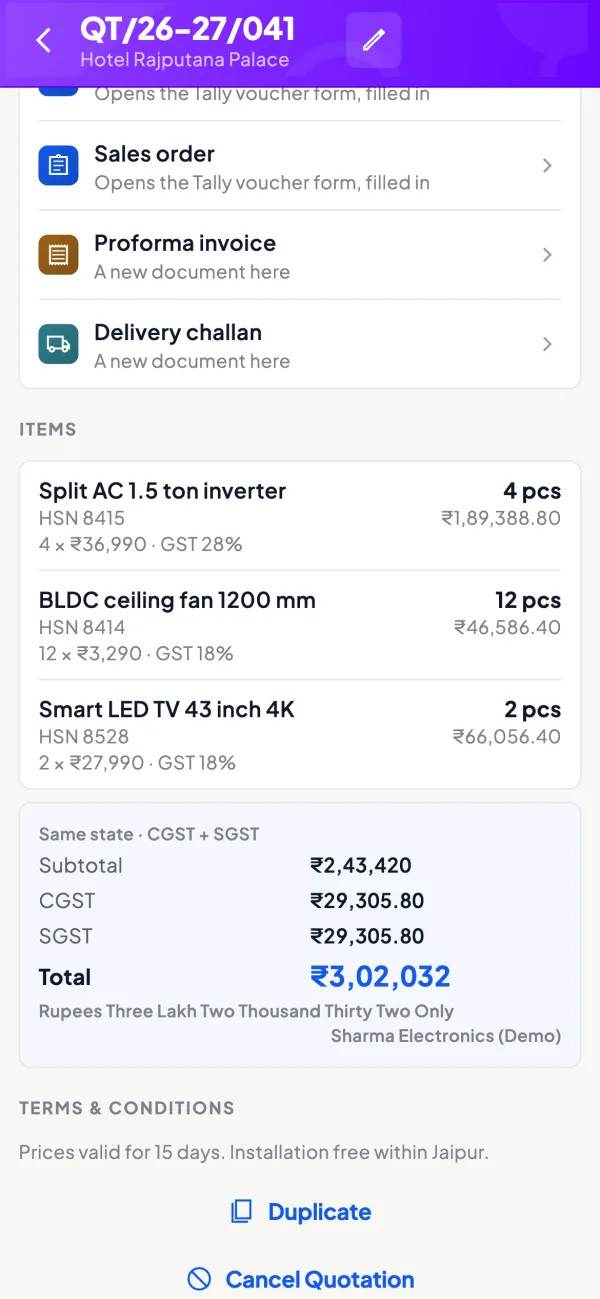
How it works. Quotations carry your letterhead, validity date, freight and payment terms, and convert into a sales order or Tally invoice.
- Validity, freight and terms on every quote
- PDF on WhatsApp or email
- Converts to an order without retyping
In practiceShree Dyeing Mills gets a quote for 1,000 kg of reactive dye at ₹420 per kg, valid for five days, ex-godown Surat.
Factory dues, bill by bill
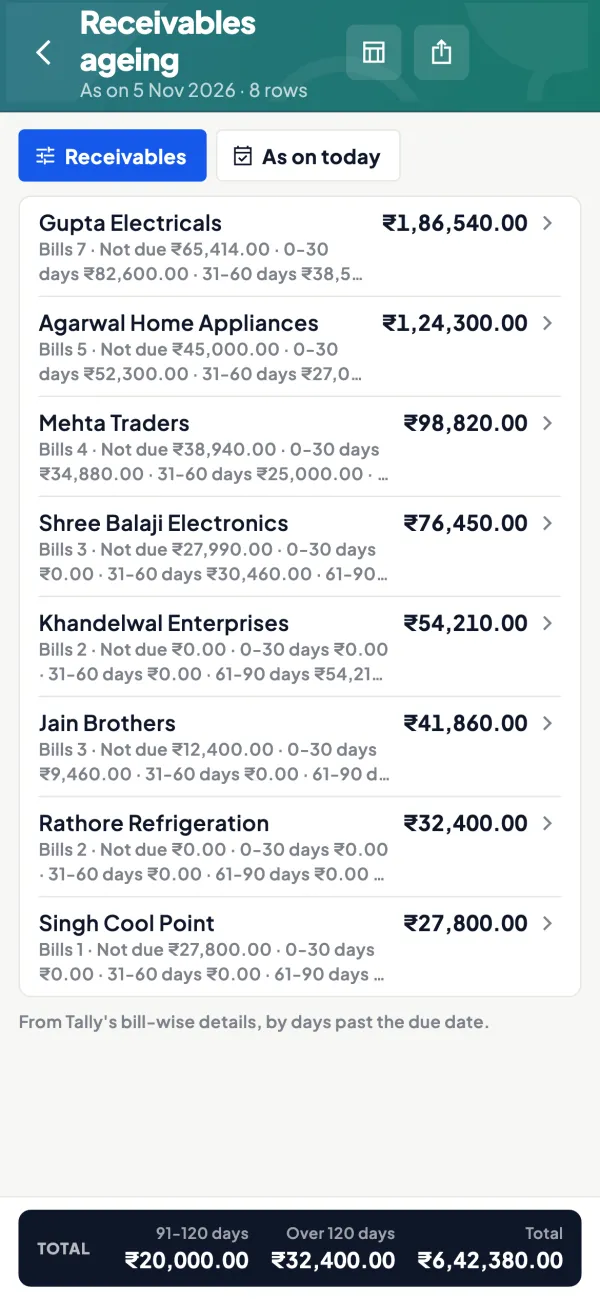
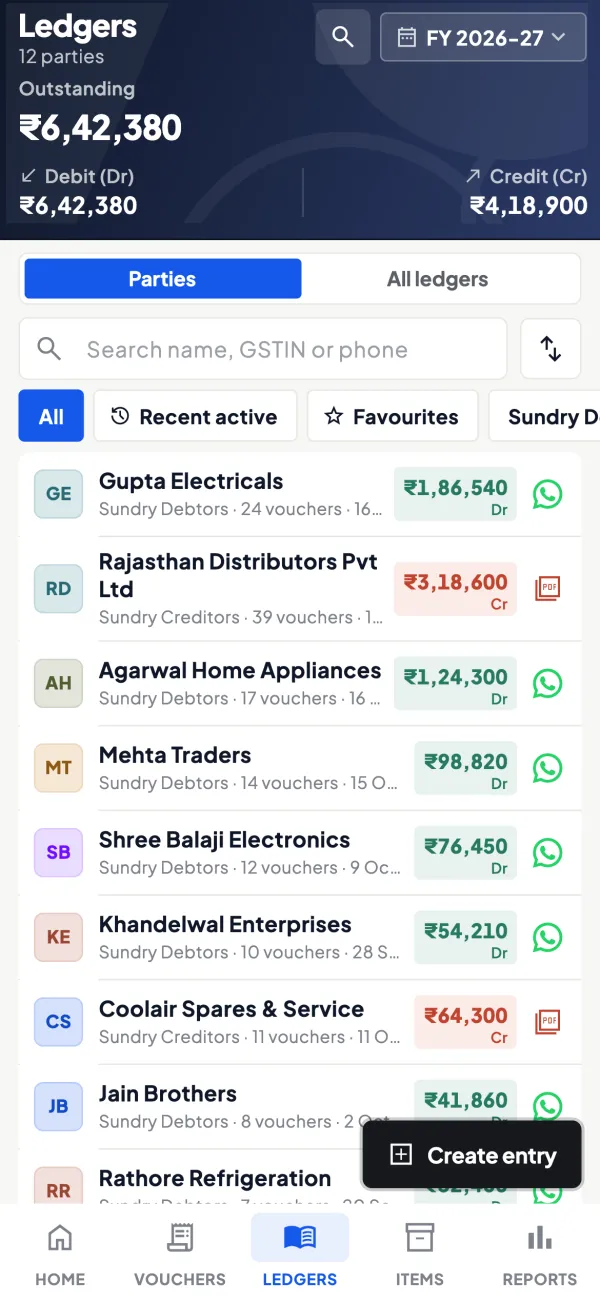
How it works. Bill-wise outstanding and ageing come from Tally for every processor and factory, on the phone and the web.
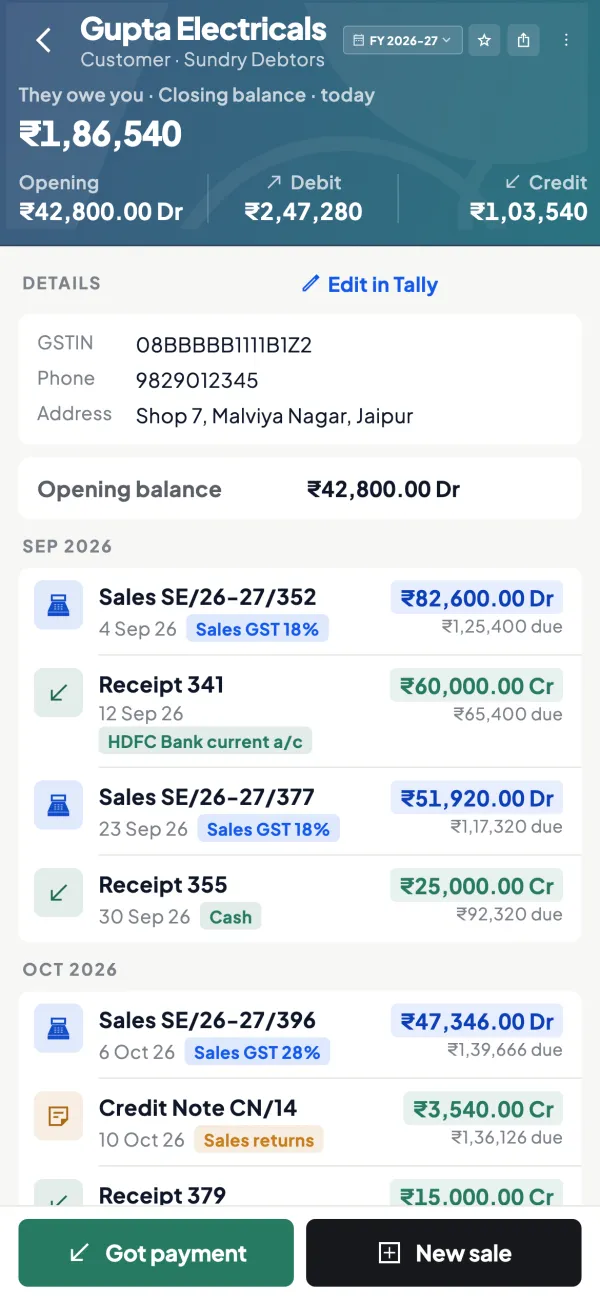
- Pending bills with ageing per buyer
- Statement shared on WhatsApp or email
- Weekly review without opening Tally
In practicePatel Textile Processors owes ₹6,80,000; ₹2,40,000 is past 90 days, so the next drum order waits for a cheque.
HSN-wise GST detail before you file
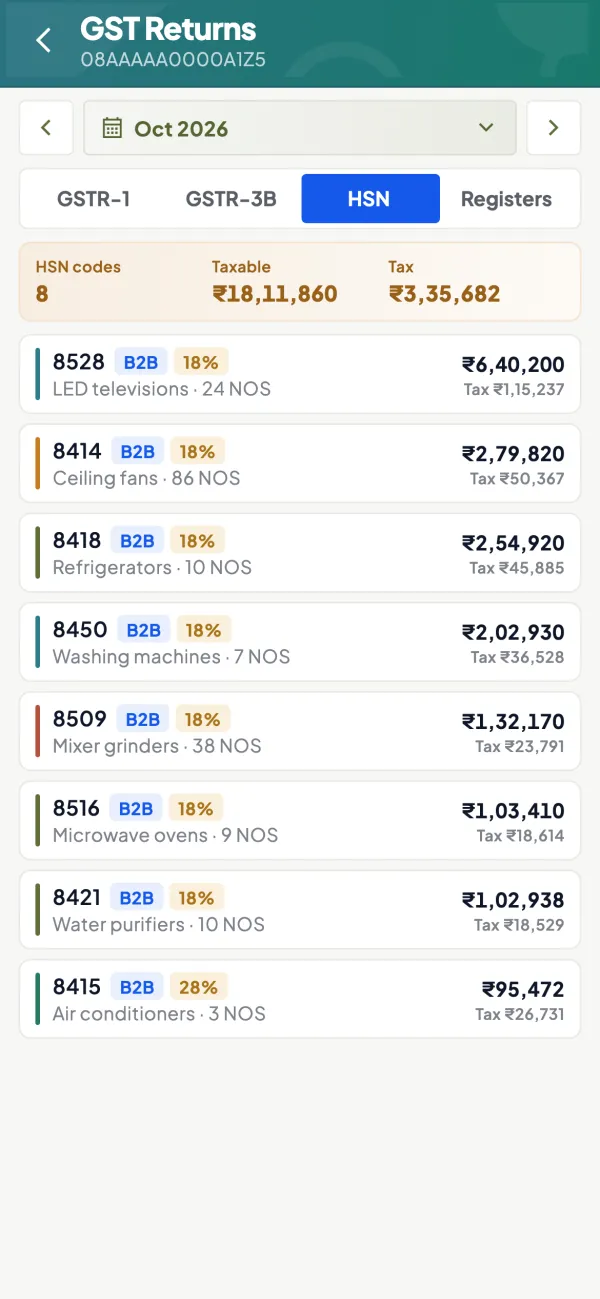
How it works. GSTR-1 and GSTR-3B views are prepared from your Tally data, with bill-wise and HSN-wise detail and JSON download for the GST portal.
- HSN-wise detail from your Tally invoices
- Bill-wise drill-down from each tile
- JSON download for filing on the GST portal
In practiceThe accountant spots one solvent billed under the wrong HSN in the month's summary and corrects the item in Tally before filing.
Ledgers your buyers' accountants can use
How it works. Ledgers, party statements and 20+ reports export to Excel or PDF for any financial year or custom date range.
- Excel and PDF export
- Custom ranges across financial years
- Profit & Loss and Balance Sheet that match Tally
In practiceFor a year-end confirmation, the trader sends Aarti Pigments its ledger from April to March as an Excel file the same afternoon.
Payables and cash in one look
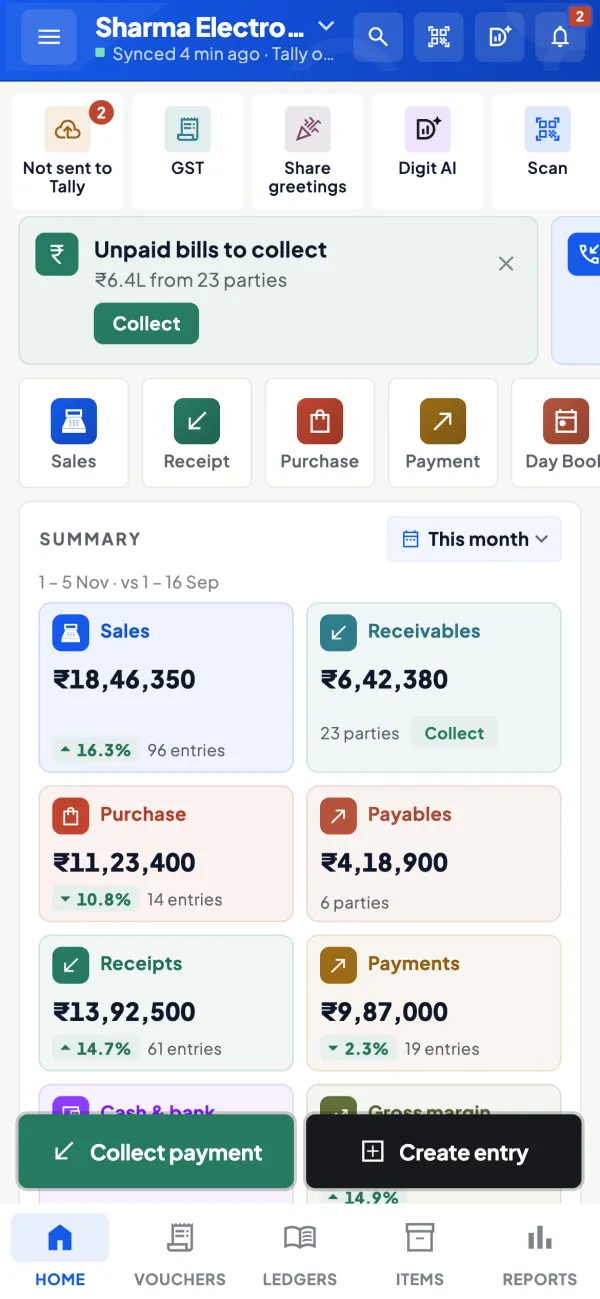
How it works. Home shows receipts, payments, cash and bank against the period before; payables show supplier dues by bill.
- Cash and bank from Tally
- Supplier dues by bill and date
- Evening summary pushed to the owner
In practiceWith ₹9,50,000 due to an importer on Friday, the owner checks the week's expected receipts before confirming a new tanker order.
Know your trade
A guide for chemical and dye traders
How the business works, where money gets stuck, and the GST points to watch.
Products and customers
The trade includes industrial chemicals, solvents, acids and alkalis, dyes and pigments, textile auxiliaries, water treatment chemicals, and speciality chemicals for specific industries. Traders buy from manufacturers, importers and larger distributors, and sell to textile processors and dyeing units, paint and ink makers, pharma and food units, leather tanneries, plastics and rubber processors, and water treatment plants.
Industrial buyers often have a fixed list of approved suppliers and products, and switching requires trials. Once approved, a trader gets steady repeat orders, but must keep quality and documentation consistent.
Sampling and approvals
New business in chemicals usually starts with a sample. The factory tests it in the lab, then in a production trial, and only then places an order. This can take weeks, and samples cost money. Record samples sent, to whom and for which product, and follow up on the result. When a product is approved, note the exact grade, supplier and specification against the customer, so every later delivery matches what was approved. Changing the source of a product without telling an approved customer is one of the quickest ways to lose the account, even if the new material is technically similar.
Units, packing and containers
Chemicals are sold by weight or volume and packed in bags, drums, carboys, IBC tanks or tankers. A single item might be sold as 25 kg bags or 200 litre drums. Returnable drums and IBCs carry a deposit or must be returned, and should be tracked per customer. In Tally, set kilograms or litres as the main unit with the pack as an alternate unit; see alternate units in Tally.
| Packing | Typical unit | Note |
|---|---|---|
| Bag | 25 or 50 kg | Check net weight on receipt |
| Drum | 200 L or by kg | Returnable or one-way |
| IBC / tanker | By weight | Weighbridge slip needed |
Batches, quality and documents
Factories expect each delivery to come with the manufacturer's batch number and a certificate of analysis, and sometimes a safety data sheet. Dyes and pigments are checked for shade strength against a standard. Keep batch numbers on purchase and sales invoices, and file the certificates so they can be sent quickly when asked. Tally can keep batch details where enabled. If a customer rejects a lot, take it back against a credit note and settle with your supplier using the same batch reference.
Price movement and quotations
Many chemical prices follow crude oil, global supply, import duties and exchange rates, and can change weekly. Quote with a validity date, state whether freight is included, and for contracts agree how price changes will be handled. When prices rise, confirm the rate on each order before dispatch, so the invoice does not become a dispute. See pricing strategy for traders.
Credit and working capital
Suppliers of chemicals, especially importers and manufacturers, often want advance or short credit, while processors and factories pay in 60 to 90 days or more. The trader finances the gap. A single large processor delaying payment can strain the business. Review ageing every week, set limits by customer, and watch for patterns such as part payments and post-dated cheques being replaced. The guide on the working capital cycle shows how to measure the gap.
Storage and handling
Many chemicals are hazardous and have specific storage, labelling and transport requirements under safety and pollution control rules. Some require licences or registrations to store or sell. Check the rules that apply to the products you handle with the relevant authorities. Spills, leaks and evaporation losses should be recorded as stock adjustments.
GST points
Chemicals and dyes are spread across many HSN codes, and an accurate HSN code on every item matters because it appears in GST returns. Rates differ by product; check the current rate for each on the GST portal. Imports involve IGST at customs and documentation for input credit. Deposits on returnable containers have their own treatment; ask your accountant. This is general information, not tax advice.
Cashflow OS and Tally for chemical traders
Cashflow OS syncs your TallyPrime books to the phone: bill-wise outstanding and ageing for every factory buyer, supplier payables, and cash and bank balances. Quotations with your letterhead carry validity and terms and convert into orders or Tally invoices. Delivery challans and purchase orders are created with your branding. Reports export to Excel for reconciliation with large buyers. Batch details stay in Tally. See outstanding receivables.
This page is general information for Indian businesses, not tax, legal or financial advice. Rules and rates change — check the official portals or your CA before acting.
Set-up
Up and running in 4 steps
No new software to learn for your accountant — Tally stays as it is.
- 1
Install the Tally Connector on the PC where TallyPrime runs
- 2
Sign in with your mobile number and scan the connector's QR
- 3
Add your letterhead, terms and bank details for quotes and challans
- 4
Invite your accountant and sales staff with a link, each with a role
Buyer’s checklist
What to look for in software for chemical and dye traders
Whatever you choose, check these before you commit.
- Quotations with validity, freight and payment terms that convert to orders
- Bill-wise receivables and payables with ageing, side by side
- Delivery challans for dispatches made ahead of the invoice
- HSN-wise GST detail from your own invoices before filing
- Excel and PDF export for reconciliations with large buyers
- Works with the units you already keep in Tally: kg, litres, drums, bags
- Batch details left in Tally, where your purchase and sales records already are
- Roles so sales staff see their customers, not your margins
Plans
Simple yearly plans
- 14-day free trial on your own books
- 3-year term saves up to 25%
- Premium modules (catalogue, field force, price lists, store…) priced extra
Start free trialGet the price for your business
Compare all plans- Growth₹3,000/year + GSTBooks, reports, outstanding and sharing
- Pro₹5,000/year + GSTEverything in Growth, plus entries into Tally
- Pro+₹7,000/year + GSTEverything in Pro, plus e-invoice and e-way bill
Why Cashflow OS
Why chemical and dye traders choose Cashflow OS
- Tally stays the booksCashflow OS reads your Tally companies and writes back only what you switch on.
- Working capital in viewReceivables and payables by bill, with ageing, on the phone and the web.
- Documents with your termsQuotes, proformas, POs and challans with your letterhead and bank details.
- GST detail from TallyGSTR-1 and GSTR-3B views with HSN-wise detail and JSON for the portal.
- E-invoice on higher plansGenerate the IRN for a synced sales voucher; it is written back to Tally.
- 14-day free trialTry it on your own Tally data, with support on call or WhatsApp from Jaipur.