Business software & ERP Business software
B2B ordering apps for dealers
A B2B ordering app replaces phone calls, WhatsApp messages and paper order books with structured orders: the right items, the right rates for that dealer, checked against credit, and sent straight into your books.
- Distributors and stockists
- Wholesalers
- Manufacturers selling to dealers
- Salespeople booking orders
- Tile, paint and hardware trade
On this page 12
Why WhatsApp orders break down
Most Indian distributors take orders on WhatsApp today. A dealer sends "10 box 2x2 white, 5 box 1x1 grey, same as last time", sometimes as a voice note, sometimes as a photo of a handwritten list. Someone in the office decodes it, checks stock, works out the rate and types the order. With 40 orders a day, this needs a full-time person, and mistakes slip in: wrong shade, wrong size, a rate the dealer is not entitled to.
WhatsApp is still the right channel for talking to dealers. It is a poor system for recording orders. See a comparison of WhatsApp-only ordering.
Who places the order
There are two models, and many distributors use both:
- Salesperson-booked: the salesperson books the order on a phone app during the dealer visit or call. This suits most Indian distribution, where dealers expect personal service.
- Dealer self-ordering: the dealer browses a catalogue and places the order. This works well for repeat orders from tech-comfortable dealers, and for small dealers the salesperson cannot visit often.
Either way, the order should land in the same place, follow the same approval rules and use the same rates.
Features that matter
| Feature | Why it matters |
|---|---|
| Catalogue with photos | Fewer wrong items, especially for shades and sizes |
| Dealer-specific rates | Rates and discounts fill automatically by dealer type |
| Stock visibility | Avoid promising what you do not have |
| Credit check | Orders over a dealer's limit or with overdue bills are held |
| Approval | Owner or manager confirms before dispatch |
| Posting to the books | Order becomes a sales order or invoice without retyping |
| Order status | Dealer or salesperson can see whether it is approved, packed or billed |
A worked example of rates
A dealer of type B orders 20 boxes of a tile listed at ₹600 per box. B dealers get 10% off this brand, plus 2% extra on orders above 50 boxes. The app should show ₹540 per box for this order, a taxable value of ₹10,800, and GST at the item's rate based on the dealer's state. The salesperson should not be able to type ₹500 without an approval. That one rule protects margin across hundreds of orders. The price list management guide covers how to set these rules.
Credit control at the point of order
The best time to manage credit is before goods leave the godown. A good ordering app shows the dealer's outstanding and overdue bills alongside the order. Typical rules:
- Order allowed if total outstanding plus this order stays within the credit limit.
- Order held for approval if any bill is overdue beyond the agreed period.
- Owner can approve, reduce or reject with one tap.
Setting up the catalogue
The catalogue decides whether orders come in right. Spend time on it before launch:
- Names dealers recognise. Use the trade name and size, such as "Pipe 1 inch 6 kg/cm2, 3 m", not an internal code.
- Photos for anything with shades, finishes or designs. Tiles, laminates, paints and fittings cause the most wrong orders.
- Grouping by how dealers think: brand first for branded goods, product type first for commodities.
- Pack sizes and minimum quantities clearly stated, so a dealer does not order 7 pieces of an item sold only in cartons of 10.
- Hide discontinued items instead of leaving them visible with zero stock.
A catalogue with 300 well-described items beats one with 3,000 items copied from the item master without photos.
Rolling it out to dealers
- Start with salesperson-booked orders, so your team learns the app first.
- Invite your 20 most regular dealers to order directly, with a short call to explain.
- Keep accepting WhatsApp orders, but have the office enter them into the app, so all orders live in one place.
- Review after a month: order accuracy, time to dispatch, dealer feedback.
Measuring whether it works
After three months, compare with the period before: how many orders came through the app versus phone and WhatsApp, the share of orders that needed correction after booking, the time from order to dispatch, and the number of rate disputes with dealers. If corrections and disputes have not fallen, look at the catalogue and price rules before blaming the dealers.
Ordering into Tally with Cashflow OS
Cashflow OS lets salespeople book sales orders with lines and GST, using price lists by dealer type with layered discounts, and items with photos from your Tally item master. Orders from frontline staff can require approval, and approved orders are posted to Tally as sales orders. An online catalogue link lets dealers browse items without installing the app, with enquiries arriving on WhatsApp. See sales orders to Tally.
Avoid these
Common mistakes
- MistakeLetting salespeople type any rate on an orderDo this instead
Fill rates from dealer type and discount rules, and send any lower rate for approval.
- MistakeCopying the whole item master into the catalogueDo this instead
Start with well-described items dealers recognise, add photos for shades and designs, and hide discontinued items.
- MistakeKeeping WhatsApp orders outside the systemDo this instead
Keep accepting them, but have the office enter them into the app so all orders live in one place.
- MistakeChecking credit only after dispatchDo this instead
Show outstanding and overdue bills with the order and hold orders over the limit or with old dues for approval.
Keep handy
Checklist
B2B ordering apps for dealers — 8 checks. Tick them as you go.
In Cashflow OS
How Cashflow OS helps
Cashflow OS puts your TallyPrime books on every phone in the team. Where it fits this topic:
Sales orders with approval, posted to Tally
Salespeople book sales orders with lines and GST; orders from frontline staff can need approval, and approved orders go into Tally as sales orders.
See Sales orders to Tally
Price lists by dealer type
Dealer types such as A, B and C with layered discount rules fill rates automatically, and items show photos from your Tally item master.
See Price lists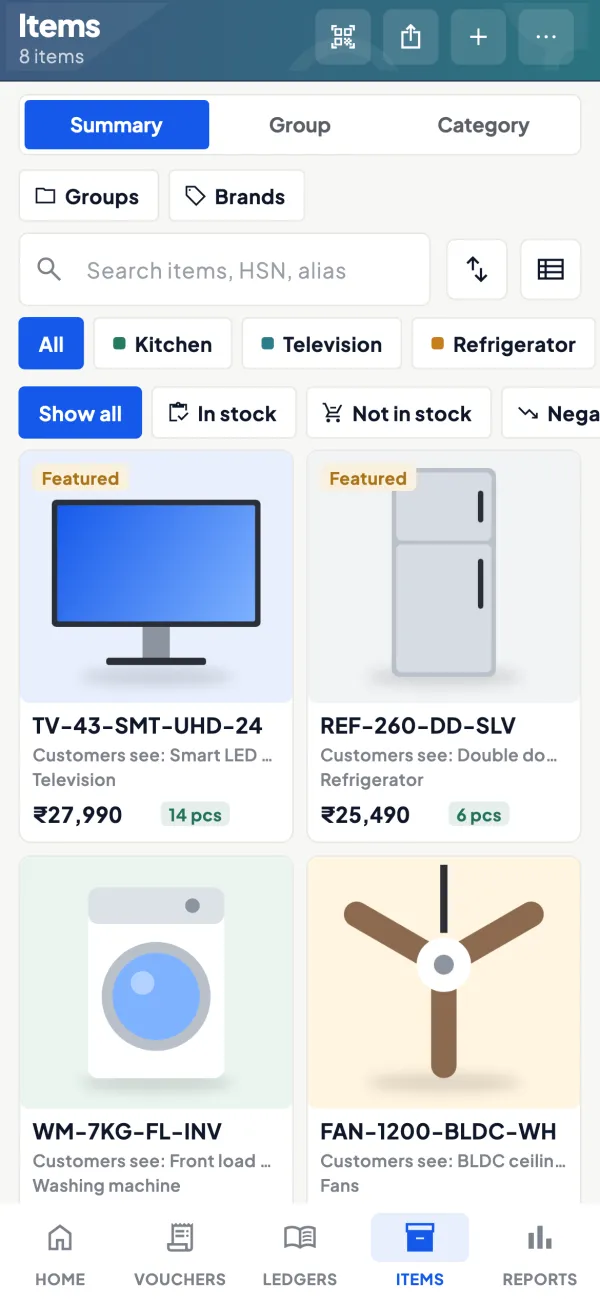
Questions people ask
Will dealers actually use an ordering app?
Should dealers see their outstanding in the app?
Can an ordering app handle schemes?
Should I start with dealer self-ordering or salesperson booking?
How do I stop wrong items being ordered?
What credit rules work at the point of order?
Can dealers browse items without installing an app?
How do I know the ordering app is working?
This page is general information for Indian businesses, not tax, legal or financial advice. Rules and rates change — check the official portals or your CA before acting.