Running the business Going digital
Moving from paper to digital orders
Paper order books and phone orders work until volume grows: lines get missed, rates are guessed, and billing staff retype everything. Digital orders capture the order once, with the right item and rate, and pass it straight to billing.
- Distributors and wholesalers
- Salespeople taking dealer orders
- Billing and order-desk staff
- Manufacturers selling to dealers
- Business owners

On this page 12
What goes wrong with paper orders
A typical day at a distributor using order books: salespeople write orders at dealer counters, photograph pages on WhatsApp in the evening, and the billing team types them into Tally the next morning. Along the way:
- Handwriting is misread — 12 becomes 17, a 1 kg pack becomes 1 litre.
- Item names do not match Tally names, so staff guess.
- Salespeople quote old rates or promise schemes that have ended.
- Nobody knows if the dealer is already over their credit limit.
- Orders sent on WhatsApp get buried and missed.
- The owner cannot see the day's orders until billing is done.
What a good digital order looks like
| Field | Why it matters |
|---|---|
| Customer picked from the master list | No duplicate or misspelt parties |
| Items picked from the item master, with photos | Exact item, no guessing |
| Rate filled from the price list | Salespeople cannot quote wrong rates |
| GST worked out automatically | Correct totals for the dealer |
| Outstanding visible while ordering | Credit decision before dispatch |
| Delivery date and notes | Warehouse knows what to pack and when |
| Status (pending, approved, billed, dispatched) | Everyone can see where an order is |
Before you start: clean the masters
Digital orders are only as good as the item and party lists behind them. Spend a week on this first:
- Items: remove duplicates, fix names so a salesperson can find them, group them sensibly, and add photos for items that look alike.
- Parties: merge duplicate customers, fill in mobile numbers, GSTIN and state.
- Rates: agree the current price list and any dealer categories. See price list management for dealers.
- Credit limits: decide limits for each customer, even roughly. See setting credit limits.
A four-week rollout plan
| Week | What happens |
|---|---|
| 1 | Masters cleaned. Two best salespeople try digital orders alongside paper. |
| 2 | Fix issues they found: missing items, confusing names. Billing team checks every digital order against paper. |
| 3 | All salespeople switch. Paper only as backup if a phone fails. |
| 4 | Paper order books withdrawn. Phone orders from dealers entered by office staff directly as digital orders. |
The firm end date in week 4 matters. If paper stays optional, some salespeople will never switch.
Handling phone and WhatsApp orders
Not every dealer will order through a salesperson. For orders that arrive by phone or WhatsApp, have one person in the office enter them as digital orders immediately, while the dealer is still on the line if possible. Read the order back with quantities and the total. For regular dealers, sharing an online catalogue link lets them pick items themselves and send an enquiry, which reduces back-and-forth. See catalogue sharing for B2B sales.
Approvals and billing
Decide which orders go straight to billing and which need approval: new customers, orders above the credit limit, special rates. Approved orders become sales orders in your accounting system, and then invoices when goods are dispatched. Partial dispatches should leave the balance open on the order, not forgotten. Billing staff should never retype an order that already exists digitally.
Measuring the change
- Time from order to invoice: from next day to same day is common once retyping stops.
- Order errors: count returns and corrections caused by wrong items or rates each month.
- Orders per salesperson per day: should not fall after the first two weeks.
- Orders over credit limit: should be caught before dispatch, not after.
Objections you will hear, and answers
- The dealer is in a hurry; writing is faster. True for the first week. Once salespeople learn to search by short names and repeat last orders, a phone is faster than a pad, and no evening is spent photographing pages.
- There is no network in the market. Plan for it: let salespeople note the order and enter it as soon as they have signal, and fix the areas where this happens often.
- Dealers want to negotiate rates. Keep that conversation, but route special rates through an approval instead of letting each salesperson decide.
- Billing staff fear losing their jobs. Their work shifts from typing to checking, dispatch planning and collections follow-up — usually more valuable work.
Digital orders with Tally and Cashflow OS
In Cashflow OS, salespeople pick customers and items (with photos) synced from Tally, rates fill from price lists by dealer type, and GST is worked out from the item and the party's state. Orders from frontline staff can need approval, and approved orders post to Tally as sales orders through the connector. Salespeople see their own customers, not the company's accounts. See sales orders to Tally.
Avoid these
Common mistakes
- MistakeGoing digital before cleaning item and party mastersDo this instead
Remove duplicate items and parties, fix confusing names and add photos for look-alike items before the first salesperson starts.
- MistakeKeeping paper as an optional fallback foreverDo this instead
Set a firm date to withdraw order books. If paper stays optional, some salespeople will never switch.
- MistakeLetting each salesperson decide special ratesDo this instead
Fill rates from an agreed price list and send special rates through an approval instead.
- MistakeBilling staff retyping orders that already existDo this instead
Convert the approved order into the sales order and invoice directly; retyping brings back the errors you set out to remove.
Keep handy
Checklist
Moving from paper to digital orders — 8 checks. Tick them as you go.
In Cashflow OS
How Cashflow OS helps
Cashflow OS puts your TallyPrime books on every phone in the team. Where it fits this topic:
Orders from the phone into Tally
Salespeople pick customers and items synced from Tally; orders from frontline staff can need approval and then post to Tally as sales orders through the connector.
See Sales orders to Tally
Rates fill from price lists
Dealer types with layered discount rules fill rates automatically, and GST is worked out from the item and the party's state.
See Price lists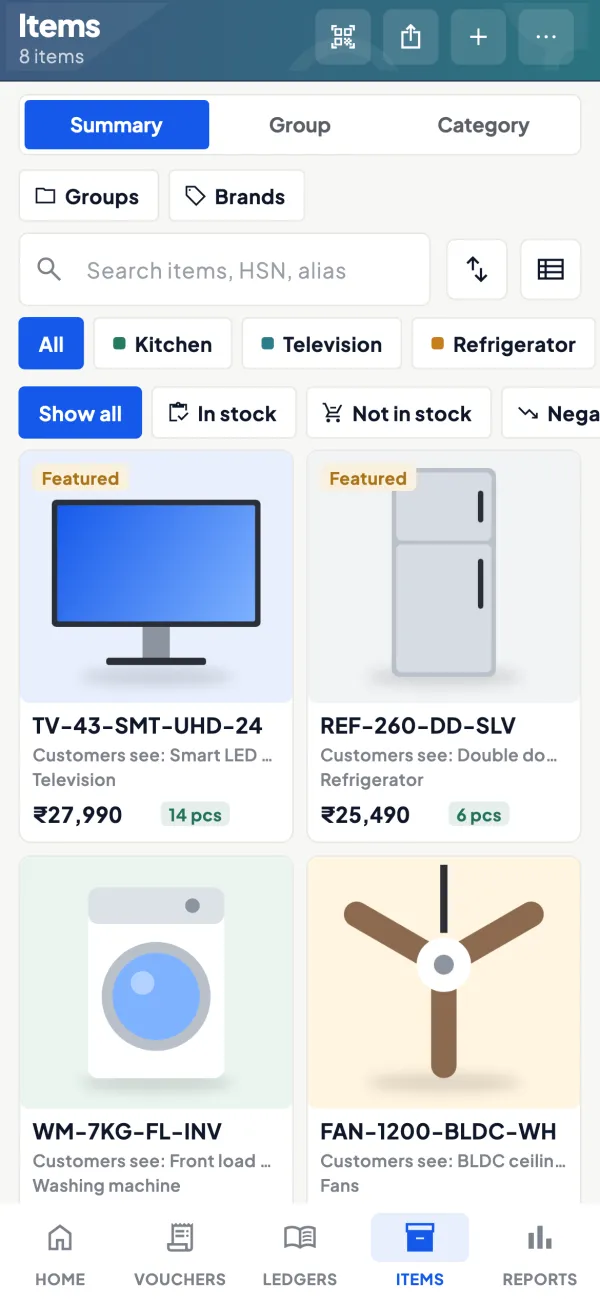
Questions people ask
Will salespeople accept taking orders on a phone?
What about dealers who only order on phone calls?
Do I need to clean my Tally items first?
What happens to partial deliveries?
What if there is no mobile network at the dealer's shop?
How long does the switch from paper usually take?
How do I know the change is working?
Should dealers see outstanding before ordering?
This page is general information for Indian businesses, not tax, legal or financial advice. Rules and rates change — check the official portals or your CA before acting.