Compared · as of November 2026
Cashflow OS vs WhatsApp-only ordering
For many Indian businesses WhatsApp is the order book: retailers send a photo of a handwritten list or a voice note, and someone in the office turns it into a Tally entry. It is free and customers already use it. The problems appear when volume grows.
- Customers stay on WhatsApp
- Catalogue link, no app needed
- Price-list rates on orders
- Dues seen before confirming
Start free trialSee the verdict
Fair comparison, facts from public websitesJaipur team, call +91 70738 53555

In one minute
The short verdict
Both can be the right answer. It depends on who in your business needs what.
Cashflow OS
Choose Cashflow OS if…
Orders are missed or entered twice, more than one person handles the chats, rates differ by customer type, or the owner cannot see the day's orders without scrolling several phones. WhatsApp stays the conversation; the order is made correctly once and goes into Tally.
WhatsApp-only ordering
Choose WhatsApp-only ordering if…
WhatsApp alone is enough when one person handles a small number of orders a day and knows every customer, or customers order the same things at the same rates. It is also fine where most sales happen at the counter and WhatsApp is an occasional channel.
Cashflow OS
Where Cashflow OS is stronger
Facts only — where Cashflow OS does more than WhatsApp-only ordering, or does it differently.
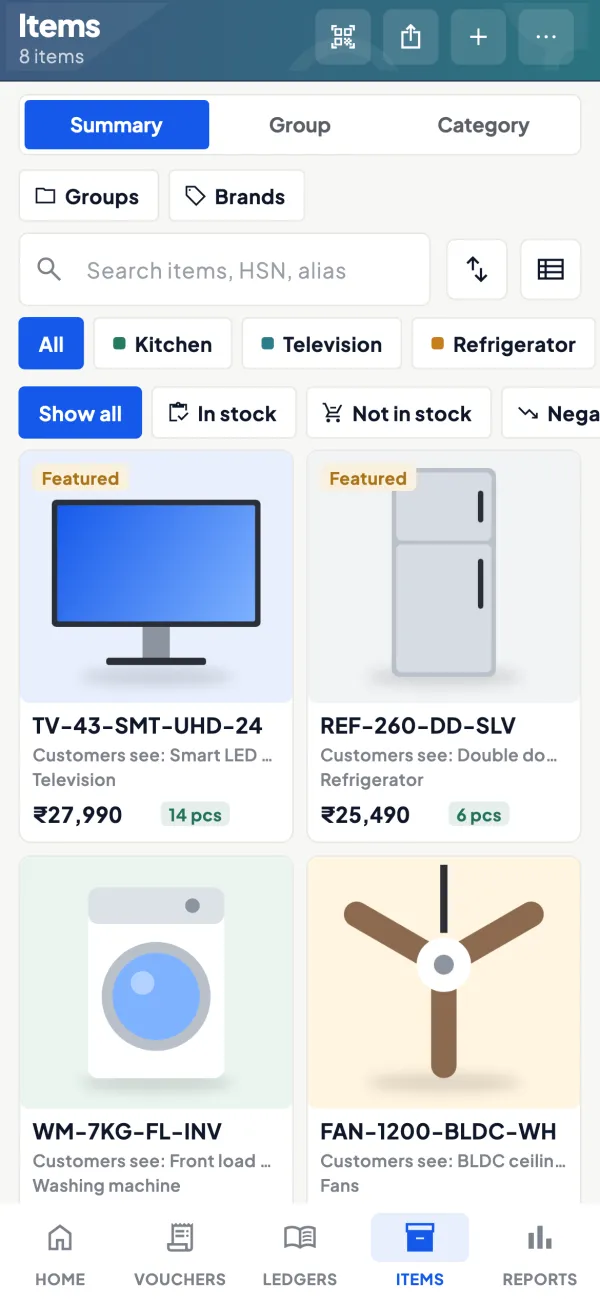
- 01A catalogue customers can browseA link with photos and display names opens without the app, and enquiries come to you on WhatsApp.Online catalogue
- 02Wishlists that become ordersWishlists with quantity, notes and interest level are shared on WhatsApp and turned into sales orders.Wishlists
- 03Orders posted to TallySales orders with lines and GST, at the price-list rate, go to Tally after approval once writing is on.Sales orders to Tally
To be fair
Where WhatsApp-only ordering may suit you
An honest view: when the other option could be the better choice for you.
- A few orders, one personIf one person who knows every customer handles a few orders a day, WhatsApp alone is simple and free.
- Mostly counter salesWhere WhatsApp is only an occasional channel and most sales are at the counter, adding an ordering app may not pay back.
In detail
The full comparison
Feature by feature, price, and when each one fits.
In this comparison 7
What WhatsApp ordering looks like
Customers message the salesman, the owner or a business number. Orders arrive as text, photos of chits, voice notes and forwarded catalogue images. A staff member reads the chats, confirms rates and availability, and enters sales orders or invoices in TallyPrime. Questions about dues and statements arrive on the same chats.
It works because there is nothing to install and nothing to learn. Our guide on WhatsApp for business selling covers how to run it well.
Side by side
| Question | WhatsApp only | WhatsApp plus Cashflow OS |
|---|---|---|
| Customer effort | None, they already use it | None; they still receive PDFs, wishlists and catalogue links on WhatsApp |
| Getting the order into Tally | Read and retype | Sales order made in the app, posted through the connector |
| Where orders live | Spread across many phones and chats | In the app and in Tally |
| Rates | Typed by whoever replies | Price lists by dealer type |
| Statements on request | Someone opens Tally and exports | Shared from the party screen |
| If the staff member leaves | The chat history may leave with the phone | Orders and parties stay in the company's account |
Where WhatsApp alone is enough
- A small number of orders a day, handled by one person who knows every customer.
- Customers who order the same things at the same rates every time.
- Businesses where most sales are at the counter and WhatsApp is only an occasional channel.
Where it breaks down
Lost orders: an order sent at 9 pm is buried by morning under twenty other chats. Nobody notices until the customer calls angry.
Two versions: the customer edits the order in a later message; the office enters the first one.
Personal phones: orders land on a salesman's personal number. When he leaves, so do the chats.
Rates in writing: a rate typed in haste becomes the customer's proof of the agreed price.
No link to credit: whoever confirms the order usually cannot see that the customer is 75 days overdue.
Keeping WhatsApp, adding structure
Cashflow OS does not try to move customers off WhatsApp. It uses WhatsApp as the delivery channel and gives the business a structured place behind it:
- Online catalogue link with photos and display names; customers browse without the app and their enquiries come to you on WhatsApp.
- Wishlists with quantity, notes and interest level, shared on WhatsApp.
- Sales orders from a wishlist or visit, with lines and GST, posted to Tally once writing is on.
- Quotations and proforma invoices with your branding, shared as PDF on WhatsApp.
- Party statements as a PDF or Hindi हिसाब page on WhatsApp.
For B2B catalogue sharing ideas, see catalogue sharing for B2B sales.
A worked example: one order, two ways
A retailer sends a photo of a chit at 8:40 pm: "20 box 6A switch, 10 box 16A socket, 5 roll 1.5mm wire". On WhatsApp alone, the office reads it the next morning, guesses that "6A switch" means the white modular one he usually buys, types the rates from memory and enters a sales order in Tally. At 11 am the retailer messages again: he wanted 2.5mm wire, not 1.5mm, which he had mentioned in a voice note nobody played. The order is corrected after the goods are packed.
With the app, the salesperson or office staff opens the retailer, builds the order from the items list with the correct names and pack sizes, and the retailer's price-list rate fills in. The salesperson sees the retailer has ₹46,000 pending for 52 days and mentions it politely. The order goes for approval, then into Tally. If the retailer wants to confirm, he can be sent a quotation PDF on WhatsApp first. The chat is still where the conversation happens; the app is where the order is made correctly once.
When Cashflow OS is the better fit
Consider the switch when orders are being missed or entered twice, when more than one person handles the chats, when rates differ by customer type, or when the owner cannot see the day's orders without scrolling through several phones. A useful test: count how many minutes a day someone spends reading chats and retyping orders into Tally. At 60 orders a day and two minutes each, that is two hours of a staff member's day, every day. Start by putting one salesperson's customers on app-made orders and compare the month's errors and returns.
Facts about other products come from their public websites as of November 2026 and may have changed. Tally, TallyPrime and other names are trademarks of their owners.
No risk
Try it side by side in 4 steps
Your Tally stays as it is. Try Cashflow OS on your own books before you decide.
- 1
Install the Tally Connector and turn on the catalogue link
- 2
Set price lists by customer type so rates fill themselves
- 3
Put one salesperson's customers on app-made orders first
- 4
Compare that month's errors and returns with WhatsApp-only orders
Plans
Simple yearly plans
- 14-day free trial on your own books
- 3-year term saves up to 25%
- Premium modules (catalogue, field force, price lists, store…) priced extra
Start free trialGet the price for your business
Compare all plans- Growth₹3,000/year + GSTBooks, reports, outstanding and sharing
- Pro₹5,000/year + GSTEverything in Growth, plus entries into Tally
- Pro+₹7,000/year + GSTEverything in Pro, plus e-invoice and e-way bill