Running the business Family business
Family business succession and the books
Most Indian MSMEs are family businesses, and many carry decades of knowledge in one person's head. Succession goes smoothly when the books are clean, family and business money are separated, credit relationships are written down, and the next generation is given real responsibility before the handover.
- Founders planning to step back
- Next-generation successors
- Partners in family firms
- Family business accountants
- CAs advising family businesses

On this page 11
Why the books decide how succession goes
When a founder steps back, the next generation inherits not just the business but its books. If those books mix family expenses with business costs, hold old balances nobody can explain, and leave half the customer credit terms unwritten, the successor spends years untangling the past instead of growing the business. Disputes between siblings or with relatives often begin with numbers nobody trusts.
Clean books are the most practical gift a founder can leave.
Step 1: separate family money from business money
- Drawings ledger: every withdrawal for personal or household use goes to the owner's or partner's drawings ledger, not to business expenses.
- Family members on the payroll: salaries should match real work, with proper records. Your CA can advise on what is reasonable.
- Loans from relatives: record them as loans with agreed interest and terms, not as unexplained credits.
- Personal assets: the family car or house should not sit in the business books unless the CA advises it.
- Separate bank accounts for business and household.
Founders sometimes resist this because the business has always run on trust. But the successor, siblings, banks and the CA will all rely on the numbers. Numbers that need the founder present to explain them are a risk to the family, not just to the business.
Step 2: clean up old balances
Many family businesses carry balances that have sat unchanged for years. Before handover, review each one:
| Type of balance | What to do |
|---|---|
| Debtors not paid for years | Collect, settle or, with the CA's advice, write off |
| Creditors with no recent activity | Confirm with the party; settle or reverse if not owed |
| Advances to staff or relatives | Recover or convert into documented loans |
| Suspense or difference ledgers | Trace and clear |
| Stock that no longer exists | Count and correct the books |
| Fixed assets sold or scrapped | Remove from the asset register |
Step 3: write down what is in the founder's head
Much of a family business runs on unwritten knowledge. Capture it while the founder is active:
- Credit terms and limits for each major customer, and which ones need personal attention.
- Supplier relationships: who gives extra credit, who gives schemes, who must be paid on time.
- Pricing logic: special rates for old customers, discount rules. A written price list replaces memory.
- Seasonal patterns: when to buy, what to stock, which months are slow.
- Bank relationships, loan terms and renewal dates.
- Every login: Tally, GST portal, income-tax, bank, company portals — kept securely in the business's control.
Step 4: hand over roles gradually
| Stage | Successor's role | Founder's role |
|---|---|---|
| Year 1 | Runs one area end to end — collections, a branch, or purchases | Reviews weekly |
| Year 2 | Owns accounts review, meets the CA, handles bank renewals | Approves major decisions |
| Year 3 | Runs the business day to day | Advises; handles key relationships |
A successor who has handled collections and a CA meeting understands the business far better than one who only sat at the counter. See delegating accounts work for how to split roles.
Agree in advance how disagreements will be settled — for example, which decisions the successor can take alone and which need the founder's agreement during the transition. Write this down. It avoids awkward conversations in front of staff, customers and suppliers, who will otherwise not know whose instruction to follow.
Legal and tax structure
Succession also raises questions on ownership: who holds the business, how a partnership deed should change, whether to move to an LLP or company, how property used by the business is held, and wills. These need advice from your CA and a lawyer, and the right answer depends on your family's situation. Start the conversation early; changes made in a hurry after a health event are much harder. This page is general guidance, not legal or tax advice.
Making the books visible with Cashflow OS
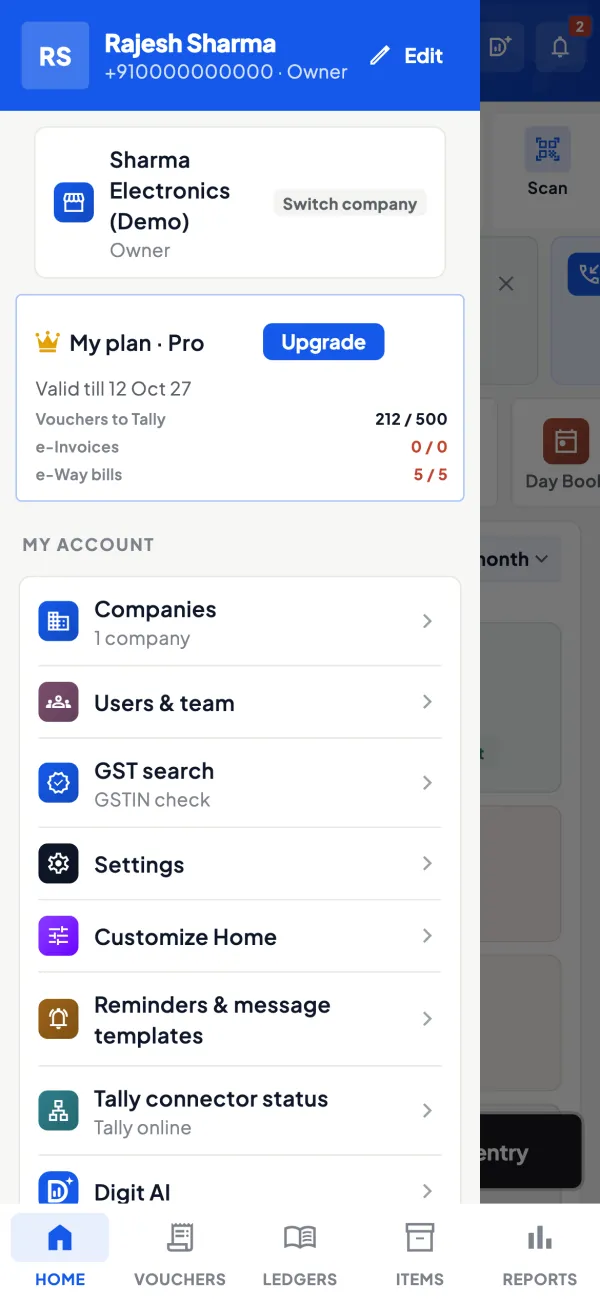
Cashflow OS helps the next generation see the business clearly without disturbing how the accountant works in Tally. Sales, receipts, outstanding with ageing, P&L and Balance Sheet are on the phone and web app, in English or Hindi — useful when the founder prefers Hindi and the successor English. Roles per company let the founder and successor both see the books while staff see only what they need, and the owner can see team activity. See team roles.
Avoid these
Common mistakes
- MistakeHousehold spending booked as business expenseDo this instead
Post personal withdrawals to the drawings ledger and run separate bank accounts for home and business.
- MistakeCarrying old balances nobody can explainDo this instead
Review old debtors, creditors, advances and suspense ledgers before handover; settle, trace or, with the CA, write off.
- MistakeCredit terms and pricing kept only in memoryDo this instead
Write down limits, special rates and supplier arrangements, and introduce the successor to key parties in person.
- MistakeLeaving structure changes until a health eventDo this instead
Start talking to your CA and a lawyer early about partnership deeds, ownership and wills.
Keep handy
Checklist
Family business succession and the books — 8 checks. Tick them as you go.
In Cashflow OS
How Cashflow OS helps
Cashflow OS puts your TallyPrime books on every phone in the team. Where it fits this topic:
Books visible to founder and successor
Sales, receipts, outstanding with ageing, P&L and Balance Sheet are on the phone and web app, in English or Hindi as each person prefers.
See Hindi and English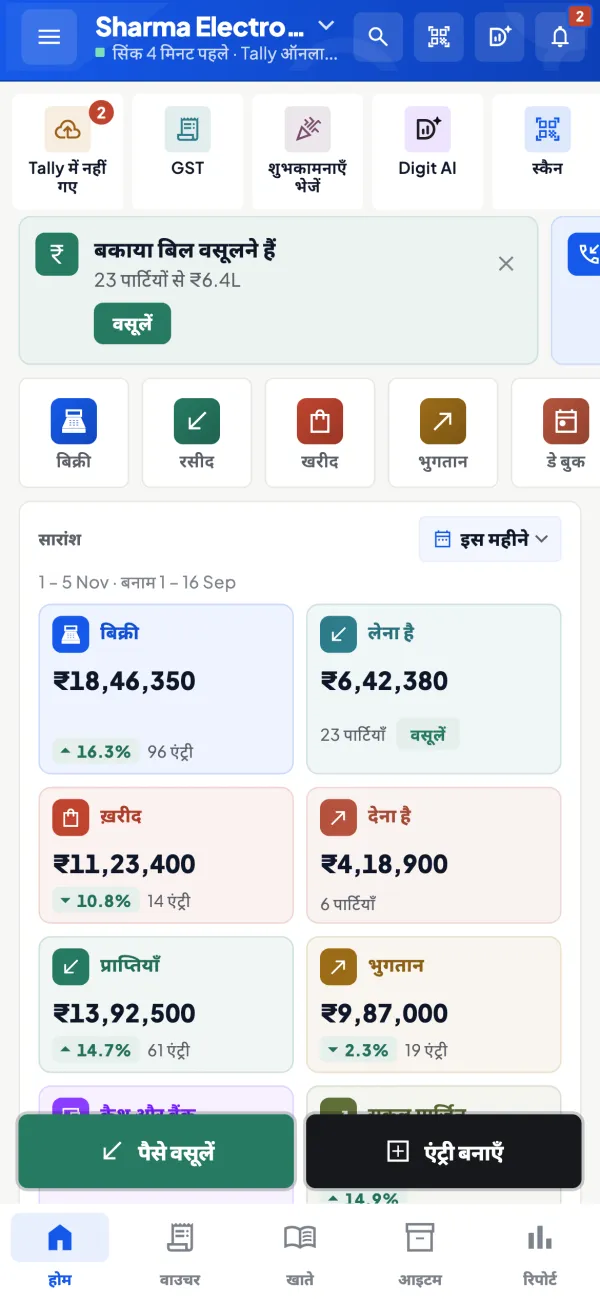
Roles for family and staff
Founder and successor can both see the books while staff see only what they need, and the owner can see team activity.
See Team roles and access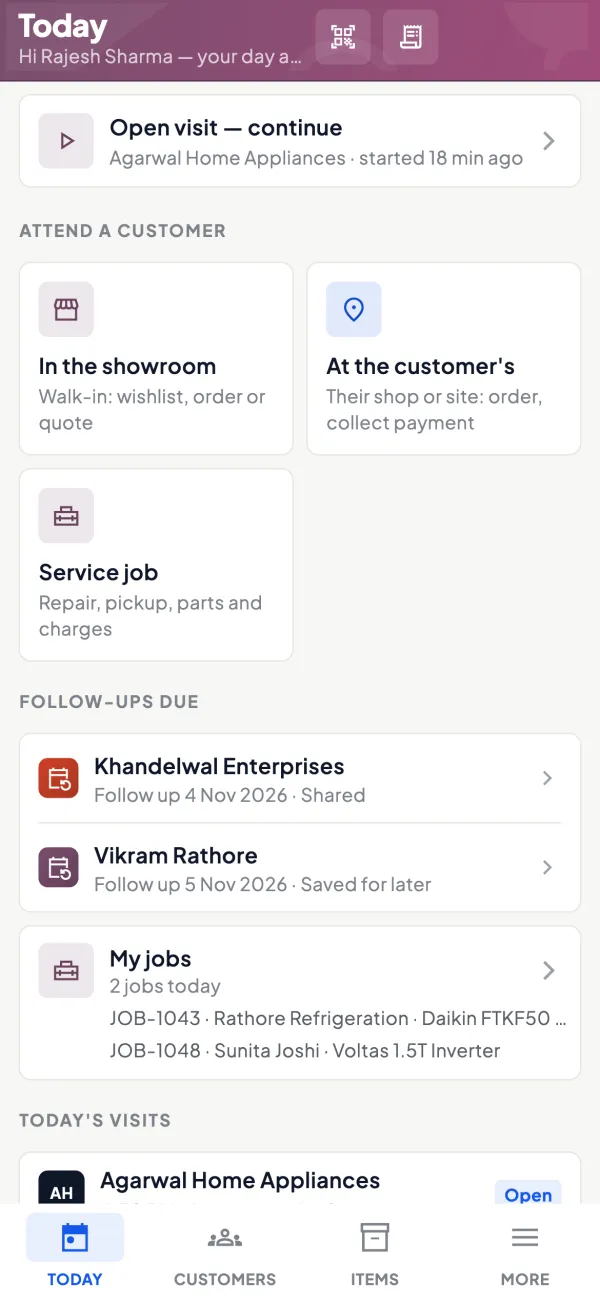
Questions people ask
When should a family business start succession planning?
Should family household expenses be paid from the business?
How do I document customer relationships for my successor?
Do we need to change the partnership deed when a son or daughter joins?
What is a drawings ledger?
Should old unpaid debtors be written off before handover?
Who should hold the business's logins?
How should the founder and successor settle disagreements?
This page is general information for Indian businesses, not tax, legal or financial advice. Rules and rates change — check the official portals or your CA before acting.