GST E-way bill
E-way bill vs e-invoice
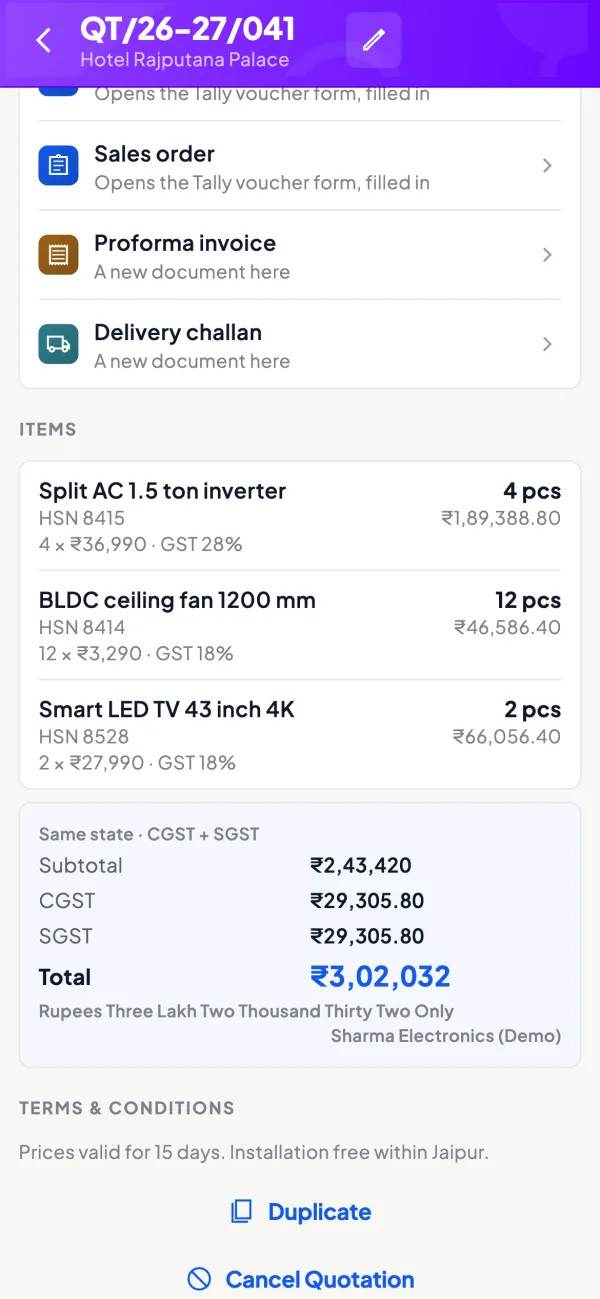
An e-invoice registers a B2B invoice with the government; an e-way bill authorises moving goods. A business can need one, both or neither, and when it needs both, the e-invoice can produce the e-way bill in one step.
- GST-registered traders
- Distributors near the e-invoice limit
- Billing and dispatch staff
- Service businesses
- Accountants and CAs
On this page 12
The core difference
The two are often confused because both are electronic, both sit on government portals, and both use invoice data. But they answer different questions:
- E-invoice: "Is this tax invoice registered?" It is about the document. See e-invoicing and IRN.
- E-way bill: "Are these goods allowed to move on this vehicle?" It is about the movement. See e-way bill basics.
Side-by-side comparison
| E-invoice | E-way bill | |
|---|---|---|
| Who needs it | Businesses above the e-invoice turnover limit | Anyone moving goods above the value limit |
| Trigger | Issuing a B2B invoice, credit or debit note, or export invoice | Movement of goods, sale or not |
| Applies to services? | Yes | No, goods only |
| Applies to B2C? | No | Yes, if goods move above the limit |
| Main output | IRN and signed QR | E-way bill number |
| Validity | Permanent | By distance, in days |
| Cancellation | Within 24 hours | Within 24 hours, if not verified |
Four situations
1. Both needed. A ₹12 crore turnover distributor ships goods worth ₹2,00,000 to a registered dealer 300 km away. The invoice needs an IRN, and the movement needs an e-way bill.
2. Only e-invoice. The same distributor bills a registered dealer ₹40,000 for goods within the state, below the e-way bill limit. Or it bills ₹3,00,000 for a maintenance service. IRN needed, no e-way bill.
3. Only e-way bill. A ₹2 crore turnover trader, below the e-invoice limit, ships ₹1,50,000 of goods to a customer. No IRN, but an e-way bill is required. Also, any business sending ₹80,000 of goods to a job worker on a delivery challan needs an e-way bill but no e-invoice, since a challan is not covered by e-invoicing.
4. Neither. A small retailer sells a ₹30,000 item to a walk-in customer, who carries it home.
How they link
When an invoice is reported to the Invoice Registration Portal, most of what Part A of the e-way bill needs is already there: GSTINs, document details, items, HSN and value. So the e-way bill can be generated from the IRN:
- Include transport details (transporter ID, distance, vehicle number) in the e-invoice request, and the e-way bill is generated along with the IRN; or
- Generate the IRN first, then generate the e-way bill later using the IRN, adding Part B when the vehicle is known.
Either way, nobody retypes the invoice on the e-way bill portal. Cancelling an IRN does not automatically fix a linked e-way bill; cancel that as well within its own window.
A quick test for each dispatch
Ask two questions, separately, every time:
- Does this document need an IRN? Only if your business is above the e-invoice turnover limit and the document is a tax invoice, credit note or debit note to a registered buyer, or an export or SEZ supply.
- Does this movement need an e-way bill? Only if goods are physically moving, the consignment value is above the limit (or the movement type always needs one), and no exemption applies.
The answers are independent. A ₹10,000 B2B invoice for a service can need an IRN and never an e-way bill; a ₹2,00,000 transfer of stock to your own godown in another state needs an e-way bill, and the tax invoice for that transfer may need an IRN as well.
Mistakes that come from mixing them up
- Assuming a business below the e-invoice limit does not need e-way bills.
- Generating an e-way bill and believing the invoice is now "registered" for the buyer's credit.
- Generating an e-way bill separately on the portal for an e-invoiced sale with different values from the IRN, creating two versions of the same transaction.
- Cancelling the e-invoice after 24 hours by cancelling only the e-way bill.
This is general information, not tax advice. Value and turnover limits can change by notification.
Who should own each in a small business
In many MSMEs, the billing clerk generates the IRN while the dispatch person handles e-way bills. Problems start at the hand-over. A simple rule helps: the invoice is not printed for dispatch until the IRN is received, and the truck does not leave until the dispatch person has checked that the e-way bill matches the invoice value and the vehicle number. Keep both numbers on the dispatch register.
Where Cashflow OS fits
On plans that include them, Cashflow OS can generate both the IRN and the e-way bill for a sales voucher synced from Tally, using your own e-invoice and e-way bill API login, and writes the numbers back onto the Tally voucher. It reads your TallyPrime data, so invoices and delivery challans can be looked up on the phone, and the GSTR-1 view prepared from Tally shows B2B invoices bill-wise. IRNs and e-way bills continue to come from your Tally setup or the government portals.
Avoid these
Common mistakes
- MistakeThinking below the e-invoice limit means no e-way billDo this instead
E-way bills depend on the goods moving and their value, not on turnover. Check every dispatch separately.
- MistakeTreating an e-way bill as registering the invoiceDo this instead
Only the IRN registers a B2B invoice for e-invoicing. The e-way bill covers the movement only.
- MistakeMaking the e-way bill separately with other valuesDo this instead
Generate it from the IRN so values match; two versions of one sale cause trouble at inspection and in returns.
- MistakeCancelling only one of the two documentsDo this instead
If an IRN is cancelled, cancel the linked e-way bill too within its own window, and the other way round.
Keep handy
Checklist
E-way bill vs e-invoice — 7 checks. Tick them as you go.
In Cashflow OS
How Cashflow OS helps
Cashflow OS puts your TallyPrime books on every phone in the team. Where it fits this topic:
IRN and e-way bill from one voucher
On plans that include them, Cashflow OS can generate both the IRN and the e-way bill for a synced Tally sales voucher using your own API login, and writes both numbers back onto the voucher.
See Create Tally vouchers from your phone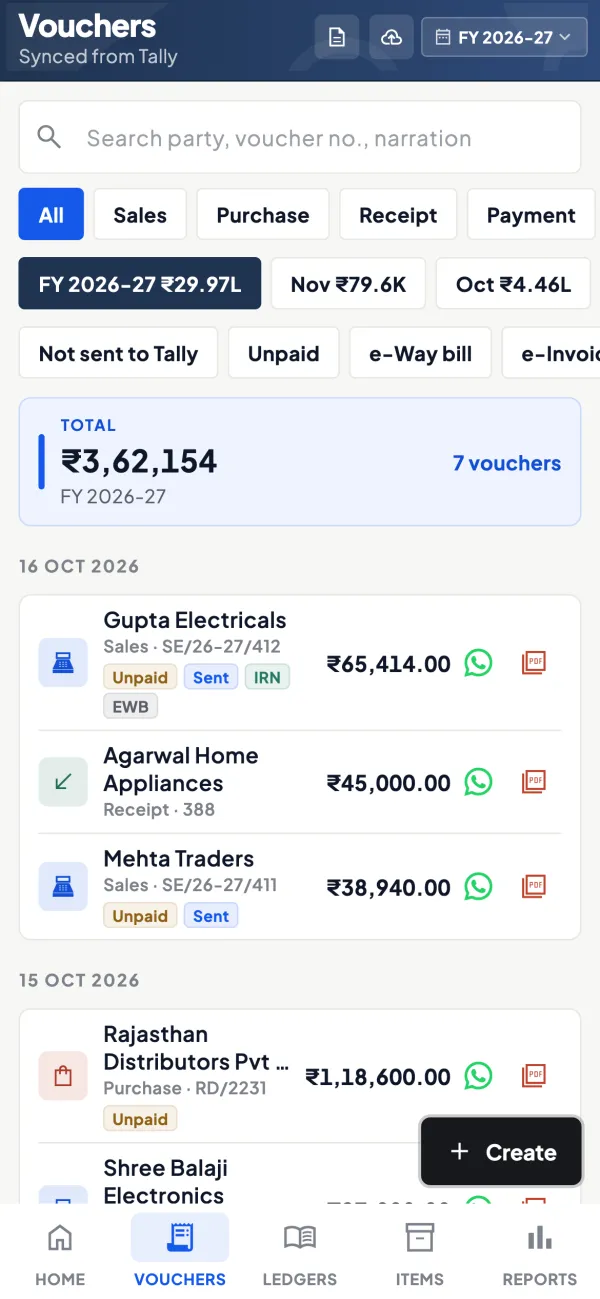
B2B invoices in the GSTR-1 view
The GSTR-1 view prepared from Tally shows B2B invoices bill-wise, so you can check what was invoiced against what was moved.
See GST reports from your Tally data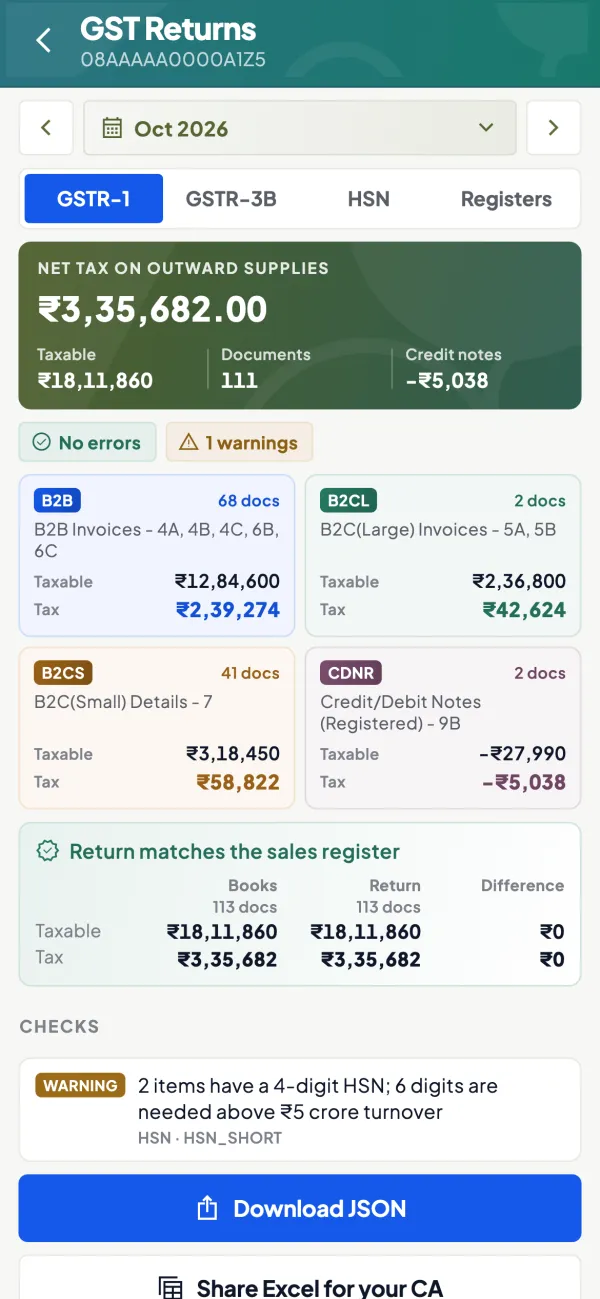
Questions people ask
If I generate an e-invoice, do I still need an e-way bill?
Do services need an e-way bill?
Is a delivery challan e-invoiced?
Does a B2C sale ever need an e-way bill?
Can a business below the e-invoice limit generate e-way bills?
Which has a validity period?
Who usually generates each one?
Is GSTR-1 auto-filled from e-way bills?
This page is general information for Indian businesses, not tax, legal or financial advice. Rules and rates change — check the official portals or your CA before acting.