Glossary GST
E-way bill
Definition
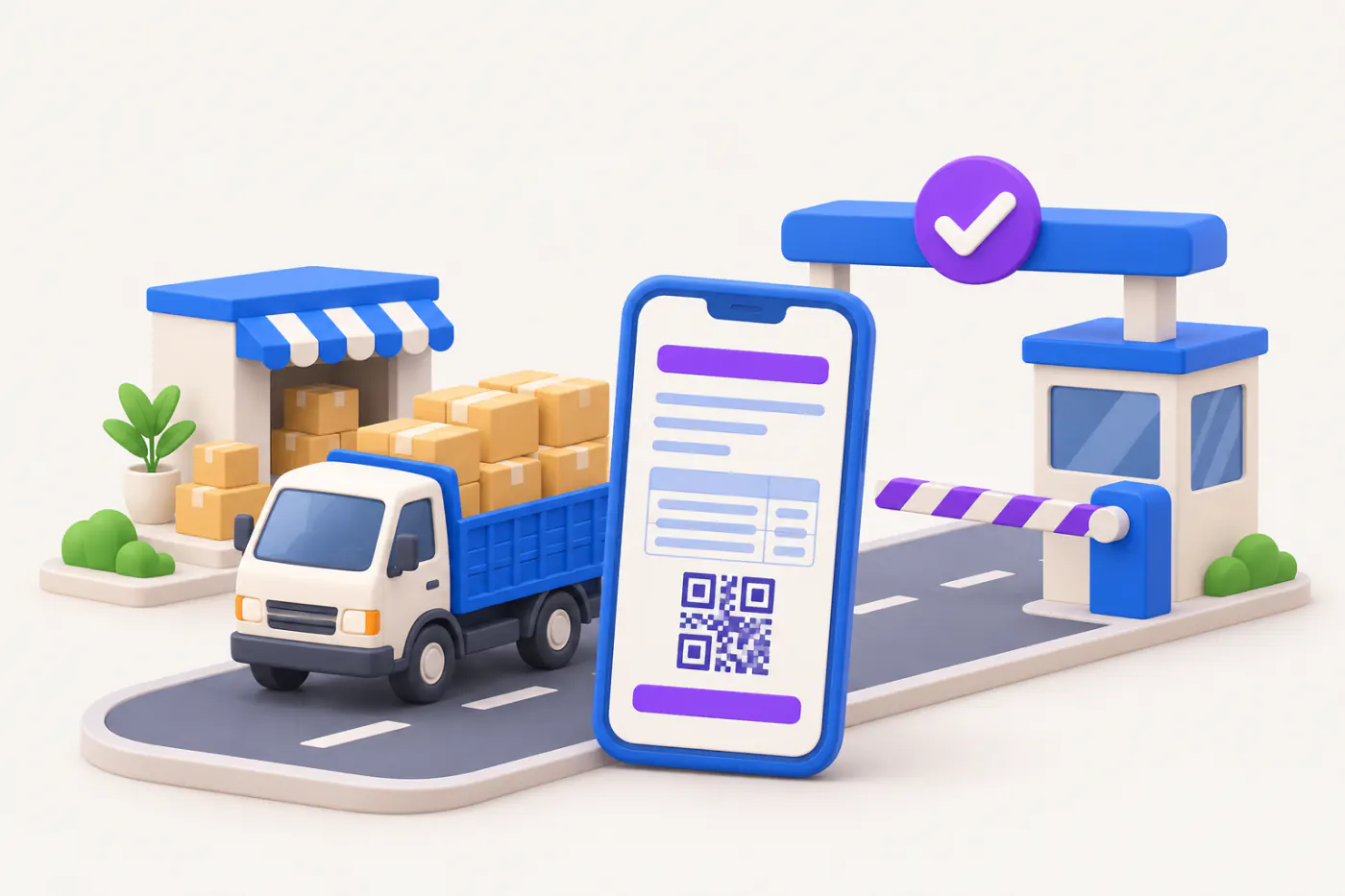
An e-way bill is an electronic document from the GST e-way bill portal that must go with goods moved above the notified value, with invoice and vehicle details.
Example
A Ludhiana hosiery wholesaler sends goods worth ₹1,20,000 including GST to a Delhi buyer by truck. It generates an e-way bill with the invoice in Part A and the truck number in Part B. When the goods are moved to another truck at Ambala, Part B is updated with the new vehicle number.
E-way bill in TallyPrime and in Cashflow OS
Where to find itIn TallyPrime
TallyPrime can record e-way bill details such as transporter, vehicle and distance on the voucher and, with the online facility set up, generate the e-way bill from it. GST reports flag vouchers that may need one.
 On your phoneIn Cashflow OS
On plans that include it, Cashflow OS generates the e-way bill for a synced Tally sales voucher through a GST Suvidha Provider using your own API login, updates Part-B and writes the number back to Tally.

Common misunderstandings
- Watch outThinking e-way bills are only for sales. Stock transfers, job work and returns can need them too.
- Watch outForgetting to update Part-B when goods change vehicle on the way.
When it is needed
The general limit is a consignment value above ₹50,000, including GST. It applies to sales, stock transfers, job work, returns and other movements, not just sales. For movement within a state, some states set their own limit or exempt certain goods and distances. Some goods are exempt everywhere. Check the current rules for your state on the e-way bill portal or gst.gov.in.
Part A and Part B
Part A carries the invoice or challan details: GSTINs, place of delivery, document number and date, value, HSN and reason for transport. Part B carries the vehicle number or the transporter's document number. Validity is counted from when Part B is first entered: for normal cargo, one day for each 200 km or part of it. If goods are moved to another vehicle, Part B must be updated.
Example
A tiles dealer in Morbi sends a ₹1,80,000 consignment (₹1,52,542 plus 18% GST) to a buyer 380 km away. The value is above ₹50,000, so the dealer generates an e-way bill. Because 380 km is more than 200 and up to 400 km, the bill is valid for two days. A ₹30,000 delivery to a local customer in the same state may not need one, depending on the state's rule. If the dealer uses a delivery challan instead of an invoice for a stock transfer, the challan details go into Part A. Our e-way bill basics guide has more cases.
Where it shows up in TallyPrime
TallyPrime can record e-way bill details on a sales, purchase or delivery note voucher (transporter, vehicle, distance) and, with the online facility set up, generate the e-way bill from the voucher. It also shows invoices that cross the limit but have no e-way bill number. Businesses covered by e-invoicing can create the e-way bill along with the IRN. See e-way bill vs e-invoice.
This is general information, not tax advice.
Related terms
IRN (Invoice Reference Number)Delivery challanHSN codeGSTINAll terms A–Z
Questions about E-way bill
Who generates the e-way bill?
Is an e-way bill needed for goods moved in my own vehicle?
What if the e-way bill expires on the way?
Can an e-way bill be cancelled?
Does the e-way bill limit include GST?
This page is general information for Indian businesses, not tax, legal or financial advice. Rules and rates change — check the official portals or your CA before acting.