Invoices & documents Debit notes
Debit note format under GST
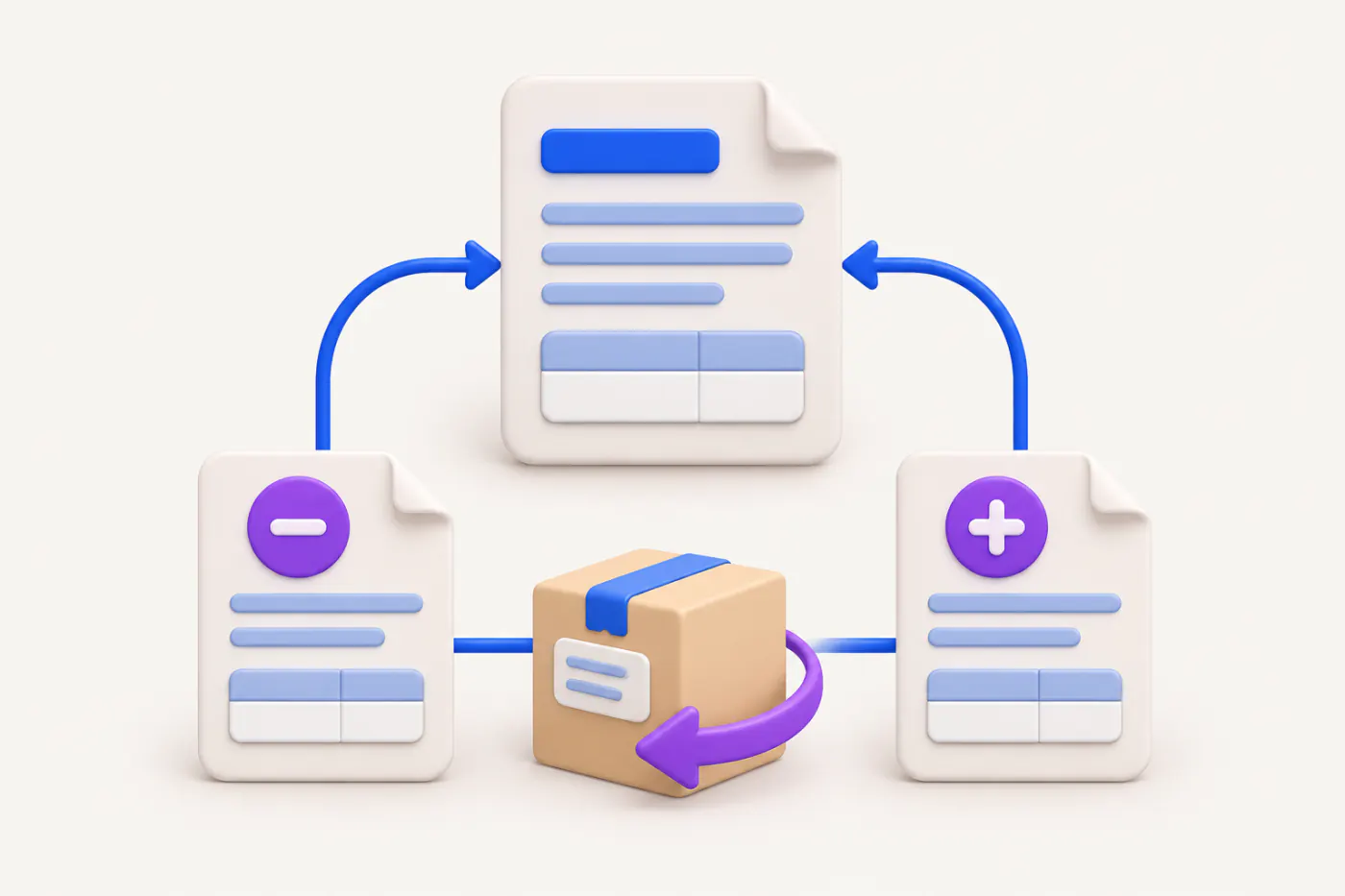
Under GST, a debit note is issued by the supplier when the invoice charged less value or tax than it should have. In everyday trade the term is also used by buyers for purchase returns, which is a different, commercial document.
- GST-registered suppliers
- Accountants
- Billing staff
- Buyers handling purchase returns
- Distributors and traders
On this page 12
Two meanings of debit note
The confusion is common, so settle it first.
| Point | GST debit note | Buyer's debit note |
|---|---|---|
| Issued by | Supplier | Buyer |
| Why | Value or tax on invoice was too low | Goods returned, shortage, rate claim |
| Effect on GST | Increases supplier's output tax | None by itself; supplier's credit note does the GST work |
| Reported in | Supplier's GSTR-1 | Not reported as a GST document |
This guide covers the GST debit note. If you are a buyer returning goods, your supplier issues a credit note; your debit note simply informs them and records the claim in your books.
When a supplier issues a debit note
- A rate was revised upwards and the buyer agreed to pay the difference.
- Freight, packing or loading that should have been on the invoice was left out.
- The wrong, lower GST rate was charged.
- Quantity supplied was more than invoiced and the buyer accepted it.
The legal basis is section 34 of the CGST Act. This is general information, not tax advice.
Fields to show
| Field | Example |
|---|---|
| Document name | Debit Note |
| Supplier name, address, GSTIN | Narmada Agro Inputs, Indore, 23ABCDE1234F1Z2 |
| Serial number and date | DN/25-26/0007, 20-11-2025 |
| Recipient name, address, GSTIN | Kisan Seva Kendra, Dewas, 23PQRSX5678K1Z5 |
| Original invoice number(s) and date(s) | INV/25-26/0480 dated 05-11-2025 |
| Additional taxable value, rate, tax | ₹6,000; CGST and SGST as applicable |
| Reason | Freight to Dewas omitted from invoice |
| Signature | Authorised signatory |
Numbering follows the invoice rule: up to 16 characters, consecutive, unique in the financial year. See invoice numbering rules.
Worked example: freight left off the bill
Narmada Agro billed sprayers worth ₹80,000 plus GST, but the agreed freight of ₹6,000 to the buyer's shop was missed. Freight charged by the supplier as part of the supply is part of the taxable value and takes the rate of the goods in most cases. See freight and delivery charges in GST invoices.
| Line | Amount |
|---|---|
| Additional taxable value | ₹6,000 |
| CGST at 9% (illustrative) | ₹540 |
| SGST at 9% (illustrative) | ₹540 |
| Debit note total | ₹7,080 |
The supplier reports the debit note in GSTR-1 for November and pays the extra ₹1,080. The buyer can claim ₹1,080 as input tax credit once it appears in their GSTR-2B and other conditions are met.
Time limits
A supplier declares the debit note in the return for the month it is issued. For the buyer, input tax credit on a debit note is linked to the financial year of the debit note itself, with the usual deadline of 30 November after that year or the annual return date, whichever is earlier. Confirm on cbic-gst.gov.in, as these dates have been amended before.
Debit note or a fresh invoice?
If the extra amount is a correction of the original supply, use a debit note referring to that invoice. If it is a new supply, such as extra goods ordered later, issue a fresh tax invoice. Using debit notes for new sales confuses both the buyer's credit and your sales register.
A simple test helps: would the buyer have paid this amount on the original invoice if it had been billed correctly? If yes, it is a correction and belongs on a debit note. If the buyer is agreeing to something new, such as an additional consignment or a separate service like installation booked later, it belongs on a new invoice with its own date of supply. Getting this right keeps your sales register by month accurate and stops the buyer's books from showing the same goods twice.
Buyer-side tips for purchase returns
- Send your return document with the goods, listing invoice number, items and reason.
- Ask the supplier for the GST credit note promptly, so your credit reversal and their output reduction happen in the same period.
- Do not deduct the return from payment without a matching credit note in hand; it creates an unexplained difference in the ledger.
Doing this with Tally and Cashflow OS
Debit notes are vouchers in TallyPrime. Through Cashflow OS, an authorised user can create a debit note from the phone or web app; it is written into Tally through the connector, GST is worked out from the item and the party's state, and Tally validates the entry. Outstanding and party statements update after the sync, so the buyer can be sent a fresh statement on WhatsApp.
Avoid these
Common mistakes
- MistakeUsing a debit note for a new saleDo this instead
Issue a fresh tax invoice for extra goods or new services; debit notes are only for correcting an earlier invoice.
- MistakeTreating the buyer's return note as a GST documentDo this instead
For returns, the supplier issues a GST credit note; the buyer's debit note only records the claim.
- MistakeDeducting a return from payment without a credit noteDo this instead
Ask the supplier for the credit note first, or the ledger shows an unexplained difference.
- MistakeLeaving out the original invoice referenceDo this instead
List each original invoice number and date, with the amount added against each.
Keep handy
Checklist
Debit note format under GST — 8 checks. Tick them as you go.
In Cashflow OS
How Cashflow OS helps
Cashflow OS puts your TallyPrime books on every phone in the team. Where it fits this topic:
Debit notes from the phone
An authorised user creates a debit note from the phone or web; it is written into Tally through the connector and Tally validates it.
See Create Tally vouchers from your phone
Fresh statement after the sync
Outstanding and the party statement update after sync, so the buyer can be sent a new statement on WhatsApp.
See Party ledger statements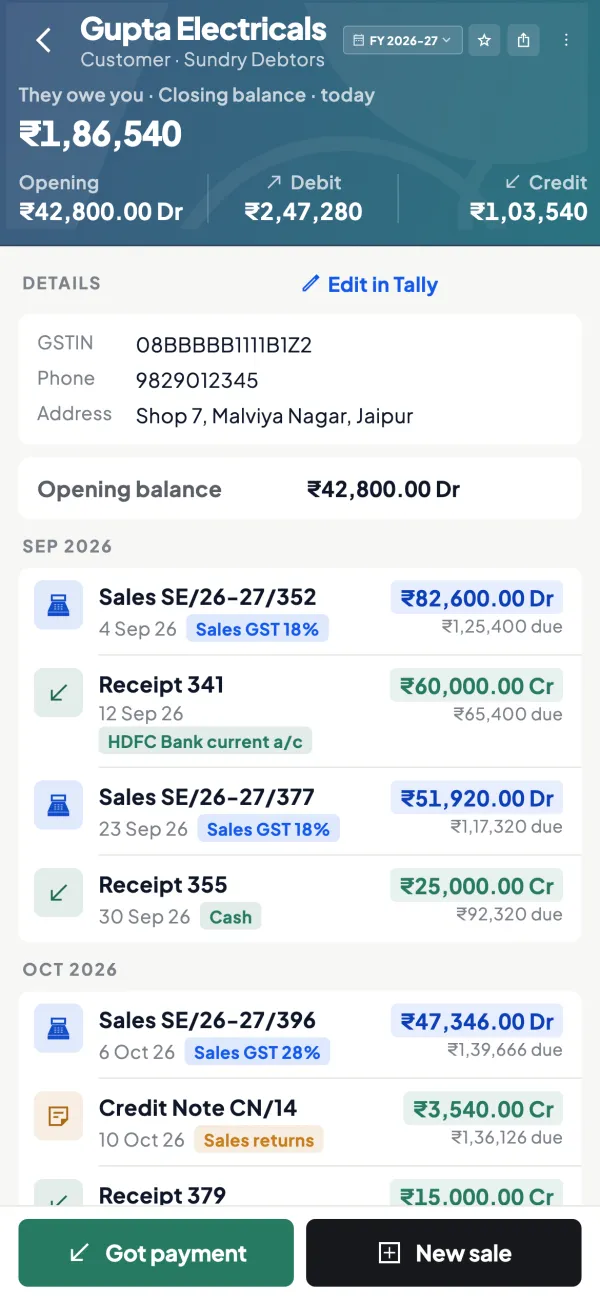
Questions people ask
Is a debit note the same as a supplementary invoice?
Does a debit note need an IRN?
Can a debit note cover several invoices?
Is freight left off an invoice taxable?
Does the buyer need to accept a debit note?
Can a debit note be issued in a later year?
Where does a debit note go in GSTR-1?
Should the debit note use the same tax type as the invoice?
This page is general information for Indian businesses, not tax, legal or financial advice. Rules and rates change — check the official portals or your CA before acting.