Business software & ERP Business software
CRM for distributors
For a distributor, CRM is less about chasing new leads and more about knowing every dealer well: what they buy, what they owe, when they were last visited, and what they asked for that you have not delivered.
- Distributors
- Wholesalers
- Sales managers
- Field salespeople
- FMCG and electrical stockists

On this page 12
Why generic CRM often fails distributors
Most CRM tools were designed around a sales funnel: lead, prospect, deal, won. A distributor's reality is different. You already know your 400 dealers. Ninety per cent of sales come from repeat orders. The money is in increasing what each dealer buys, collecting on time and noticing when a dealer goes quiet.
A CRM that asks your team to log "opportunities" for every repeat order will be ignored within a month. A distributor needs a CRM shaped around accounts, not leads.
What to track for each dealer
- Purchase history: last order date, average monthly value, top items and brands.
- Outstanding and ageing: what is due, what is overdue, how many days.
- Visits and calls: who visited, when, and what was discussed.
- Enquiries and wishlists: items the dealer asked about, with quantity and how keen they were.
- Complaints and returns: open issues that will block the next order.
- Location and area: for route planning and territory reports.
Five follow-up rules worth automating
- Silent dealers: any dealer who bought monthly but has not ordered in 45 days gets a visit or call.
- Overdue bills: bills past due by 15 days trigger a statement on WhatsApp; past 30 days, a call from the salesperson.
- Open enquiries: any enquiry older than a week without a quotation or order is flagged.
- New dealers: a visit in the first two weeks after their first order.
- Top dealers: the top 20 by value get a visit every month regardless of orders.
Even if you track these on paper today, writing the rules down is the first step. The guide on reducing outstanding receivables pairs well with the collection rules.
A quick worked example
A lighting distributor reviews its dealer list and finds 60 dealers who bought every month last year but have not ordered in two months. Their average monthly purchase was ₹35,000. If a focused round of visits wins back even a third of them, that is 20 dealers × ₹35,000 = ₹7,00,000 of monthly sales recovered. The data to spot this was already in the books; it simply was not being looked at in a CRM way.
Setting it up in the first month
- Clean the dealer list. One record per dealer, with the same name as in your books, a working mobile number, area and assigned salesperson.
- Agree what counts as a visit. A phone call, a shop visit, a counter visit by the dealer? Decide once so reports compare like with like.
- Pick three reports for the weekly meeting: silent dealers, overdue bills by salesperson, and open enquiries. Do not start with twenty.
- Review every Monday. A CRM that nobody looks at is a CRM nobody fills in. When salespeople see the owner using their notes, they write better notes.
- After a month, add rules such as automatic statement reminders for overdue bills.
Keep notes short and factual: "Wants 20 boxes of 10W panel next month, waiting for scheme" is more useful than a paragraph.
The non-negotiable: one source of balances
The single biggest CRM mistake for distributors is keeping dealer balances in the CRM separately from the accounts. When the two disagree, the salesperson argues with the dealer using wrong figures. Outstanding and purchase history should come from the books, with the CRM adding visits, notes and enquiries on top.
Questions for any CRM vendor
- Where do outstanding and sales history come from, and how fresh are they?
- Can a salesperson see only their own dealers?
- Can enquiries be turned into quotations or orders without retyping?
- Can the team use it in Hindi?
- Can I export everything if I leave?
Dealer CRM on top of Tally
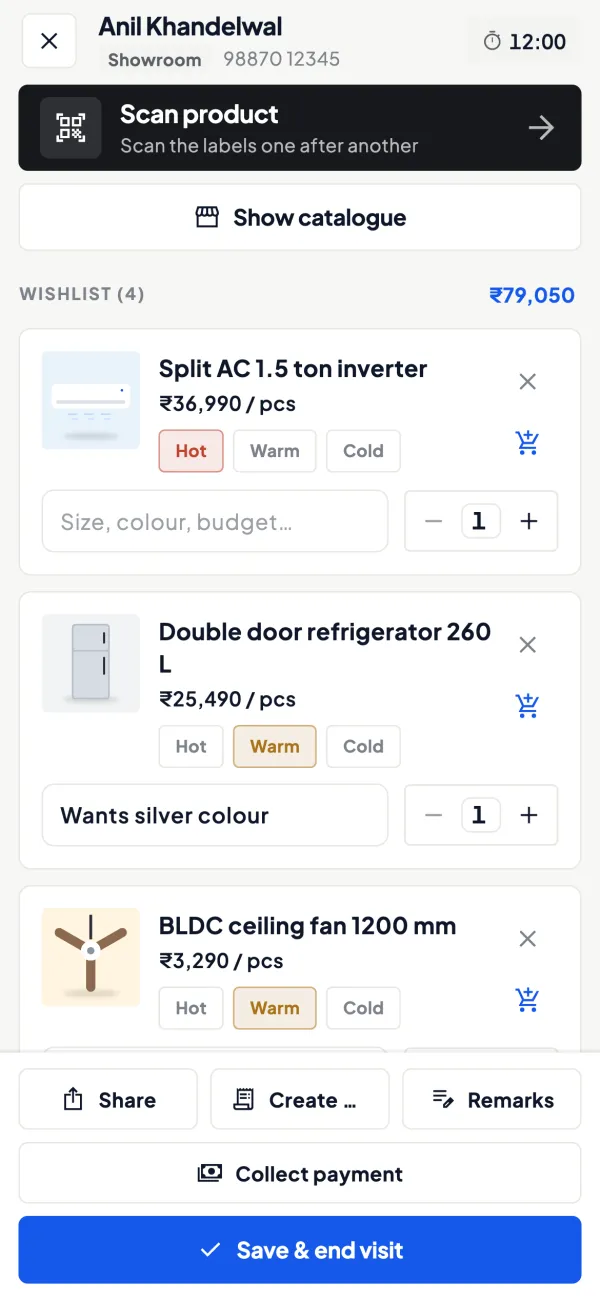
Cashflow OS takes outstanding, ageing and party ledgers from your synced Tally data, so the salesperson and accountant see the same figures. On top of that it records visits with notes and photos, wishlists with quantity and hot, warm or cold interest, and lets an enquiry become a sales order with lines and GST that is posted to Tally. Party statements can be shared on WhatsApp. See wishlists and the page for wholesalers.
Avoid these
Common mistakes
- MistakeKeeping dealer balances in the CRM separatelyDo this instead
Take outstanding and purchase history from the books, so salespeople and accounts quote the same figure.
- MistakeMaking the team log every repeat order as a dealDo this instead
Shape the CRM around accounts: visits, notes and enquiries, not opportunities for routine orders.
- MistakeStarting with twenty reportsDo this instead
Begin with silent dealers, overdue bills by salesperson and open enquiries, reviewed every Monday.
- MistakeLetting notes run to long paragraphsDo this instead
Keep one or two factual lines per visit: what the dealer needs, any complaint and the next step.
Keep handy
Checklist
CRM for distributors — 8 checks. Tick them as you go.
In Cashflow OS
How Cashflow OS helps
Cashflow OS puts your TallyPrime books on every phone in the team. Where it fits this topic:
Visits, notes and wishlists
Record visits with notes and photos, and wishlists with quantity and hot, warm or cold interest; an enquiry becomes a sales order posted to Tally.
See Wishlists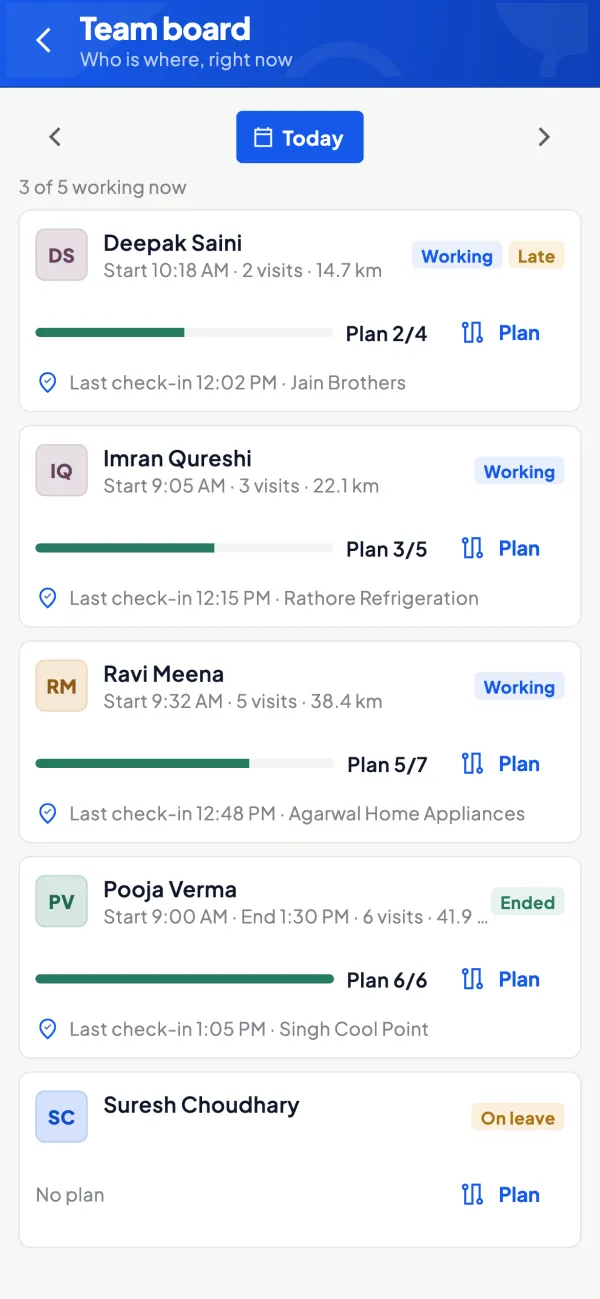
Same figures as the books
Outstanding, ageing and party ledgers come from synced Tally data, and party statements go on WhatsApp.
See Party ledger statements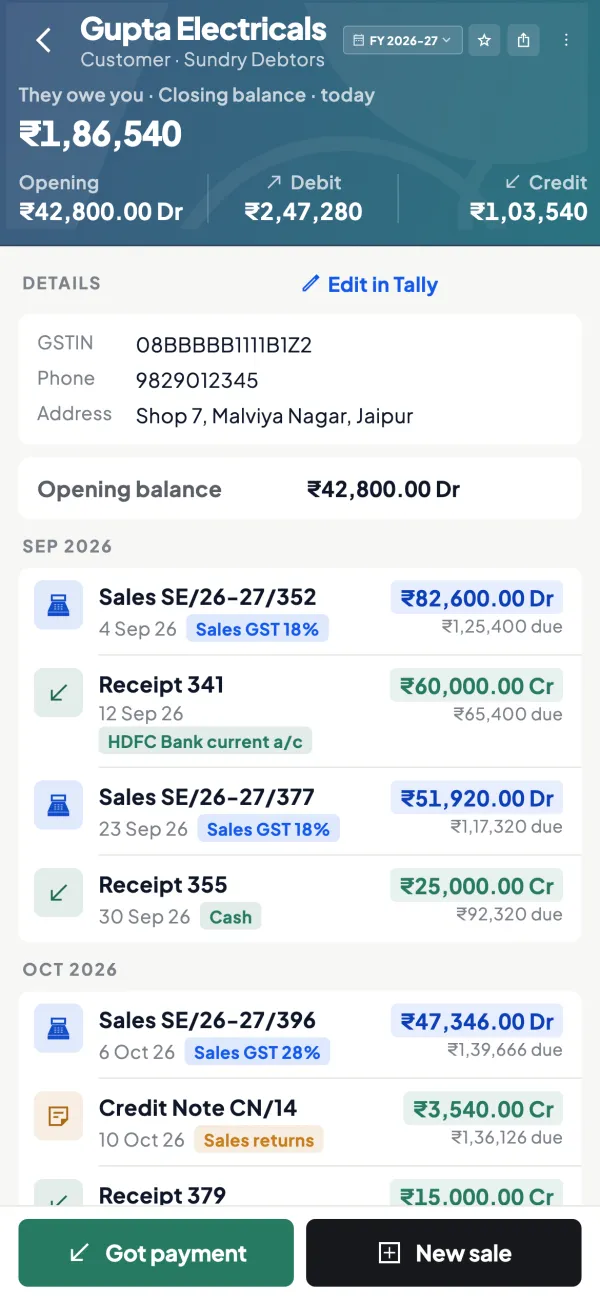
Questions people ask
Do small distributors need CRM?
Should dealers have access to the CRM?
How much should salespeople write in a CRM?
What is the difference between CRM and SFA?
What is a silent dealer?
How often should top dealers be visited?
Can CRM data help route planning?
Should the CRM be in Hindi?
This page is general information for Indian businesses, not tax, legal or financial advice. Rules and rates change — check the official portals or your CA before acting.