
Running the business Field sales
Sales beat planning
A beat is a fixed set of outlets a salesperson visits on a given day of the week. Good beat planning makes sure every outlet is visited at the right frequency, travel time is low, and each salesperson has a fair, full day.
- Distributors and stockists
- FMCG and pharma wholesalers
- Sales managers
- Field salespeople
- Owners planning territories

On this page 11
Step 1: list and classify outlets
Make one list of every outlet in the territory with address, area and last three months' purchases. Then classify:
| Class | Rule of thumb | Visit frequency |
|---|---|---|
| A | Top outlets making up most of sales | Weekly |
| B | Regular mid-sized buyers | Fortnightly |
| C | Small or occasional buyers | Monthly |
| Prospect | Not yet buying | Monthly, until they convert or drop |
Step 2: work out the visit load
Count the visits needed in a four-week month. Example for one salesperson:
- 30 A outlets × 4 visits = 120
- 60 B outlets × 2 visits = 120
- 50 C outlets × 1 visit = 50
- 20 prospects × 1 visit = 20
Total: 310 visits a month. With 24 working days, that is about 13 visits a day. If your experience says 12 is realistic in this area, either move some outlets to another person, or visit some C outlets by phone in alternate months.
Step 3: group outlets into beats
- Mark outlets on a map, or at least sort them by area or pin code.
- Draw six beats (Monday to Saturday) so that each is one compact area or a line along one road.
- Put every A outlet in exactly one beat so it gets its weekly visit.
- Split B outlets into two groups visited in alternate weeks on the same beat day.
- Split C outlets across the four weeks.
- Check each day has a similar number of visits and similar travel.
Order the outlets in each beat so the salesperson moves in one direction, starting near home or the office and ending near a point where they can send orders and deposit collections.
Step 4: fix the calendar and tell customers
Customers like knowing that "Ravi comes every Tuesday". It lets them keep their order ready and arrange payment. Share the beat day with each outlet and keep to it. A predictable visit often brings better collections than an unplanned extra one.
Also agree a cut-off with dispatch: orders taken on the beat by a set time go out the next day. When customers see that the Tuesday visit reliably means a Wednesday delivery, they stop placing scattered phone orders with other suppliers between visits.
Step 5: review beats every quarter
- Re-classify outlets on the latest three months' sales.
- Look for outlets missed repeatedly; they may be in the wrong beat.
- Check productive calls per beat. A beat with many visits and few orders may need a different day or approach.
- Add new outlets and drop closed ones.
Beat discipline feeds directly into salesperson performance measures such as planned vs actual visits.
A sample weekly beat calendar
| Day | Beat | A outlets | B outlets | C / prospects |
|---|---|---|---|---|
| Monday | Old city market | 6 | 5 | 2 |
| Tuesday | Station road | 5 | 5 | 3 |
| Wednesday | Industrial area | 4 | 6 | 3 |
| Thursday | New colonies (east) | 5 | 5 | 3 |
| Friday | New colonies (west) | 5 | 5 | 2 |
| Saturday | Outskirts and highway towns | 5 | 4 | 4 |
B outlets alternate between week 1 and week 2, so each B column shows the outlets visited that week; C outlets and prospects rotate over four weeks. Every day lands at 12 to 14 visits. Keep the plan on one page and give a copy to the salesperson and the dispatch team, so deliveries can follow the same pattern; see delivery management for distributors.
Beat plans with Cashflow OS
In Cashflow OS you can store dealer locations, group them into areas and build route plans for each salesperson. The app suggests recommended visits, and salespeople check in at each visit with location, notes and photos. Their Today screen lists the customers to attend along with orders and collections, and the owner can see a performance view for the team. Read more on route planning and the field sales team playbook.
Avoid these
Common mistakes
- MistakeVisiting every outlet at the same frequencyDo this instead
Class outlets by recent purchases and visit A outlets weekly, B fortnightly and C monthly.
- MistakePlanning more visits a day than is realisticDo this instead
Count the monthly visit load, divide by working days, and move outlets or use phone calls where the number is too high.
- MistakeBeats that zig-zag across the cityDo this instead
Make each beat one compact area or one road, and order outlets so the route runs in one direction.
- MistakeChanging beat days every weekDo this instead
Keep each outlet's visit day fixed so customers keep orders and payments ready; review beats quarterly.
Keep handy
Checklist
Sales beat planning — 7 checks. Tick them as you go.
In Cashflow OS
How Cashflow OS helps
Cashflow OS puts your TallyPrime books on every phone in the team. Where it fits this topic:
Areas and route plans
Store dealer locations, group them into areas and build route plans for each salesperson; the app suggests recommended visits.
See Route planning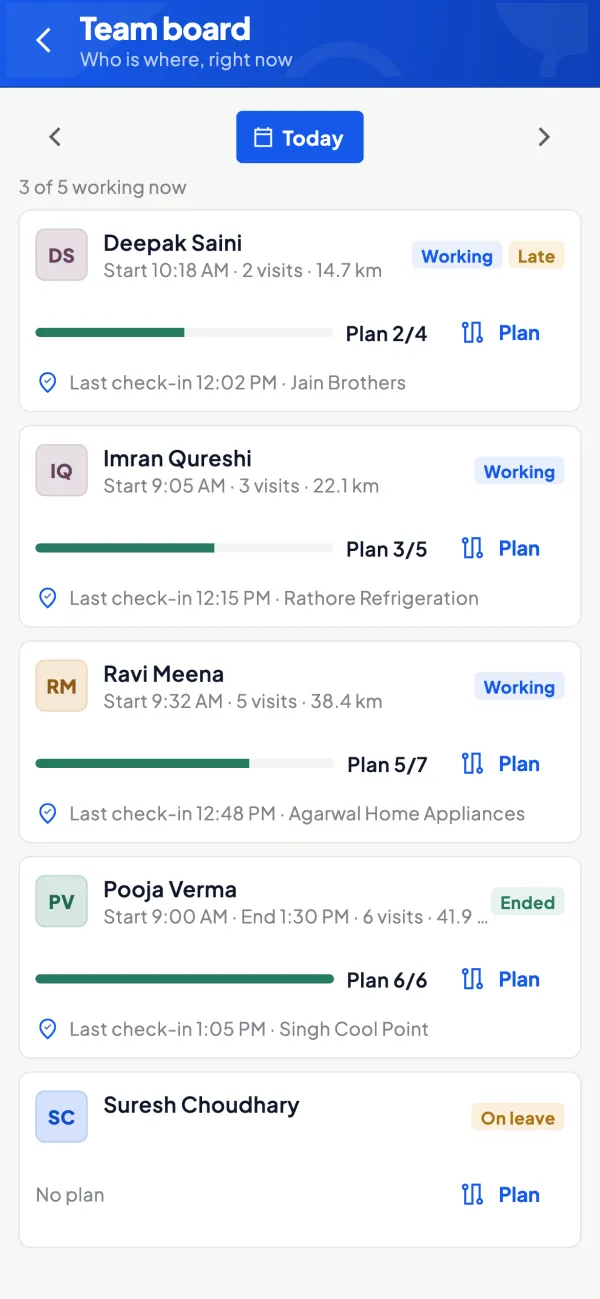
Check-ins on every visit
Salespeople check in at each visit with location, notes and photos, and their Today screen lists customers to attend, orders and collections.
See Field force tracking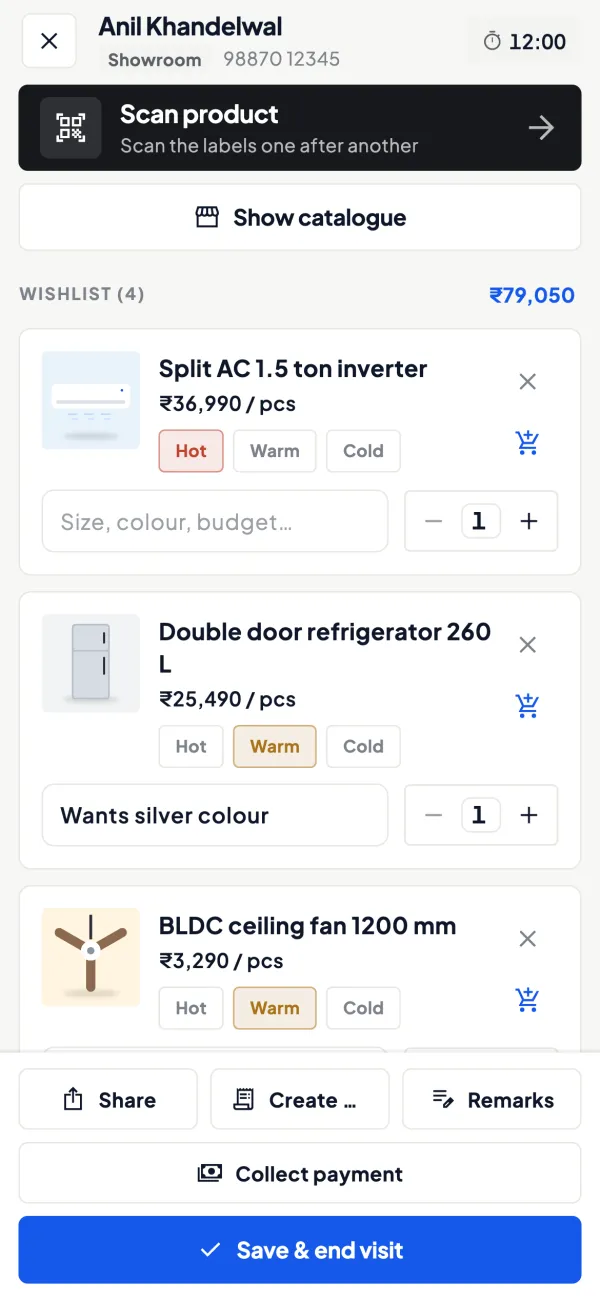
Questions people ask
What is the difference between a beat and a route?
Should beats change every week?
How do I handle urgent orders from outlets not on today's beat?
How do I plan beats for a rural or spread-out territory?
Should the owner ever ride along on beats?
How many outlets should one salesperson cover?
What is a productive call?
Should prospects be part of the beat?
This page is general information for Indian businesses, not tax, legal or financial advice. Rules and rates change — check the official portals or your CA before acting.