Invoices & documents Dispatch
Packing list vs invoice
An invoice tells the buyer what they owe. A packing list tells everyone handling the shipment what is inside each package. The invoice is a tax and payment document; the packing list is a logistics document with no prices.
- Exporters
- Distributors shipping many cartons
- Project and site suppliers
- Dispatch and warehouse staff
- Manufacturers
On this page 12
Side by side
| Point | Invoice | Packing list |
|---|---|---|
| Purpose | Bill for the supply, basis of GST | Describe the physical contents of each package |
| Shows prices | Yes | No |
| Shows tax | Yes | No |
| Shows weights and dimensions | Sometimes total quantity only | Net and gross weight, sizes per package |
| Used by | Buyer's accounts, tax authorities | Warehouse, transporter, customs, buyer's receiving staff |
| Legally required under GST | Yes | No |
What goes on a packing list
| Field | Example |
|---|---|
| Packing list number and date | PL/25-26/0144, 18-11-2025 |
| Invoice reference | INV/25-26/0802 |
| Consignor and consignee | Names and addresses, as on the invoice |
| Package number and marks | Carton 1 of 12, marked SGT/JPR |
| Contents per package | Carton 1: 24 × LED panel 15 W |
| Net and gross weight | Net 9.6 kg, gross 11.2 kg |
| Dimensions | 60 × 40 × 35 cm |
| Totals | 12 cartons, 288 units, gross 134 kg |
When you need one
- Exports: customs and the buyer's import clearance rely on the packing list along with the commercial invoice. Freight forwarders ask for it to book space. See export invoice format.
- Multi-carton domestic dispatches: a dealer receiving 40 cartons of mixed items checks each carton against the list instead of opening everything.
- Project supplies: material sent to a site in stages, where the site engineer signs per package.
- Partial shipments: when one invoice goes in several vehicles, each with a delivery challan, a packing list per vehicle shows exactly what is in it. See delivery challan under GST.
For a single box of five items to a local shop, the invoice alone is enough.
Worked example: a mixed dispatch
A Jaipur lighting distributor ships an order of ₹1,86,000 (taxable value) to a dealer in Bikaner in 12 cartons.
| Cartons | Contents | Gross weight |
|---|---|---|
| 1 to 5 | 24 LED panels each (120) | 11.2 kg each |
| 6 to 9 | 40 batten lights each (160) | 12.5 kg each |
| 10 to 12 | Mixed: 8 ceiling fans each (24) | 14.0 kg each |
Gross total: 56 + 50 + 42 = 148 kg. When the dealer reports carton 7 missing, both sides know it held 40 battens, and the transporter's claim is settled from the packing list, not from guesswork. The invoice stays one document for ₹1,86,000 plus GST; the packing list adds no tax.
Packing list, delivery challan, e-way bill: who does what
- Invoice: the sale and its tax.
- Delivery challan: moves goods when there is no sale yet, or for later consignments of one invoice.
- E-way bill: the electronic permit for movement where required; declares the invoice or challan. See e-way bill basics.
- Packing list: what is physically in each package.
None replaces another. This is general information, not tax advice.
Mistakes that cause trouble
- Quantities that do not match the invoice. If the packing list says 288 units and the invoice says 300, the receiver will dispute the bill and customs may hold an export shipment. Prepare both from the same order data.
- Estimated weights. Freight is charged on weight; an underestimated gross weight leads to extra charges at the destination, and for exports to queries from customs.
- Unmarked cartons. A list that says carton 7 holds battens is useless if the cartons are not numbered.
- Prices on the packing list. They expose your margins to everyone who handles the goods and serve no purpose there.
- No signed copy. Without the receiver's signature and remarks, shortage claims become your word against theirs.
Good practice
- Number cartons as 1 of 12, 2 of 12 and mark them with the invoice or packing list number.
- Weigh each carton; do not estimate gross weight for exports.
- Tape a copy of the packing list inside carton 1 and send another with the documents.
- Ask the receiver to sign the packing list with remarks on damage or shortage.
- Keep the signed copy with your invoice copy.
Doing this with Tally and Cashflow OS
Cashflow OS does not produce packing lists. It does create delivery challans and proforma invoices as branded PDFs from your Tally items, shareable on WhatsApp or email, and can post sales and delivery note vouchers to Tally through the connector. Barcode labels per item or per piece can also be printed from the barcodes module for marking goods.
Avoid these
Common mistakes
- MistakePacking list quantities that differ from the invoiceDo this instead
Prepare both documents from the same order data, so the receiver and customs see the same units on each.
- MistakeEstimating gross weight instead of weighingDo this instead
Weigh each carton. Freight is charged on weight, and wrong weights cause extra charges or customs queries on exports.
- MistakeListing contents per carton without numbering cartonsDo this instead
Mark every carton '1 of 12' with the invoice or packing list number so the list matches what arrives.
- MistakePutting prices on the packing listDo this instead
Keep prices on the invoice only; the packing list goes to handlers who do not need to see your margins.
Keep handy
Checklist
Packing list vs invoice — 8 checks. Tick them as you go.
In Cashflow OS
How Cashflow OS helps
Cashflow OS puts your TallyPrime books on every phone in the team. Where it fits this topic:
Delivery challans from your Tally items
Create branded delivery challans and share them as PDFs on WhatsApp or email. Cashflow OS does not produce packing lists.
See Delivery challans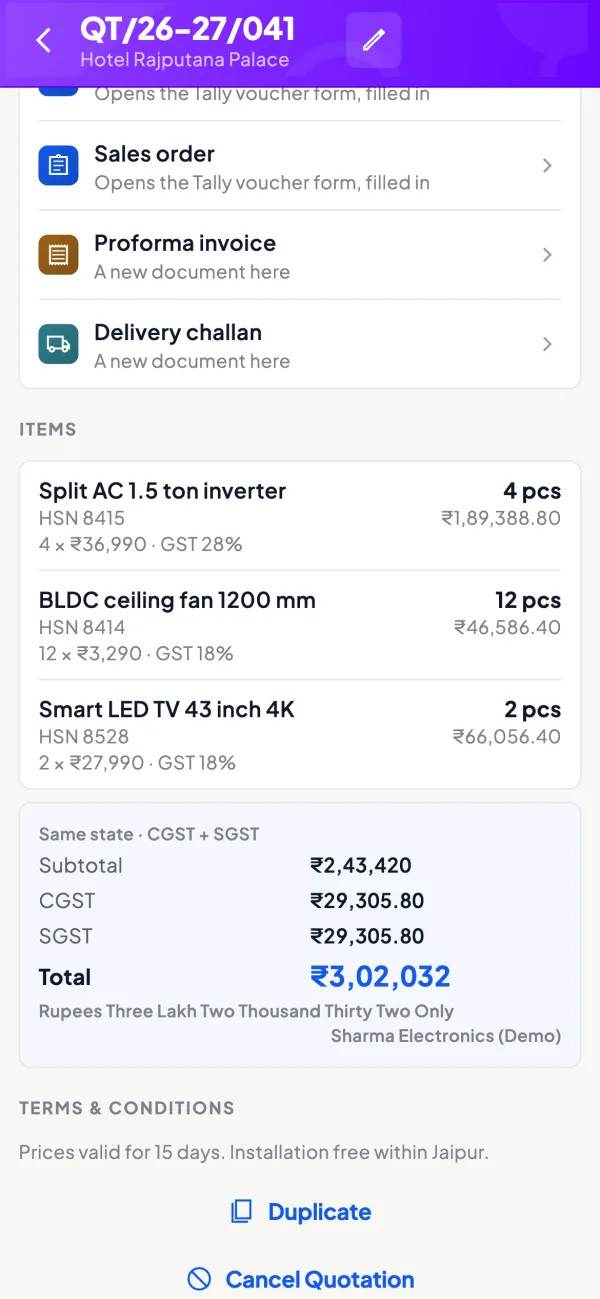
Labels for marking goods
Print barcode labels per item or per piece on thermal or A4 printers, and scan them with the phone camera.
See Barcodes and labels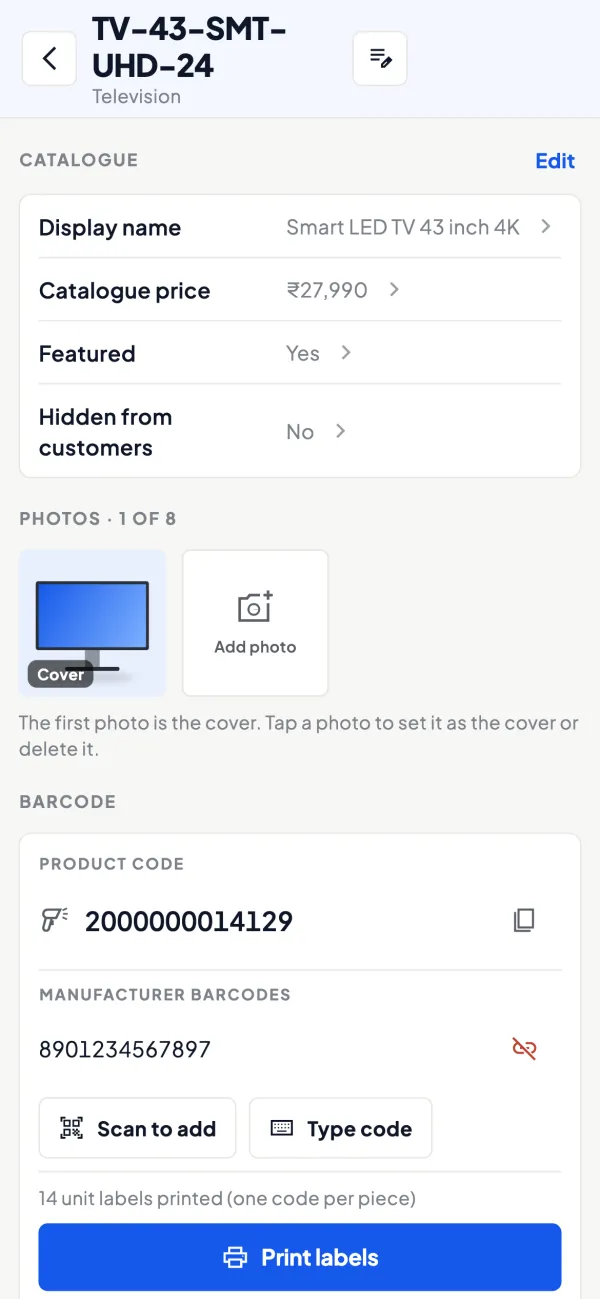
Questions people ask
Is a packing list required under GST?
Can the invoice and packing list be combined?
Should a packing list show prices?
Is a packing list the same as a delivery challan?
Does an e-way bill need the packing list?
What is the difference between net and gross weight?
Who should sign the packing list on delivery?
Do I need a packing list for one small parcel?
This page is general information for Indian businesses, not tax, legal or financial advice. Rules and rates change — check the official portals or your CA before acting.