
Business software & ERP Business software
An online store for local retailers
A local retailer's online store does not need to compete with national marketplaces. Its job is simpler: let nearby customers see what you stock, order or enquire, and pay or arrange delivery without visiting the shop.
- Local retail shops
- Electrical and hardware stores
- Showrooms with regular customers
- Shops taking WhatsApp orders
- Retailers moving beyond the counter

On this page 12
Why a shop of your own, not just a marketplace
Marketplaces bring customers but take commission, set the rules and own the customer relationship. A store of your own is for the customers you already have and those nearby who search for you: regulars who want to reorder, people who saw your shop and want to check prices, and customers you share links with on WhatsApp. It complements the shop, it does not replace it.
What to list first
Do not try to put 5,000 items online on day one. Start with:
- Your 100–200 best sellers, with clear photos and correct names.
- Items people ask about on the phone most often.
- Seasonal ranges you want to push, such as coolers before summer or lights before Diwali.
For items whose price depends on quantity or negotiation, such as building materials or furniture, show them with "price on request" so customers can enquire. Items you do not want visible can be hidden without being deleted.
Photos and descriptions that sell
- Shoot on a plain background with daylight; a phone camera is enough.
- Show the product from two angles and, where size matters, next to something familiar.
- Write the name customers use, not your internal code. "Ceiling fan 1200 mm, white" beats "CF-1200-WH".
- Add the two or three facts people ask on the phone: size, warranty, colour options.
Payments and delivery
| Option | Good for | Watch out for |
|---|---|---|
| Online payment through your own gateway | Small, fixed-price items | Gateway charges, refunds for cancelled orders |
| Cash on delivery | Local customers who prefer to pay on receipt | Refused deliveries; keep COD to a radius you deliver yourself |
| Agreed terms or pay at pickup | Regular customers, bulky items | Confirm the order by phone before packing |
Decide a delivery radius and charges before you go live. Many local stores deliver free above a set order value within a few kilometres and charge beyond it.
GST and invoicing
An online order is still a sale and needs the same invoice as a counter sale, with GST based on the place of supply. If you sell only through your own website, the rules for e-commerce operators who collect tax at source apply to marketplaces, not to you selling directly; still, confirm your position with your CA, especially if you also sell on marketplaces. See the GST for e-commerce sellers guide. This is general information, not tax advice.
Keeping stock and orders in one place
The most common failure is a store that shows items you no longer have. If the store's item list is typed separately from your billing system, it falls out of date within weeks. The store should read items from your main item master, and every online order should become a normal order in your books, so the counter and the website never sell the same last piece twice.
Running the store day to day
An online store needs a daily routine, not a one-time setup. Assign one person to:
- Check new orders every morning and after lunch, and confirm each by phone or WhatsApp.
- Update hidden items when stock runs out, and unhide them when it returns.
- Add photos for new arrivals within a week of receiving them.
- Note what customers ask that is not online, and add the most requested items.
Track a few numbers monthly: orders received, their value, the share cancelled, and how many came from repeat customers. If most orders are from existing customers, the store is working as a convenience; to reach new buyers, push the link harder in the neighbourhood.
Getting the first customers
- Share the store link on your WhatsApp status and with regular customers.
- Print a QR code with the link at the counter and on bills.
- Add the link to your online map and business listings, and to your shop signage.
- When a customer asks a price on the phone, send the item's link instead of typing the answer.
A store built from your Tally items
Cashflow OS offers a hosted online store at shop.cashflowos.in/your-name, built from your Tally items. Customers can order as guests, each order has its own page by link, and products can be hidden or marked "price on request". Payment goes through your business's own payment gateway, or you can use cash on delivery or agreed terms. It is a module switched on per company. See online store and online catalogue.
Avoid these
Common mistakes
- MistakePutting thousands of items online on day oneDo this instead
List best sellers and the items people ask about most, with good photos, then add more as customers ask for them.
- MistakeTyping the store's item list separately from billingDo this instead
Build the store from your main item master and turn every online order into a normal order in your books.
- MistakeOffering cash on delivery everywhereDo this instead
Keep COD to a radius you deliver to yourself, and confirm bulky or high-value orders by phone before packing.
- MistakeTreating the store as a one-time setupDo this instead
Give one person the daily routine: check and confirm orders, hide sold-out items and add photos for new arrivals.
Keep handy
Checklist
An online store for local retailers — 8 checks. Tick them as you go.
In Cashflow OS
How Cashflow OS helps
Cashflow OS puts your TallyPrime books on every phone in the team. Where it fits this topic:
A hosted store from your Tally items
A shop at shop.cashflowos.in/your-name is built from your Tally items, with guest checkout, an order page by link, and hidden or price-on-request products.
See Online store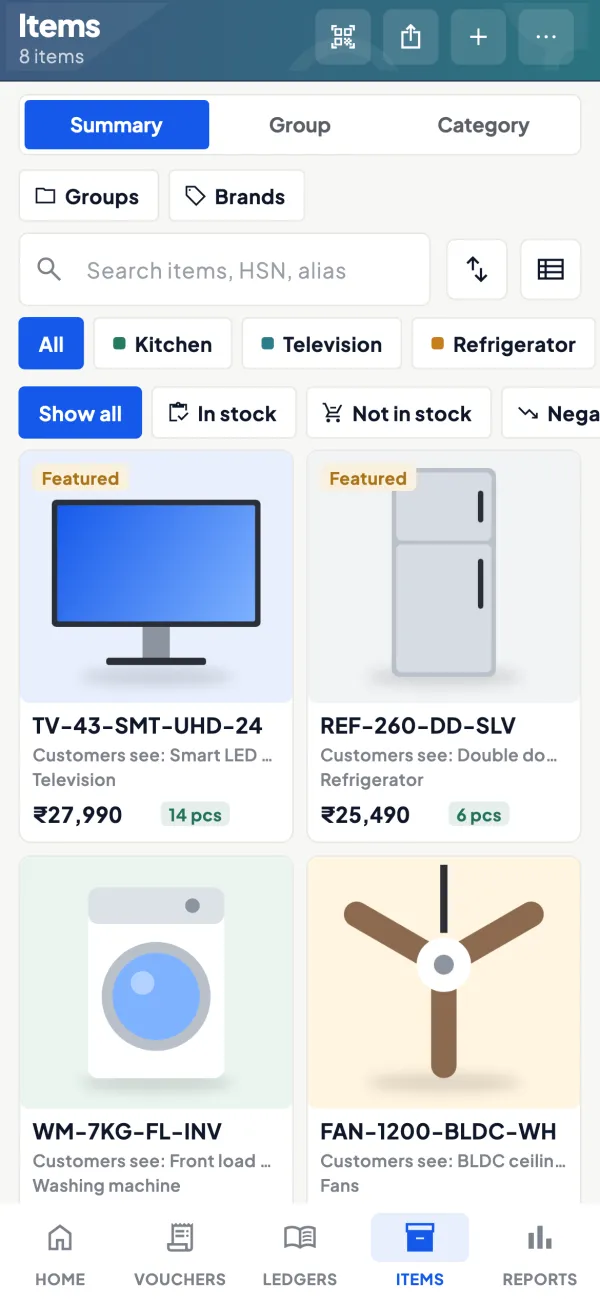
A catalogue link for WhatsApp
Share an online catalogue customers can browse without the app; enquiries come to you on WhatsApp. Payment goes through your own gateway, cash on delivery or agreed terms.
See Online catalogue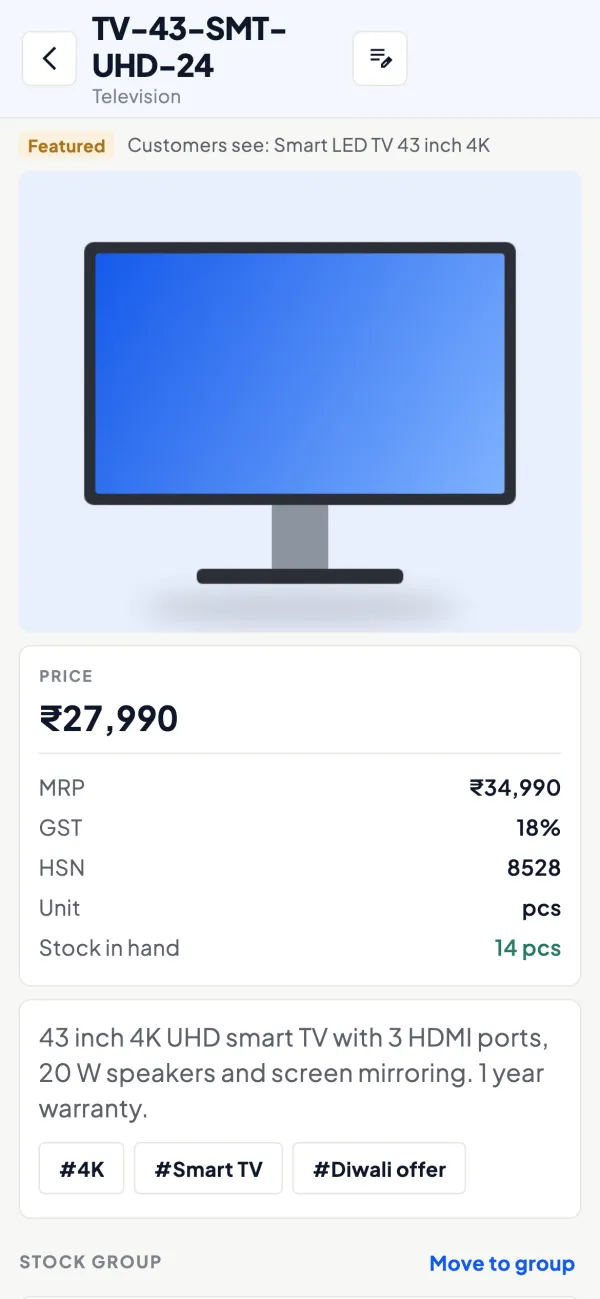
Questions people ask
Do I need a website developer for an online store?
Should I show prices online?
How quickly should I respond to online orders?
Does an online order need a GST invoice?
How many items should I list at the start?
How do I get customers to use the store?
What should I track to see if the store is working?
Can I hide items without deleting them?
This page is general information for Indian businesses, not tax, legal or financial advice. Rules and rates change — check the official portals or your CA before acting.



