
Invoices & documents Records
How long to keep invoices and records
Under GST, books and records must be kept for 72 months from the due date of the annual return for that year, which works out to roughly seven years from the start of the financial year. Income-tax and company law have their own periods, so most businesses keep core records for at least eight years.
- GST-registered businesses
- Companies and LLPs
- Partnership firms and proprietors
- Accountants
- Businesses closing down
On this page 12
The GST rule
Section 36 of the CGST Act requires every registered person to keep books of account and records for 72 months from the due date of furnishing the annual return for the year they relate to. If you are party to an appeal, revision or other proceeding, or under investigation, records relating to that matter must be kept for one year after it is finally disposed of, or for the 72-month period, whichever is later.
Records can be kept electronically, but they must be accessible, backed up and producible when asked. They are to be kept at your principal place of business as declared in registration, and at each additional place for records relating to it. This is general information, not tax advice.
Working out the date
The annual return GSTR-9 for a financial year is normally due on 31 December after the year ends (it can be extended). Counting 72 months from that due date:
| Financial year | GSTR-9 due (normal) | Keep GST records at least until |
|---|---|---|
| 2023-24 | 31 Dec 2024 | 31 Dec 2030 |
| 2024-25 | 31 Dec 2025 | 31 Dec 2031 |
| 2025-26 | 31 Dec 2026 | 31 Dec 2032 |
Small taxpayers exempted from filing GSTR-9 should still count from the due date that would apply; ask your CA if unsure. Read GSTR-9 annual return for due dates.
Income-tax and company law periods
- Income-tax: the law sets a minimum period for keeping books and documents for those required to maintain accounts, and reassessment can reach back several years for larger amounts. The Income-tax Act, 2025 replaced the 1961 Act from April 2026, so confirm the current retention and reassessment periods on incometax.gov.in or with your CA.
- Companies: the Companies Act, 2013 requires books of account to be kept for at least eight financial years immediately before the current year, and longer if an investigation is ordered.
- LLPs and partnerships: follow their own law and partnership deed, plus the tax rules above.
Because the periods differ and can be extended by proceedings, a simple rule many CAs suggest is: keep everything for at least eight years, and keep anything under dispute until it is closed.
What counts as a record
| Category | Examples |
|---|---|
| Sales | Tax invoices, bills of supply, credit and debit notes, e-way bills |
| Purchases | Supplier invoices, debit notes received, goods receipt notes |
| Stock | Stock registers, delivery challans, job-work challans |
| Money | Receipt and payment vouchers, bank statements, cash book |
| GST | Returns filed, challans, refund papers, notices and replies |
| Books | Ledgers, day book, trial balance, final accounts |
| Contracts | Rent agreements, dealer agreements, AMCs |
Storing records sensibly
- Paper: box by financial year and month, label the outside, keep in a dry place off the floor. Termites and monsoon damp destroy more records than any officer ever asks for.
- Scans: scan purchase invoices as they come in; name files by date, party and number.
- Accounting data: take regular backups of your Tally data, keep one copy off-site, and test that you can restore it. See backing up accounting data.
- Email and WhatsApp: not a filing system. Save important PDFs into your own folders.
- Index: a simple list of what is where, so someone other than the accountant can find a 2022 invoice.
Destroying old records safely
Once the retention period has passed and nothing is pending, old records can be destroyed. Before doing so, check with your CA that no assessment, appeal or notice is open for that year. Shred or pulp documents with GSTINs, bank details and signatures rather than selling them as scrap paper. Keep a short note of what was destroyed and when.
Annual records checklist
- Closed year's paper files boxed and labelled.
- Backup of the year's accounting data taken and verified.
- Returns, challans and acknowledgements downloaded from the GST portal.
- Notices and replies filed with the year.
- Years past the retention date reviewed for disposal.
Pair this with the year-end closing checklist.
Doing this with Tally and Cashflow OS
Tally remains your books of record, so its data and backups are what you retain. Cashflow OS keeps a synced copy of the companies open in Tally and lets you view reports for any financial year, or custom ranges across several years, and export them to Excel or PDF. That makes it quick to pull an old ledger or day book when an officer or auditor asks. It does not replace your Tally backups. See reports in Excel and PDF.
Avoid these
Common mistakes
- MistakeTreating WhatsApp and email as the filing systemDo this instead
Save important PDFs into your own folders by year, month and party.
- MistakeKeeping only a synced or cloud copy, not Tally backupsDo this instead
Take regular Tally backups, keep one off-site and test that you can restore them.
- MistakeDestroying records while a case is still openDo this instead
Check with your CA that no assessment, appeal or notice is open for the year before destroying anything.
- MistakeSelling old invoices as scrap paperDo this instead
Shred or pulp documents with GSTINs, bank details and signatures, and note what was destroyed and when.
Keep handy
Checklist
How long to keep invoices and records — 7 checks. Tick them as you go.
In Cashflow OS
How Cashflow OS helps
Cashflow OS puts your TallyPrime books on every phone in the team. Where it fits this topic:
Old years' reports when asked
Cashflow OS lets you view reports for any financial year, or custom ranges across several years, from the synced copy of your Tally companies.
See Financial reports from Tally
Export to Excel or PDF
Pull an old ledger or day book and export it to Excel or PDF for an auditor or officer. It does not replace your Tally backups.
See Reports in Excel and PDF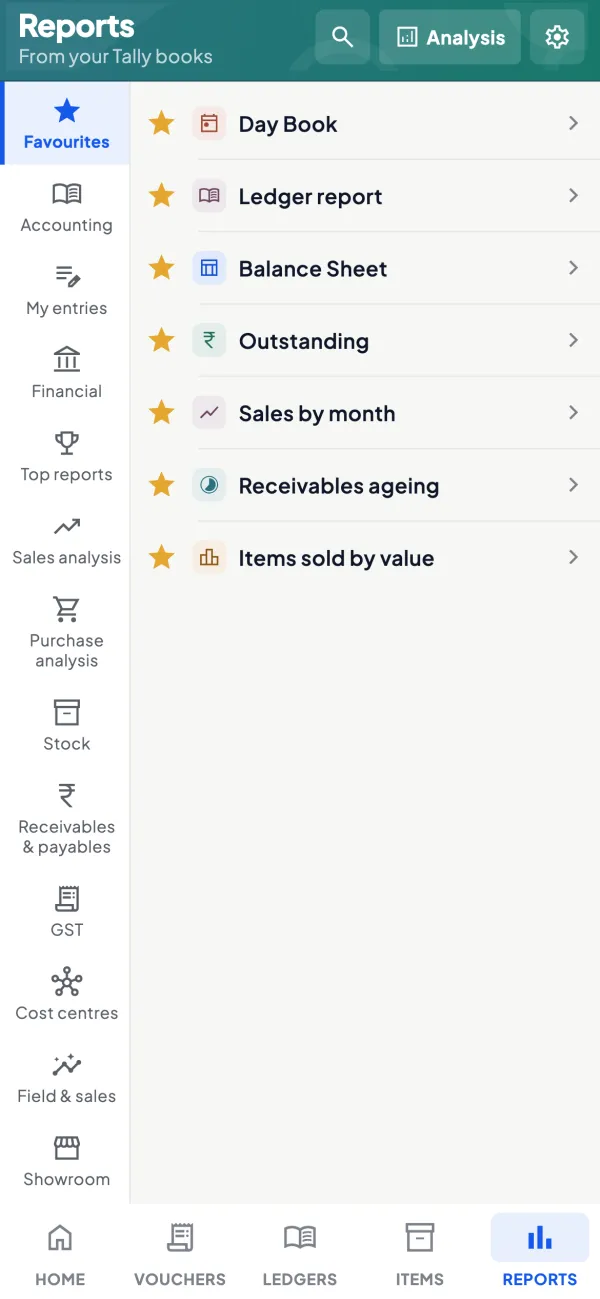
Questions people ask
Can I keep only digital copies of invoices?
Do I need to keep delivery challans?
What if my business closes?
How long must GST records for FY 2025-26 be kept?
Where must GST records be kept?
How long must a company keep its books?
Do small taxpayers exempt from GSTR-9 have a different period?
Is a synced copy in an app a backup?
This page is general information for Indian businesses, not tax, legal or financial advice. Rules and rates change — check the official portals or your CA before acting.



