
GST GST compliance
GST audit preparation checklist
A GST department audit checks your books and returns for a period and asks you to explain differences. Businesses that reconcile monthly finish quickly; those that do it only when the notice arrives spend weeks.
- GST-registered businesses
- Accountants and CAs
- Owners who received ADT-01
- Finance managers
- Businesses filing GSTR-9C

On this page 12
Types of GST audit
| Type | Who does it | Basics |
|---|---|---|
| Departmental audit (Section 65) | Tax officers | Notice in Form ADT-01 at least 15 working days before; usually completed within three months of starting, extendable up to six; findings in ADT-02 |
| Special audit (Section 66) | A chartered or cost accountant nominated by the department | Ordered where the case is complex; report within a set period |
| Annual reconciliation (GSTR-9C) | Self-certified by the taxpayer, above a turnover limit | Reconciles books with the annual return; see GSTR-9C reconciliation |
The audit can be at your place of business or at the tax office. Time limits and procedures are in the law and rules and can change; follow the notice. This is general information, not tax advice.
Documents to keep ready
- Registration certificate, with all additional places of business.
- Returns filed: GSTR-1, GSTR-3B, GSTR-9, GSTR-9C, with acknowledgements.
- Sales register and purchase register, month-wise.
- Tax invoices, bills of supply, credit and debit notes, delivery challans, e-way bills.
- Stock registers or stock summaries, with year-end physical count.
- Electronic cash and credit ledger statements; challans paid.
- Financial statements and the income-tax audit report, if any.
- Contracts, dealer scheme circulars, job work challans, LUT, export documents.
Reconciliations to run before the officer does
- Turnover: sales in books vs GSTR-1 vs GSTR-3B vs financial statements, month by month.
- Output tax: GSTR-1 vs GSTR-3B; explain every difference.
- ITC: books vs GSTR-3B vs GSTR-2B; see reconciling GSTR-2B.
- E-way bills: total value of e-way bills generated vs sales reported.
- RCM: expenses that attract reverse charge (GTA freight, legal fees, rent from unregistered persons where applicable) vs RCM paid.
- Reversals: blocked credit, exempt-supply share, 180-day unpaid bills, free samples.
- Stock: opening + purchases − sales ≈ closing, in quantity, for main items.
A worked reconciliation
| Source | Taxable turnover for the year |
|---|---|
| Profit and loss account (sales) | ₹4,82,40,000 |
| Add: sale of a used machine (in other income, taxable) | + ₹3,50,000 |
| Less: exports under LUT (zero-rated, reported separately) | − ₹22,00,000 |
| Expected taxable domestic turnover | ₹4,63,90,000 |
| GSTR-3B taxable outward supplies | ₹4,63,90,000 |
The aim is a short note explaining every adjustment, so the officer sees the same number arrived at from both ends. Unexplained gaps are what turn into demands.
Questions officers commonly ask
- Why is ITC higher than GSTR-2B in some months?
- Why did tax paid in cash fall while turnover rose?
- Was RCM paid on freight, legal fees and other notified services?
- Were credit notes issued within the time limit, and was the buyer's ITC reversed?
- Was ITC on exempt supplies reversed?
- Were inter-state branch transfers invoiced?
The two weeks before the audit date
- Read the notice: period covered, documents listed, place and date.
- Bring your CA in early and agree who will speak for the business.
- Complete the reconciliations above for every month in the period, not only the year totals.
- Pull a sample of invoices, e-way bills and credit notes for the largest customers and suppliers, and check they agree with the returns.
- List known issues honestly, with the amount involved, and decide which ones to pay before the officer raises them.
- Arrange a desk, a printer and organised files, physical or digital, so the officer is not kept waiting.
During and after the audit
- Name one person as the point of contact and keep a log of every document handed over.
- Answer in writing with reconciliations, not just verbally.
- If an observation is correct, you can pay the tax with interest voluntarily through DRC-03, which can limit penalties.
- If you disagree, reply to the observations with reasons and evidence within the time given.
- Correct the underlying cause so the same issue does not repeat.
The common notices that can follow are covered in common GST notices.
Getting audit-ready with Cashflow OS
Most audit preparation is pulling the right reports for the right period. Cashflow OS syncs your TallyPrime data and lets you run reports for any financial year or a custom range across years: day book, ledgers, stock summaries, Profit and Loss, Balance Sheet, and GSTR-1 and GSTR-3B views with bill-wise and HSN-wise detail. Reports export to Excel and PDF for your CA. It does not represent you before the department or give tax advice.
Avoid these
Common mistakes
- MistakeReconciling only when the notice arrivesDo this instead
Reconcile books with GSTR-1, GSTR-3B and GSTR-2B every month so the audit becomes a review, not a rebuild.
- MistakeShowing only year totalsDo this instead
Prepare reconciliations month by month for the whole period covered by the notice.
- MistakeAnswering the officer only verballyDo this instead
Reply in writing with reconciliations and evidence, and log every document handed over.
- MistakeIgnoring RCM and ITC reversalsDo this instead
Check RCM on GTA freight, legal fees and other notified services, and reversals such as the 180-day rule, before the audit.
Keep handy
Checklist
GST audit preparation checklist — 8 checks. Tick them as you go.
In Cashflow OS
How Cashflow OS helps
Cashflow OS puts your TallyPrime books on every phone in the team. Where it fits this topic:
Reports for any year or range
Run day book, ledgers, stock summaries, P&L and Balance Sheet for any financial year or a custom range across years, and export to Excel and PDF for your CA.
See Reports in Excel and PDF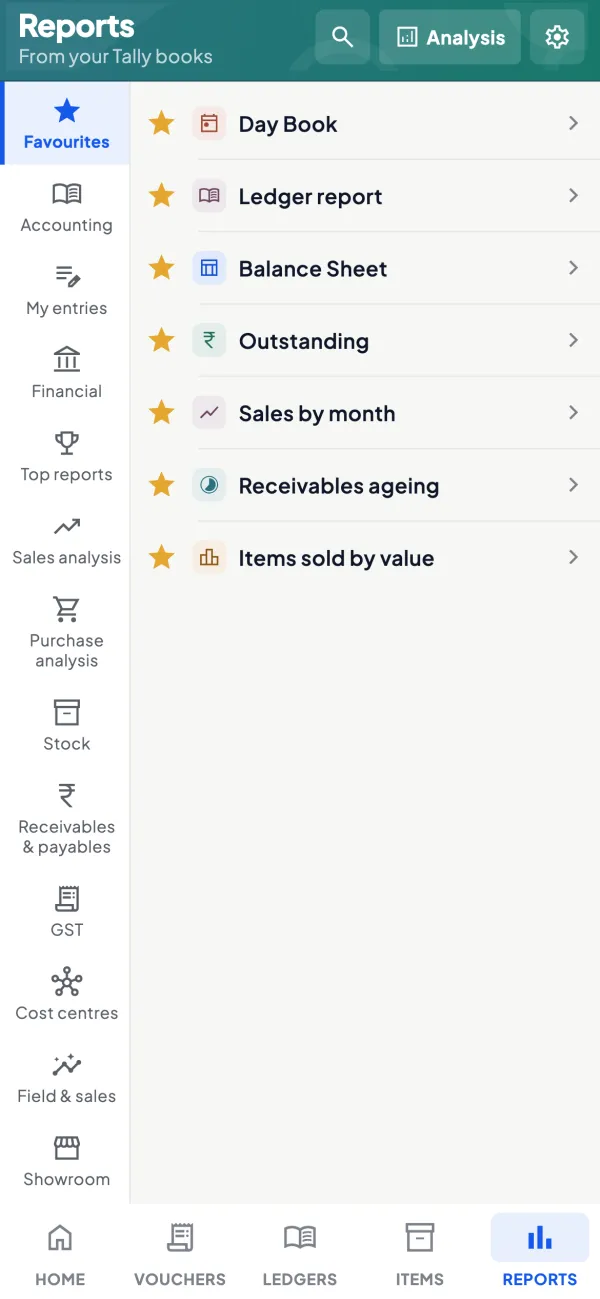
GSTR-1 and GSTR-3B views from Tally
GSTR-1 and GSTR-3B views prepared from your Tally data, with bill-wise and HSN-wise detail, help match books with returns. It does not represent you or give tax advice.
See GST reports from your Tally data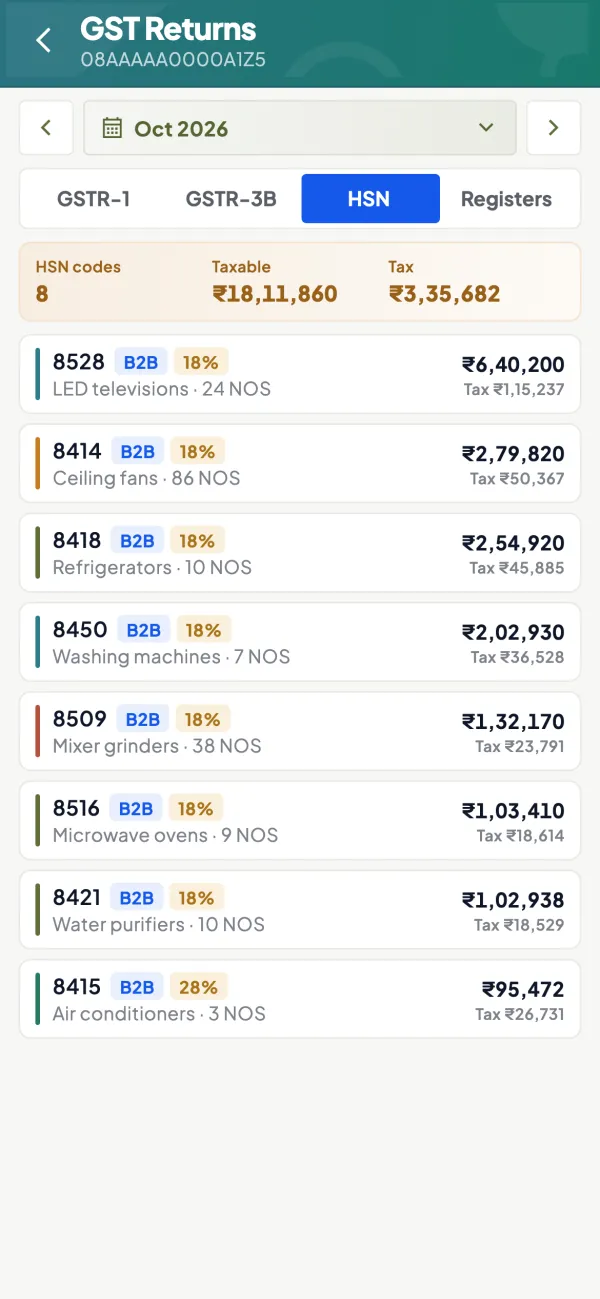
Questions people ask
How much notice is given for a GST audit?
How long does a GST department audit take?
Can I pay tax during the audit?
Is GSTR-9C the same as a department audit?
Where does a GST audit take place?
What form records the audit findings?
What is a special audit?
Should I disclose known errors before the officer finds them?
This page is general information for Indian businesses, not tax, legal or financial advice. Rules and rates change — check the official portals or your CA before acting.



