Glossary Tax
TCS (tax collected at source)
Definition
TCS (tax collected at source) is tax a seller or e-commerce operator collects from the other party on specified transactions and deposits with the government.

Example
A seller makes net sales of ₹2,00,000 through a marketplace in a month. The operator collects GST TCS at the current rate and pays the rest after its fees. The seller books the TCS amount to a TCS receivable ledger and uses it from the electronic cash ledger after accepting it on the portal.
TCS in TallyPrime and in Cashflow OS
Where to find itIn TallyPrime
TallyPrime supports income-tax TCS on specified sales once it is enabled for the company and the goods and collectee parties are marked. GST TCS from a marketplace is usually recorded by a journal against the operator's ledger.
 On your phoneIn Cashflow OS
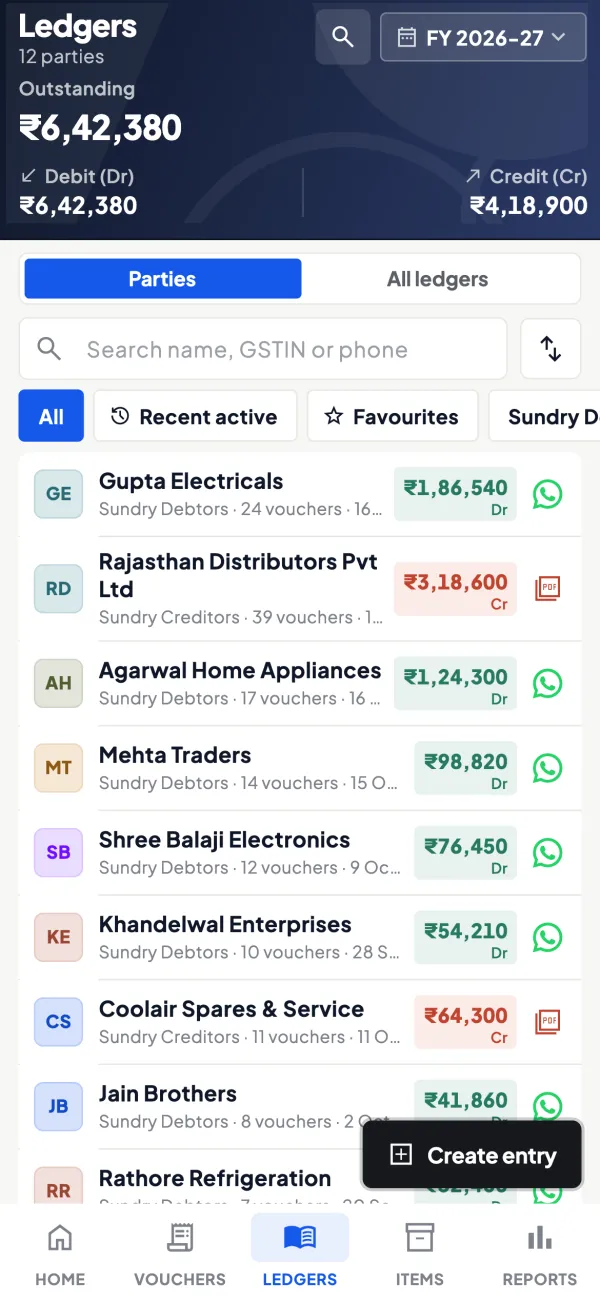
Cashflow OS shows the TCS ledgers and marketplace party ledgers from Tally with live balances, so a balance that never clears is easy to spot.
Common misunderstandings
- Watch outTreating marketplace TCS as an expense instead of a tax credit you can use.
- Watch outAssuming all sellers must collect income-tax TCS; it applies only to specified goods and transactions.
TCS under income tax
Under income tax, a seller of certain specified goods, such as scrap, some minerals, forest produce and liquor, and certain other transactions such as motor vehicles above a value and some foreign remittances, collects TCS from the buyer at the rate set in the law. The buyer gets credit for it against their own tax. The general TCS on sale of goods above ₹50 lakh in a year was withdrawn from 1 April 2025. The Income-tax Act, 2025 applies from 1 April 2026 and renumbers these provisions. Check rates and the current list on incometax.gov.in.
TCS under GST
Under GST, e-commerce operators collect TCS on the net taxable value of supplies made through their platform by registered sellers. The rate has been reduced over time and is now 0.5% in total (0.25% CGST plus 0.25% SGST, or 0.5% IGST). The operator files a monthly statement, and the seller sees the amount and can use it from the electronic cash ledger after accepting it. See TDS and TCS under GST and GST for e-commerce sellers.
Example
A seller makes ₹4,00,000 of net taxable sales through a marketplace in a month. The operator collects 0.5%, ₹2,000, and pays the seller the rest of what is due after its fees. In the seller's books, the marketplace ledger shows ₹2,000 less received, and a TCS receivable ledger shows ₹2,000, which the seller later uses against its GST liability. If the seller does not record the TCS, the marketplace ledger will show a ₹2,000 balance that never clears.
Where it shows up in TallyPrime
TallyPrime supports TCS under income tax on sales of specified goods: you enable it for the company, mark the stock items or ledgers with the nature of goods and the party ledgers as collectees, and TallyPrime adds TCS to the sales invoice. GST TCS from a marketplace is usually recorded through a journal against the operator's ledger when you reconcile its settlement statement.
This is general information, not tax advice.
Related terms
TDS (tax deducted at source)GSTR-3BLedgerInput tax credit (ITC)All terms A–Z
Questions about TCS
Is TCS the same as TDS?
Can I claim the TCS collected from me?
Does a small trader need to collect TCS?
Where do I see GST TCS collected from me?
Does TCS change my sales figure?
This page is general information for Indian businesses, not tax, legal or financial advice. Rules and rates change — check the official portals or your CA before acting.