Invoices & documents Service billing
Invoices for repair and service jobs
A repair invoice usually mixes two things: spare parts (goods) and labour (a service). Showing each line with its own HSN or SAC, and agreeing the estimate before work starts, avoids most disputes with customers and most GST errors.
- Appliance service centres
- Mobile and electronics repairers
- Vehicle workshops
- AC and RO technicians
- Brand-authorised service partners

On this page 12
What a service bill should show
| Line | Example | Code |
|---|---|---|
| Job number and device | JOB/25-26/0412, washing machine, serial WM7K… | |
| Spare part | Drain pump, 1 no., ₹1,450 | HSN of the part |
| Spare part | Door gasket, 1 no., ₹780 | HSN of the part |
| Labour / repair charge | ₹600 | SAC under heading 9987 (repair services) |
| Visit or pickup charge | ₹200 | SAC as applicable |
| Tax per line | Rate as applicable to each |
Add customer name and mobile, address for home visits, the date the job was completed and the warranty on the repair (for example, 90 days on labour, as per manufacturer on parts). For registered business customers, their GSTIN goes on the invoice too.
Parts and labour: one rate or two?
When parts and labour are supplied together, GST treats them either as a composite supply, taxed at the rate of the principal supply, or as separate supplies taxed at their own rates. The answer depends on the facts: how the job is quoted, whether the customer could buy parts alone, and how the invoice is drawn up. Many repairers itemise parts and labour separately with their own rates; that is common and transparent, but it is not automatically correct in every case. For vehicle, machinery or contract repair work, ask your CA once and set the billing pattern accordingly. Read GST for service and repair businesses.
This is general information, not tax advice.
Worked example
A Kochi appliance service centre repairs a washing machine. Rates used are illustrations only.
| Line | Taxable | GST | Total |
|---|---|---|---|
| Drain pump | ₹1,450 | ₹261 (18%) | ₹1,711 |
| Door gasket | ₹780 | ₹140 (18%) | ₹920 |
| Labour | ₹600 | ₹108 (18%) | ₹708 |
| Pickup and drop | ₹200 | ₹36 (18%) | ₹236 |
| Total | ₹3,030 | ₹545 | ₹3,575 |
Kerala to Kerala, so the tax splits equally into CGST and SGST on the invoice. Check the current rate of each part's HSN; rates for several goods changed with the 2025 rate revision.
Warranty, AMC and chargeable jobs
- Under manufacturer warranty: the customer pays nothing; the service centre usually bills the brand for labour and gets parts from the brand. CBIC has clarified the GST treatment of warranty replacements; follow that clarification and your brand agreement.
- Under your AMC: labour is covered by the AMC invoice already raised; parts may be extra as per contract. Write the AMC number on the job. See annual maintenance contracts.
- Out of warranty: full chargeable invoice to the customer.
Keep these three apart in your books, so you can see what each brand owes you and what customers paid.
Estimate first, invoice later
Most complaints about repair bills are about surprise amounts. Send an estimate after diagnosis and wait for approval: Sir, your machine needs a drain pump and gasket. Estimate ₹3,575 including GST. Reply YES to proceed. If the cost rises during repair, ask again. A short written yes, kept with the job, settles arguments at delivery. See estimate vs quotation.
Advance and deposits
If you take an advance for a service job, GST is generally payable when the advance is received, so issue a receipt voucher and adjust it in the final invoice. A refundable security deposit for a loaner device is treated differently from an advance. When the job is cancelled and the advance refunded, record it with a refund voucher.
Service bill checklist
- Job number on the invoice, linked to the job card.
- Each part with its HSN and each service with its SAC.
- Warranty or AMC status written clearly.
- Old parts returned to the customer or disposed of with consent.
- Customer signature or OTP confirmation at delivery.
- Repair warranty period printed.
Doing this with Tally and Cashflow OS
The service jobs module in Cashflow OS records repair and pickup jobs, lets you add items and service charges as work progresses, and closes the job with an invoice. Items and parts come from your Tally stock items, and the sale reaches Tally through the connector, so stock and the customer's account stay in step with your books.
Avoid these
Common mistakes
- MistakeOne line such as 'AC repair ₹6,500' with one codeDo this instead
List parts with their HSN and labour with its SAC, unless your CA has advised one composite supply.
- MistakeStarting work before the customer approvesDo this instead
Send the estimate on WhatsApp after diagnosis and keep the customer's written yes with the job.
- MistakeMixing warranty jobs with chargeable onesDo this instead
Keep warranty, AMC and chargeable jobs separate, so you can see what each brand owes and what customers paid.
- MistakeNo receipt voucher for service advancesDo this instead
GST is generally payable on advances for services; issue a receipt voucher and adjust it in the final invoice.
Keep handy
Checklist
Invoices for repair and service jobs — 7 checks. Tick them as you go.
In Cashflow OS
How Cashflow OS helps
Cashflow OS puts your TallyPrime books on every phone in the team. Where it fits this topic:
From job to invoice in one flow
Service jobs record repair and pickup work; add items and service charges as the work goes on, then close the job with an invoice that reaches Tally through the connector.
See Service jobs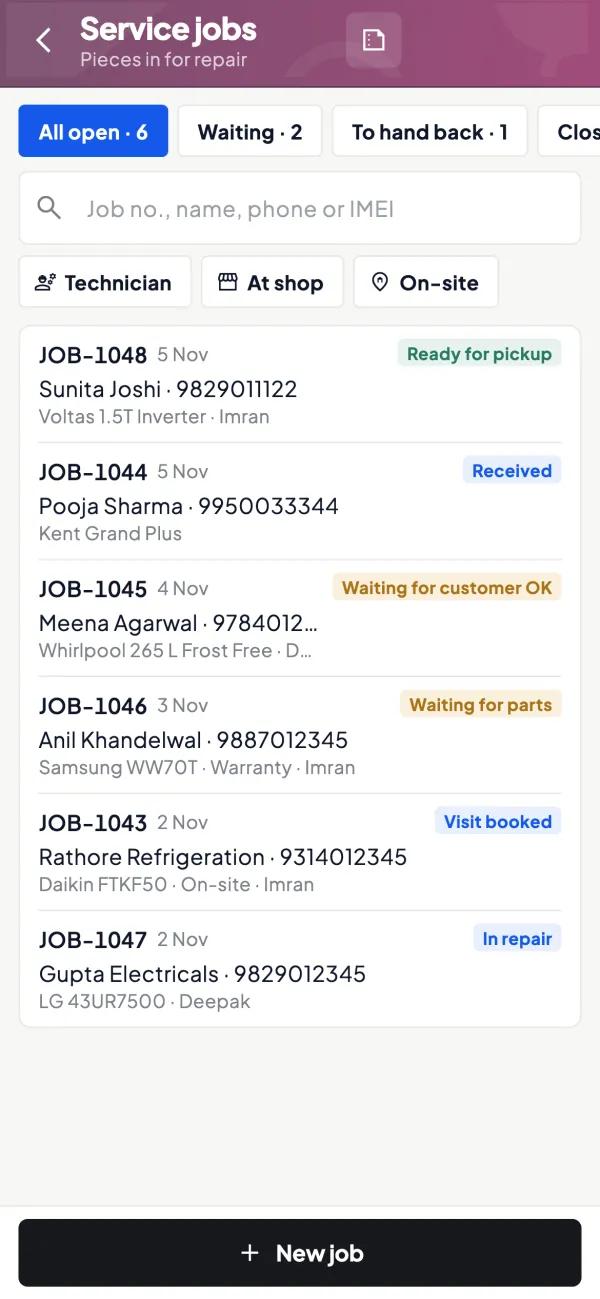
Parts from your Tally stock
Spare parts are picked from your Tally stock items, so stock and the customer's account stay in step with your books.
See Create Tally vouchers from your phone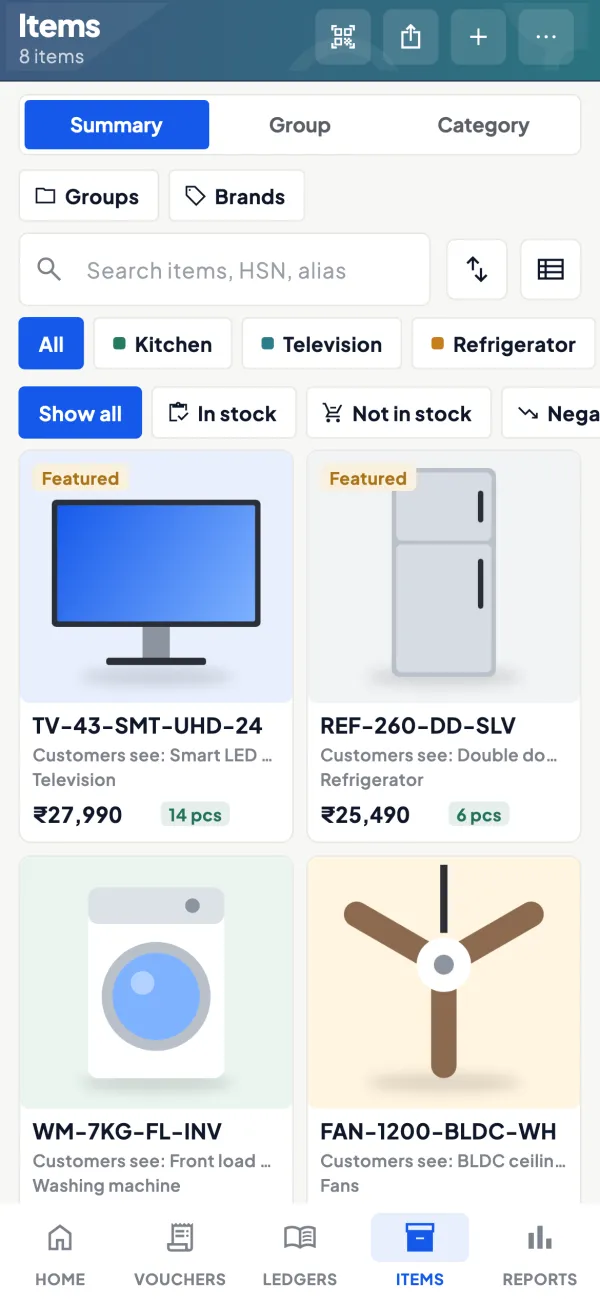
Questions people ask
What SAC code is used for repair services?
Do I charge GST on labour if I am not registered?
Should I give an invoice for warranty repairs?
Can I charge a diagnosis fee if the customer declines the repair?
Should I charge GST on a visit or pickup charge?
How long should a repair warranty be?
What if the customer never collects the device?
Do I need to keep the old parts?
This page is general information for Indian businesses, not tax, legal or financial advice. Rules and rates change — check the official portals or your CA before acting.