GST Tally and GST
How to check GSTR-3B from Tally data
GSTR-3B is where tax is actually paid, so it deserves the most careful check. Compare Tally's GSTR-3B report with your filed GSTR-1, the GSTR-2B on the portal and your GST ledgers before you offset and file.
- GST-registered businesses
- Accountants filing returns
- CAs reviewing clients
- Business owners checking tax
- Tally users

On this page 12
What GSTR-3B contains
| Part | What it shows | Check against |
|---|---|---|
| 3.1 Outward and RCM inward supplies | Taxable, zero-rated, nil/exempt, non-GST sales; RCM purchases | GSTR-1 for the same period |
| 3.2 Inter-state supplies | To unregistered persons, composition dealers and UIN holders, by state | B2C inter-state in GSTR-1 |
| 4 ITC | ITC available, reversed, net, ineligible | GSTR-2B and your purchase register |
| 5 Exempt inward | Purchases that are exempt, nil or non-GST | Purchase register |
| 6 Payment | Offset of liability with credit and cash | Portal ledgers |
On the portal, much of 3.1 is auto-filled from GSTR-1 and section 4 from GSTR-2B. The portal has been moving to lock auto-filled liability, so differences must be fixed at the source. Check the current position on gst.gov.in.
Step 1: open GSTR-3B in TallyPrime
GSTR-3B is in the same GST reports area as GSTR-1. Set the period and look at the summary: vouchers included, not relevant, and those with incomplete or mismatched information. Resolve the flagged ones exactly as you would for GSTR-1; see preparing GSTR-1 from Tally. Purchase vouchers are often the culprit here: a supplier ledger without GSTIN, or an expense ledger without GST classification.
Step 2: match outward liability to GSTR-1
Tax in 3.1 should equal the tax in the GSTR-1 you filed for the same period, adjusted for amendments and advances. Differences trigger the DRC-01B intimation described in common GST notices.
Example. GSTR-1 tax: ₹3,42,000. Tally GSTR-3B outward tax: ₹3,38,400. The ₹3,600 gap turns out to be a ₹20,000 sales voucher at 18% entered after GSTR-1 was filed. Report it through GSTR-1A for the same month (if available) or the next GSTR-1, and make sure the tax is paid in the right month.
Step 3: match ITC to GSTR-2B
- Download GSTR-2B for the month from the portal.
- Use Tally's GSTR-2A/2B reconciliation feature if your release has it, or compare in Excel.
- Claim only ITC that appears in GSTR-2B and meets the conditions.
- Note bills in your books but not in GSTR-2B; follow up with suppliers rather than claiming.
- Note bills in GSTR-2B but not in your books; enter them if genuine.
The full process is in reconciling GSTR-2B with the purchase register.
Step 4: reversals, RCM and blocked credit
- Reversals: bills unpaid for 180 days, common credit for exempt sales, free samples.
- RCM: GTA freight, advocate fees and other RCM services or goods; liability in 3.1(d), with matching ITC in section 4 once paid in cash.
- Blocked credit: motor vehicles, food and beverages, personal use and similar items should not be in net ITC.
Step 5: work out the cash payable
A simple worksheet before you offset:
| IGST | CGST | SGST | |
|---|---|---|---|
| Output tax (incl. RCM) | ₹1,20,000 | ₹1,10,000 | ₹1,10,000 |
| Net ITC (2B-matched, after reversals) | ₹95,000 | ₹80,000 | ₹80,000 |
| Before cross-utilisation | ₹25,000 | ₹30,000 | ₹30,000 |
Here IGST credit is fully used against IGST (Rule 88A requires IGST credit to be used up first), so CGST and SGST credit pay their own heads. Cash payable is ₹25,000 IGST + ₹30,000 CGST + ₹30,000 SGST = ₹85,000, plus RCM tax, which is always paid in cash. Compare this with the portal's offset screen. This is general information, not tax advice.
Common mistakes at this stage
- Copying ITC from the books into GSTR-3B without checking GSTR-2B.
- Forgetting the RCM liability because the freight bill showed no GST.
- Claiming the reclaimed portion of a 180-day reversal twice.
- Paying cash in SGST while unused CGST credit sits idle, because the IGST credit split was left to chance.
- Filing before the period's purchase entries are complete, then adding ITC 'next month' without tracking it.
Reviewing GSTR-3B in Cashflow OS
Cashflow OS prepares a GSTR-3B view from the data synced from TallyPrime, alongside the GSTR-1 view for the same period, so the owner can compare outward tax and ITC on the phone or web before the accountant files. A JSON file can be downloaded for the portal, and the GST ledgers and purchase register can be opened to trace any figure. Fixes are made in Tally; filing and payment happen on the GST portal.
Avoid these
Common mistakes
- MistakeCopying ITC from the books without checking GSTR-2BDo this instead
Match the purchase register with GSTR-2B; follow up missing bills with suppliers instead of claiming them.
- MistakeMissing RCM tax on freight or legal feesDo this instead
Book RCM liability in table 3.1(d), pay it in cash, and claim the matching credit in table 4.
- MistakeFiling before all purchase entries are completeDo this instead
Finish the month's purchase entries first, or track ITC deferred to next month so it is neither lost nor claimed twice.
- MistakePaying SGST in cash while CGST credit lies unusedDo this instead
Work out the IGST credit split before offset and compare with the portal's offset screen.
Keep handy
Checklist
How to check GSTR-3B from Tally data — 7 checks. Tick them as you go.
In Cashflow OS
How Cashflow OS helps
Cashflow OS puts your TallyPrime books on every phone in the team. Where it fits this topic:
GSTR-3B and GSTR-1 views from Tally
Cashflow OS prepares GSTR-3B and GSTR-1 views from the synced data, so the owner can compare outward tax and ITC before the accountant files, with JSON download.
See GST reports from your Tally data
Trace a figure to its ledger
Open GST ledgers and the purchase register on the phone or web to find the voucher behind a difference; fix it in Tally.
See Financial reports from Tally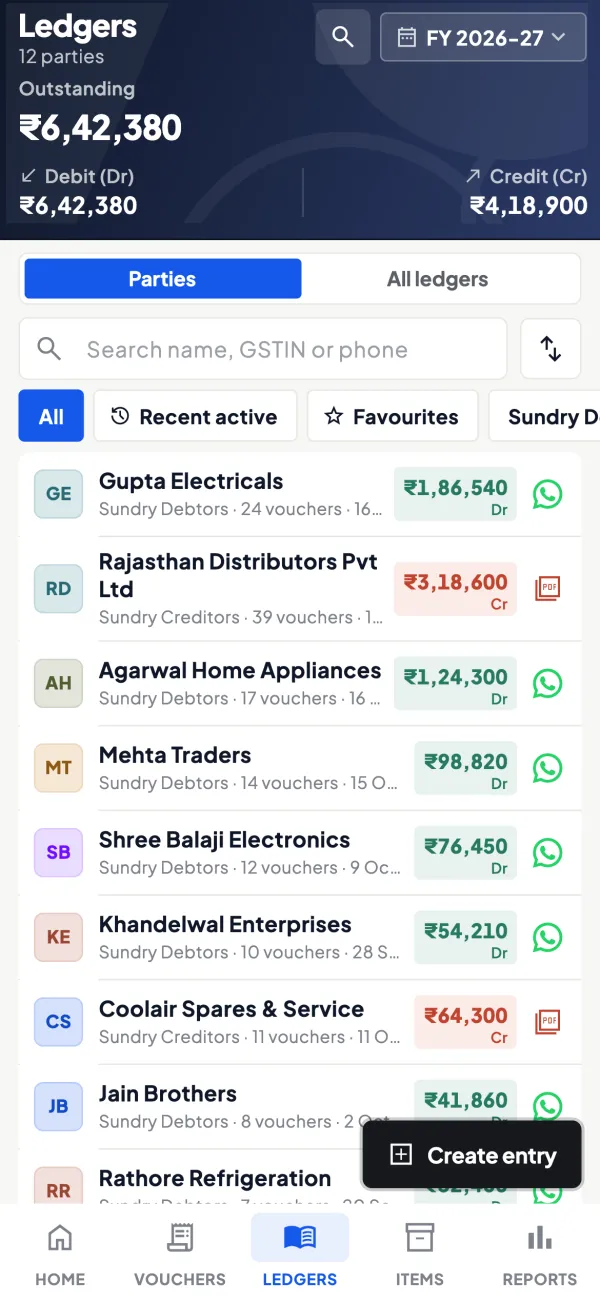
Questions people ask
Should GSTR-3B match GSTR-1 exactly?
Can I claim ITC in GSTR-3B that is in my books but not in GSTR-2B?
Where is RCM shown in GSTR-3B?
Does Tally file GSTR-3B?
What is DRC-01B?
Can I edit auto-filled values in GSTR-3B?
Why must IGST credit be used first?
What if I find a missed sale after filing GSTR-3B?
This page is general information for Indian businesses, not tax, legal or financial advice. Rules and rates change — check the official portals or your CA before acting.